François Boucher, 1703 – 1770

François Boucher maalid: 100 kuulsumat teost järjestatud

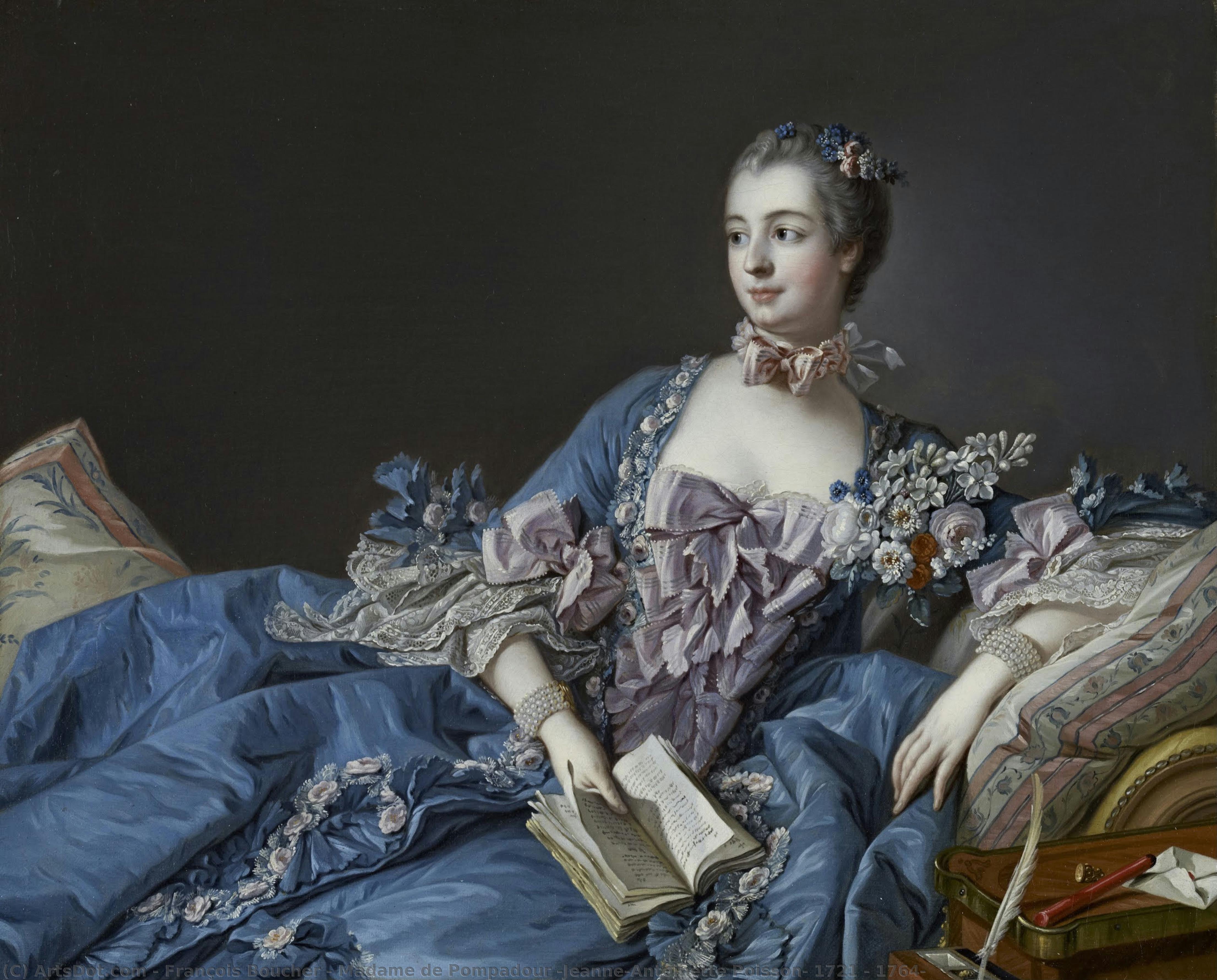
François Boucher kõige kuulsam teos on Diana getting out of her bath (1742). koos Bouguereau Song of the Angels ja Madame de Pompadour (Jeanne-Antoinette Poisson, 1721 - 1764) (1758) moodustavad need kolm teost, mis on kõigile tuttavad. Meie kataloogis on 377 teost kunstnikult François Boucher; alljoonas on 100 kõige vaadeldavamat teost koos nende loomisaea, säilitaja museumi ja olulisuse selgitusega.

Reiting põhineb meie populaarsusindeksil, mis koondab iga teose otsingud, külastused ja tellimused. Uuendatud oktoober 2026. Iga selle lehekülje meistriteos on tellitav muuseumikvaliteedse käsitsi maalatuna õlireproduktsiona või fine art trükkina vastavalt valitud suurusele.

François Boucher portree
François Boucher · 1703 – 1770
Sündinud · surnud
1703 – 1770, Pariis
Suunata
Rokokoo naasma
Meie kataloogis olevad teosed
377
Kõige tuntud
Diana getting out of her bath (1742)
Enamasti teoseid on
Hermitage muuseum

10 kõige kuulsumat François Boucher maali

Diana getting out of her bath (1742) autor François Boucher
1

Diana getting out of her bath

1742 · Oil On Canvas

François Boucher created Diana getting out of her bath in 1742. The work centers on the Roman goddess Diana, portrayed in a state of nudity. She is situated within a dense forest setting, a natural environment that provides the backdrop for her emergence from the water.

Bouguereau Song of the Angels autor François Boucher
2

Bouguereau Song of the Angels

Oil On Canvas

The air in this 18th-century French Rococo scene vibrates with an invisible melody. At the center, the quiet devotion of Mary and the infant Jesus anchors the composition. Around them, a choir of heavenly beings gathers to perform. One angel rests on the left, another occupies the middle, while two more flank the right side. They hold lyres, flutes, and strings, their movements precise and graceful. The music of the…

Madame de Pompadour (Jeanne-Antoinette Poisson, 1721 - 1764) (1758) autor François Boucher
3

Madame de Pompadour (Jeanne-Antoinette Poisson, 1721 - 1764)

1758 · Oil On Canvas · Scottish National Gallery, Edinburgh

To gaze upon this portrait of Madame de Pompadour is to step directly into the gilded salons of 18th-century France, a world steeped in exquisite taste and whispered intrigue. Painted around 1758 by the master hand of François Boucher, this work transcends mere likeness; it captures an ephemeral moment of cultivated grace. The subject, Jeanne-Antoinette Poisson, is presented not just as a woman of high standing, but as an embodiment…

Madame Bergeret (1766) autor François Boucher
4

Madame Bergeret

1766 · Oil On Canvas · National Gallery of Art, Washington

François Boucher’s “Madame Bergeret,” completed in 1766, stands as a quintessential exemplar of Rococo artistry—a style synonymous with aristocratic refinement and sensual beauty. More than just a depiction of a woman, it's an immersive experience into the opulent aesthetic sensibilities of Louis XV’s court, capturing not merely likeness but also an idealized vision of feminine grace.

The Interrupted Sleep (1750) autor François Boucher
5

The Interrupted Sleep

1750 · Õlimaal kangaruumil · Metropolitan Museum of Art, New York

In the heart of the French Rococo era, few works capture the ephemeral magic of a summer afternoon as tenderly as François Boucher’s The Interrupted Sleep. Created in 1750, this masterpiece serves as a window into an idealized world where the rigors of reality are replaced by a soft, melodic dreamscape. The painting invites the viewer to step into a lush, sun-drenched woodland, where the boundaries between music, nature, and…

The Setting of the Sun autor François Boucher
6

The Setting of the Sun

Oil On Canvas

In the luminous realm of 18th-century French artistry, few works capture the ephemeral magic of twilight as profoundly as François Boucher’s The Setting of the Sun. This masterpiece serves as a breathtaking window into the Rococo era, an age defined by its pursuit of elegance, pleasure, and a certain dreamlike sensuality. As the sun descends, the canvas erupts into a dramatic and opulent spectacle, where the boundaries between the earthly…

Pastoral Scene (1745) autor François Boucher
7

Pastoral Scene

François Boucher’s “Pastoral Scene,” painted in 1745, isn't merely a depiction of a rural landscape; it’s a carefully constructed invitation into an idealized world—a sanctuary of innocence and leisure nestled within the heart of France. The painting immediately draws the viewer in with its soft palette of browns, beiges, and muted greens, evoking a sense of gentle warmth and timeless serenity. Two young figures – a boy and girl –…

Venus at Vulcan (1769) autor François Boucher
8

Venus at Vulcan

1769 · Oil On Canvas · Kimbell Art Museum, Fort Worth

François Boucher’s “Venus at Vulcan’s Forge,” painted in 1769, isn't merely a depiction of mythological figures; it’s a vibrant embodiment of reconciliation and the potent dance between opposing forces. Rooted firmly within the opulent Rococo style that defined late 18th-century France, the painting transports us to a dramatic tableau inspired by Virgil’s *Aeneid*. Here, Venus, goddess of love and beauty, and Vulcan, god of fire and craftsmanship, find themselves caught…

The Toilette (1742) autor François Boucher
9

The Toilette

1742 · Oil On Canvas · Thyssen-Bornemisza Museum, Madrid

In the soft, luminous atmosphere of François Boucher’s 1742 masterpiece, La Toilette, we are invited to step into a world of refined grace and quiet domesticity. This exquisite oil on canvas serves as a quintessential window into the Rococo era—a period defined by its celebration of pleasure, light, and the delicate nuances of everyday life. The scene unfolds within a richly appointed room, where the warmth of a fireplace anchors…

Boreas Abducting Oreithyia (1769) autor François Boucher
10

Boreas Abducting Oreithyia

1769 · Oil On Canvas · Kimbell Art Museum, Fort Worth

François Boucher’s “Boreas Abducting Oreithyia,” completed in 1769, is a captivating distillation of classical mythology rendered with the characteristic exuberance and sensual grace that defined the Rococo style. This painting, measuring an impressive 273 x 205 cm, transports us to a moment of violent disruption – a dramatic retelling of Ovid’s tale from the *Metamorphoses*, where the icy North Wind god, Boreas, forcibly claims the Athenian princess Oreithyia.

François Boucher, maalid 11 kuni 100

Painter in his Studio autor François Boucher
#13

Painter in his Studio

Louvre'i muuseum

In the heart of the eighteenth century, few artists captured the ephemeral beauty of French aristocratic life as masterfully as François Boucher. His work, “The Painter in His…

Tooge see koju →
Young Woman Sleeping (1760) autor François Boucher
#15

Young Woman Sleeping

1760 · Hermitage muuseum

François Boucher's "Young Woman Sleeping," painted around 1760, isn’t merely a depiction of repose; it’s an exquisite distillation of Rococo ideals – a shimmering tableau of beauty, innocence,…

Tellinige käsitsi maalatud koopia →
The Forest (1740) autor François Boucher
#16

The Forest

1740 · Louvre'i muuseum

To gaze upon François Boucher's The Forest is to step through a veil of time and into an idealized pastoral reverie. This masterpiece, painted in 1740, captures the…

Tooge see koju →
Vertumnus and Pomona autor François Boucher
#17

Vertumnus and Pomona

Bavaria riiklikud maalidema kogumikud

In Vertumnus and Pomona, François Boucher explores a central myth of classical antiquity. The scene captures the moment of Vertumnus's transformation, a metamorphosis undertaken specifically to woo the…

Telli reproduktsiooni →
Madame de Pompadour (1754) autor François Boucher
#18

Madame de Pompadour

1754 · National Gallery of Victoria

A Portrait of Patronage: Madame de Pompadour by François Boucher Subject: This exquisite hand-painted reproduction captures the essence of Madame de Pompadour, Jeanne-Antoinette Poisson, a figure who epitomized…

Tellinige käsitsi maalatud koopia →
Mill at Charenton (1758) autor François Boucher
#19

Mill at Charenton

1758 · Toledo kunstimuuseum

François Boucher's "Mill at Charenton," painted in 1758, isn’t merely a landscape; it’s an invitation to step into a meticulously crafted world of Rococo delight. This idyllic scene,…

Tellinige käsitsi maalatud koopia →
Madame de Pompadour (1758) autor François Boucher
#20

Madame de Pompadour

1758 · Victoria and Albert Museum

François Boucher's “Madame de Pompadour” isn’t merely a portrait; it’s a carefully constructed tableau vivant, a shimmering distillation of 18th-century French elegance and the subtle power wielded by…

Telli reproduktsiooni →
The Mill (1751) autor François Boucher
#23

The Mill

1751 · Louvre'i muuseum

François Boucher’s “The Mill,” painted in 1751 during the zenith of Rococo art, offers a glimpse into a refined aesthetic that prioritized elegance and sensual beauty. More than…

Tellinige käsitsi maalatud koopia →
The Afternoon Meal (1739) autor François Boucher
#24

The Afternoon Meal

1739 · Louvre'i muuseum

The painting The Afternoon Meal by François Boucher is a quintessential example of the Rococo style, characterized by its delicate lines, soft colors, and intimate atmosphere. Created in…

Tooge see koju →
Pastorale (1760) autor François Boucher
#26

Pastorale

1760 · Staatliche Kunsthalle Karlsruhe

The painting Pastorale is a work by the French artist François Boucher. Created in 1760, it captures a quiet, idealized moment within a lush landscape. This specific canvas…

Telli reproduktsiooni →
Vertumnus and Pomona (1757) autor François Boucher
#27

Vertumnus and Pomona

1757 · Fine Arts Museums of San Francisco

Vertumnus and Pomona is an oil on canvas by François Boucher, dating to about 1757. The work illustrates a scene from Ovid’s Metamorphoses, focusing on the Roman god…

Telli reproduktsiooni →
Death of Meleager (1727) autor François Boucher
#28

Death of Meleager

1727 · Los Angeles County Museum of Art

The air in the room feels heavy, thick with the scent of damp earth and the metallic tang of tragedy. At the center of the composition, a body…

Tooge see koju →
Venus in the Workshop of Vulcan (1757) autor François Boucher
#29

Venus in the Workshop of Vulcan

1757 · Yale University Art Gallery

Venus in the Workshop of Vulcan is an oil on canvas painting by François Boucher. Executed in 1757, this mythological work centers on the figure of Venus. The…

Tooge see koju →
Triumph of Venus autor François Boucher
#32

Triumph of Venus

Hermitage muuseum

A Celebration of Venus: François Boucher’s Triumph Revisited François Boucher (1703-1770) stands as a cornerstone of Rococo art, embodying its opulent aesthetic and masterful manipulation of light and…

Telli reproduktsiooni →
Washerwomen (1768) autor François Boucher
#34

Washerwomen

1768 · Metropolitan Museum of Art

The air feels heavy with the scent of damp earth and river mist as a group of women gathers by a flowing stream. Sunlight filters through a thick,…

Tooge see koju →
The Billet-Doux autor François Boucher
#35

The Billet-Doux

The Billet-Doux is a notable work by the French artist François Boucher. This oil on canvas over wood was originally commissioned for the Chateau at Bellevue. It was…

Tooge see koju →
Monument to Mignard (1735) autor François Boucher
#37

Monument to Mignard

1735 · Los Angeles County Museum of Art

In this dramatic wash drawing, we find ourselves looking upward at a monumental structure that seems to rise directly from the depths of antiquity. The composition is anchored…

Telli reproduktsiooni →
Young Girl and Eros (1750) autor François Boucher
#39

Young Girl and Eros

1750 · Detroit Institute of Arts

A young woman and a winged Cupid occupy an intimate, oval-shaped space, their presence defined by the soft textures of the Rococo style. She is draped in flowing…

Tooge see koju →
Saint John the Baptist (1755) autor François Boucher
#44

Saint John the Baptist

1755 · Minneapolis Institute of Art

In this oil painting from 1755, we find Saint John the Baptist in a state of profound contemplation. The composition draws the eye along a diagonal path, following…

Tooge see koju →
Bathing Nymph (1747) autor François Boucher
#45

Bathing Nymph

1747 · Art Institute of Chicago

A solitary female figure, identified as a nymph, occupies the center of this composition. She sits amidst a landscape of dark rocks and dense foliage. The skin of…

Tooge see koju →
The Modiste (1746) autor François Boucher
#47

The Modiste

1746 · Wallace Collection

The Modiste is an oil on canvas painted by François Boucher. The artist, born in Paris, France, in 1703, captured this scene around 1746. His brush moved across…

Telli reproduktsiooni →
Head of a Young Girl (1750) autor François Boucher
#48

Head of a Young Girl

1750 · Hermitage muuseum

The portrait presents a close-up view of a young woman's profile and upper torso. Soft textures and warm skin tones define the subject, set against a deep brown…

Telli reproduktsiooni →
The Distorted Child (1742) autor François Boucher
#50

The Distorted Child

1742 · Staatliche Kunsthalle Karlsruhe

The Distorted Child is a genre painting by the French painter François Boucher. Born in Paris, France, in 1703, Boucher captured this intimate scene of parenthood through the…

Tooge see koju →
Diana and Callisto (1760) autor François Boucher
#52

Diana and Callisto

1760 · Slovak National Gallery

This Rococo-style oil painting depicts the mythological scene of Diana and Callisto set within a lush, wooded landscape. The composition is dynamic and pyramidal, featuring two women reclining…

Tellinige käsitsi maalatud koopia →
Pastoral (1730) autor François Boucher
#54

Pastoral

1730 · Walters Art Museum

The scene unfolds within the quietude of Pastoral, a painting by the French artist François Boucher. Created in France about 1730, this oil on canvas captures a moment…

Tooge see koju →
The Cherry Gatherers (1768) autor François Boucher
#57

The Cherry Gatherers

1768 · Kenwood House

is an oil on canvas painting by François Boucher, executed in 1768. Also known by the alternative title Landscape With Figures Gathering Cherries, the work belongs to the…

Tooge see koju →
Allegory of Autumn (1753) autor François Boucher
#59

Allegory of Autumn

1753 · Metropolitan Museum of Art

The oil on canvas titled Allegory of Autumn was painted by François Boucher in 1753. This work captures a specific seasonal transition through the lens of Rococo sensibility.…

Telli reproduktsiooni →
The Education of Cupid (1742) autor François Boucher
#60

The Education of Cupid

1742 · Charlottenburgi loss

In a quiet corner of the Charltenburg Palace, The Education of Cupid waits, suspended in a moment of divine instruction. This oil on canvas, painted by François Boucher,…

Tooge see koju →
The Birth of Venus (1740) autor François Boucher
#61

The Birth of Venus

1740 · Nationalmuseum

François Boucher: Rococo Master of Myth, Sensuality, and the French Court François Boucher (1703-1770) was a pivotal figure in 18th-century French art, renowned as one of the most…

Telli reproduktsiooni →
Bacchus and Erigone (1745) autor François Boucher
#71

Bacchus and Erigone

1745 · Wallace Collection

is an oil on canvas painting by the artist François Boucher. Executed in 1745, the work depicts a mythological scene set within a wooded landscape. This specific composition…

Telli reproduktsiooni →
The Bird Catchers (1748) autor François Boucher
#76

The Bird Catchers

1748 · J. Paul Getty muuseum

We are looking at The Bird Catchers, a work by François Boucher. Painted in 1748, this oil on canvas captures a specific moment of leisure within a pastoral…

Tooge see koju →

François Boucher maalid ajastuse kaupa

Teemad, mida François Boucher kõige rohkem maalis

Neli kõige sagedamini esinenud teemat nende meistriteoste seas, koos iga teema parima näitega.

Kust näha François Boucher maale

Kümne 8 muuseumi kollektsioonid, mis sisaldavad kõige rohkem sellel lehel esitatud teoseid.

Muuseumid Linn François Boucher teosid Selle nimekirja maalid
Hermitage muuseum, StiiitlinburgHermitage muuseum Stiiitlinburg 12 Study for The Bath of Venus, Young Woman Sleeping, Triumph of Venus
Metropolitan Museum of Art, New YorkMetropolitan Museum of Art New York 13 The Interrupted Sleep, Imaginary Landscape with the Palatine Hill from Campo Vaccino, Washerwomen
Louvre'i muuseum, PariisLouvre'i muuseum Pariis 8 Painter in his Studio, The Forest, The Mill
Los Angeles County Museum of Art, Los AngelesLos Angeles County Museum of Art Los Angeles 6 Death of Meleager, Venus and Mercury Instructing Cupid, Monument to Mignard
Wallace Collection, LondonWallace Collection London 21 The Setting of the Sun, The Modiste, Mercury Confiding the Infant Bacchus to the Nymphs
Scottish National Gallery, EdinburghScottish National Gallery Edinburgh 5 Madame de Pompadour (Jeanne-Antoinette Poisson, 1721 - 1764), A Pastoral Scene ('La Jardiniere Endormie'), A Pastoral Scene ('L'Offrande a la Villageoise')
Cleveland Museum of Art, ClevelandCleveland Museum of Art Cleveland 5 Head of a Young Woman, Cupids in Conspiracy, Music and Dance
Kimbell Art Museum, Fort WorthKimbell Art Museum Fort Worth 4 Venus at Vulcan, Boreas Abducting Oreithyia, Juno Asking Aeolus to Release the Winds

François Boucher kõige kuulsam maala igas kümnendis

  1. 1720s
    Death of Meleager (1727) autor François Boucher
    Reede 28 / 100

    Death of Meleager

    Vanus 17–26 · Los Angeles County Museum of Art

    The air in the room feels heavy, thick with the scent of damp earth and the metallic tang of tragedy. At the center of the composition, a body…

  2. 1730s
    The Afternoon Meal (1739) autor François Boucher
    Reede 24 / 100

    The Afternoon Meal

    Vanus 27–36 · Louvre'i muuseum

    The painting The Afternoon Meal by François Boucher is a quintessential example of the Rococo style, characterized by its delicate lines, soft colors, and intimate atmosphere. Created in…

  3. 1740s
    Diana getting out of her bath (1742) autor François Boucher
    #1 / 100

    Diana getting out of her bath

    Vanus 37–46

    François Boucher created Diana getting out of her bath in 1742. The work centers on the Roman goddess Diana, portrayed in a state of nudity. She is situated…

  4. 1750s
  5. 1760s
    Madame Bergeret (1766) autor François Boucher
    Nr 4 100st

    Madame Bergeret

    Vanus 57–66 · National Gallery of Art

    François Boucher’s “Madame Bergeret,” completed in 1766, stands as a quintessential exemplar of Rococo artistry—a style synonymous with aristocratic refinement and sensual beauty. More than just a depiction…

  6. 1770s
    Young Country Girl Dancing (1770) autor François Boucher
    Nr 21 100st

    Young Country Girl Dancing

    Vanus 67 · Art Gallery of Ontario

    François Boucher's "Young Country Girl Dancing," painted in 1770, is more than just a depiction of youthful exuberance; it’s a quintessential embodiment of the Rococo aesthetic – a…

Küsimused François Boucher maalide kohta

Mis on François Boucher kõige kuulsam maaliam?Näita vastus

Diana getting out of her bath (1742). Järgnevad Bouguereau Song of the Angels ja Madame de Pompadour (Jeanne-Antoinette Poisson, 1721 - 1764) (1758).

Kui vana oli François Boucher, kui teos Diana getting out of her bath maalis?Näita vastus

39 aastat vanus: teos Diana getting out of her bath on aastatest 1742 ja kunstnik François Boucher on sündinud aastal 1703.

Millised on François Boucher 10 kõige populaarsemat maalatist?Näita vastus

Diana getting out of her bath, Bouguereau Song of the Angels, Madame de Pompadour (Jeanne-Antoinette Poisson, 1721 - 1764), Madame Bergeret, The Interrupted Sleep, The Setting of the Sun, Pastoral Scene, Venus at Vulcan, The Toilette ja Boreas Abducting Oreithyia. Ülemine reiting näitab iga teose puhul aastat ja muuseumi.

Kui palju maali François Boucher teinud on?Näita vastus

Meie kataloogis on 377 teost kunstnikult François Boucher, aastatest 1720 kuni 1770.

Kus asuvad François Boucher kõige kuulsamad maalid?Näita vastus

Enamik neist asub Hermitage muuseum (Stiiitlinburg), Metropolitan Museum of Art (New York) ja Louvre'i muuseum (Pariis). Ülemal olev tabel on loetelnud muuseumid üks-eiralt.

Millal maalas François Boucher oma kuulsamaid teoseid?Näita vastus

Ajalisel perioodil 1730s: 28 100 sellel lehel olevat teost on sellest ajast, მათhulgas The Afternoon Meal.

Millised on François Boucher esimesed ja viimad kuulsad maalid?Näita vastus

Sellel lehel on kõige vanem teos The Judgement of Susannah (1720) ja kõige uuem Young Country Girl Dancing (1770).

Mida François Boucher kõige enam maalis?Näita vastus

Woman (21), Trees (14) ja Man (10), 100 teose seas sellel lehel.

Mida François Boucher kõige rohkem kasutas?Näita vastus

Oil On Canvas: 46 100 teosest sellel lehel.

Millisse toidunäidule François Boucher kuulub?Näita vastus

nagu sellel lehel olevad maalid näitavad Rokokoo naasma.

Milliseid François Boucher maale saan näha Hermitage muuseum muuseumis?Näita vastus

Study for The Bath of Venus, Young Woman Sleeping ja Triumph of Venus on üks 6 teosest sellel lehel, mida hoiab Hermitage muuseum, Stiiitlinburg.

Kas ma saan osta François Boucher maali reproduktsiooni?Näita vastus

Jah. Iga maali sellel lehel on võimalik tellida muuseumikvaliteedilisena käsitööna valminud õlimaalina või fine art trükkina vastavalt valitud måõduna otse maali oma lehekülalt.

Info François Boucher kohta

Varajane elu, pere ja koolitus

Prantsuse Pariisi kohinavates tänavades algas François Boucheri lugu 29. septembril 1703. Ta sündis kodus, kus visuaalkunstid olid juba eluviis, olles pitsidisigner Nicolas Boucheri poeg. See varajane kokkupuide mustri ja disaini keerukustega on tõenäoliselt kujustanud noore poja täpsust ja detailidevarendust veel kaua enne, kui ta kunagi harja liais kanga trassiga. Tema isa andis talle esimesed õppetunnid, sisestades temasse alused oskused, mis olid vajalikud linna konkurentsetes kunstiringkondes toimelemiseks.

Poja kasvades pärgas tema talent ning päris tähelepanu neile, kes olid selles käsitluses juba tunnustatud. Ka Seventeena aasta vanuses sai François Boucher õpilaseks François Lemoyne'ile, inimesele, kes oli oma valdkonnas märkimisväärne tegelane. See õppimisaeg oli siiski lühike, kuna noore kunstniku tee pöörduks vaid kolme kuu pärast ootamatult. Ta liikus Lemoyne juhendamustest graafiku Jean-François Carsi alla, ning see üleminek võimaldas tal mestriks saada täpseid jooni ja graafika tehnikat.

Ambitsioon ja talent kohtusid peagi suure võidu hetkel. Aastal 1720 saavutas François Boucher tunnustust, mis muutus tema elu kulgu igavesti: ta võitis prestiižse Grand Prix de Rome auemma. See võit ei olnud väike saavutus, mis märkis teda kui ujuvat jõudena oma kollegade seas ning andis vajaliku impulsi, et liikuda Pariisi töökodadest suuremate Euroopa kunstiväljade suunas.

Kunstiline areng ja Itaalia mõju

Pärast prestiižse Grand Prix de Rome võitmist suunas noor kunstnik oma pilgu Itaalia poole. Ta jõudis Rooma aastal 1728, et õppida Prantsuse akadeemias – periood, mis kujustas tema kunstilist mõistmist igavesti. Klassikalised ideaalid, millega ta Itaalia valguskeskkonnas ja suurepärasemate meistrite teosid uurides kohtas, ei õpetanud talle pelgalt tehnikat; need installeerisid tema sisse uue viisi maailma nägemiseks. Ta leidis end tõmmatuna barokimeestrite ekspressiivse pintslitöö ja rustikaalse, maalistava lähenduse juurde, eelistus, mis eristas ta lõpuks tema kollegadest, kes järgisid jäikamat akadeemilist traditsiooni.

Pärast Prantsusmaasse naasmist oli tema tõus kunstilises hierarhias kiire. Aastal 1731 võeti ta vastu Académie Royale de Peinture et de Sculpture'i ning aastaks 1734 oli ta saavutanud akadeemias ajaloolise maali kunstniku staatuse. See ametlik tunnustus pani aluse kareerile, mis liikus peagi vaikust klassikaliste vormide uuringust Prantsuse õukonna kohinavasse ja luksuslikku ellu. Tema varajased edu saavutused olid ehitatud rangast koolitust ja välismaal saadud vaimuka ning ekspressiivse õppeperioodi sünergial.

Kliendid, töötoad ja tellimused

Lõputu edu Prantsuse õukonnas nõudis sageli enam kui pelgalt kunstilist talent; see tähendas vajadust saada kindlust nende inimeste poolt, kes hoidisid kuningliku maitse võtmeid. François Boucher leidis sellise võimsa liitlase Madame de Pompadourst, kuningas Louis XV mõjuvalt armastust. Nende side oli sügav, kuna Pompadour sai tema kõige märkimatuma kliendiks, tellides mitmekorralist teoseid, mis aitasid defineerida oma ajastu visuaalset keelt. Tänu tema toetusele kasvas Boucheri maine oskusliku maaliast kuni figureerimiseks Prantsuse õukonna imago keskel.

Tema mõju tungis lõpuks sisse isegi nendesse institutsioonidesse, mis reguleerisid Prantsuse kunsti. aastal 1755 nimetati ta Kuningliku Gobelini manufaktööri direktoriks, ametikoht, mis võimaldas tema visioonil ulatuda ka dekoratiivkunsti valdkonda. Ta panustas samuti Beauvais' töötoadesse, kus tema kujundused muutusid kudedeks ja tekstiliseks kunstiks. Tema loovus ei olnud piiratud vaid lõendile; ta liikus läbi teatri maailma, luues nii kostüüme kui ka lavakujundusi, mis tõid ellu dramaatilised spektakleid. See mitmekorraline loovus tagas, et tema esteetika tundja oli aristokraatliku elu igas nurgas, palatsi seinadest kuni teatri lavale.

Tema ametliku tunnustuse tipphetk saabus aastal 1765, mil ta nimetati Kuninga esmaseks maalijaks, Premier Peintre du Roi. See tiitel märkis tema tõusut pikaajalise professionaalsuse tipppunktini. Ta oli muutunud inimeseks, kelle nimi oli sümbooniks kogu ajastule – loovkriatork, kelle tööd otsiti riigi kõrgeimatest võimudest. Tema karjäär oli pidev tõus akademia rektori ja professori rollidest, lõppedes akhirnya otseselt krooni teenimisega.

Tehnika ja rokoko stiil

François Boucher liikus kunstimaailmas eelistades valgust ja ilu, pöörates sageli selja minekusuunale, mis oli täis raskaid ja tumedaid varju. Tema käsi juhtis peen pintslitöö, mis eelistas luminöosset värvi ja pehmet pastellpaletti. Ta püüdis tabada naudingut ja gracioosust, kasutades sageli asümmeetrilisi kompozitsioone, et luua liikumise ja vabaduse tunnet. See lähenemine võimaldas tal muuta isegi kõige tõsisemad müütilised narratiivid kannatuse ja intiime erotilisuse stseenideks, kus jumalad tundusid pigem mänguliste armastajate kui kaugest ja aloofsete jumalikkuste asemel.

Tema vaade loodusmaailmale sisaldas teatud laadset vastupositi toimimist. Ta on kuulsust leidnud kommentaar, et loodus on "trop verte et mal éclairée" — liiga roheline ja halvasti valgustatud — viitab sellele, et too råe ja kaunistamata maailm puudutas seda rafineeritud täiuslikkust, mida ta soovis pakkuda. Selle asemel, et kirjeldada välmaailma karmid tõed, eelistas ta luua ideaalseeritud ja idüllilist maailma. Tema käes muutus maastik vabaaja ja kauneuse lavaks, kohaks, kus valgus tundus alati langevan paremini, et imetleda tema teemede naha pehmust ja säravust.

Tema oskused ulatusid beyond lamedalt kangasele ka tema teemede tekstuuride juurde. Ta omandas uudne täpsuse ja tähelepanu detailidele, eriti siis, kui ta kirjeldas peente kangaste läikivat pinda või inimnaha pehmust. See tehniline täpsus aitas tal määratleda Prantsuse rokoko visuaalset keelt, luues luksuse ja rafineerumuse maailma, mis peegeldas õukonna maitseastet. Tema töö ei olnud pelgalt stseeni kirjeldamine, vaid elegantsi ja sofisteeritud nautingu atmosfääri loomine.

Peateosed ja meistriteosed

Kui tema talent Akadeemia hallides täielikult õitsemas sai, püüdis François Boucher tõestada oma väärtust antikaalse maailma suurepõlised narratiivid. aastal 1734 esitas ta oma morceau de réception’i teose Rinaldo ja Armida, mis oli märguandekunstnikk tema ilmumisest ajastu meistrite hulka. See teos võimaldas tal näidata täielikku kontrolli müütilise dramaatika üle, luues aluse kareerile, mida iseloomustas Õilsuse otsing ja ideaalse ilu kujutamine.

Tema pintsel leidis oma kõige sagedasemaid teemasid jumalalikus ja sensuaalsuses. Umbes aastal 1740 valmis tema Veenuse triumf (The Birth of Venus), linatehnikas teos, mis pities kinni merevahendest uimastavalt ilmuvat jumalannet. See naiselikkuse ja müütilise maailma kütastus jätkus ka 1750ndatel. Aastal 1751 loodid ta Veenuse egidemine ja Venus lohutab Armast – teosed, mis rõhutasid naha pehmeid tekstuure ja tema kompositsioonide mängulist, intiimset olemust. Need maalid peegeldasid maailma, kus isegi jumalad elasid rafineeritud vabaaja ja luksuse keskel.

Müütide rajamisel pidi François Boucher’i kätt sageli kutsuma ka neid, kes hoidisid Prantsuse mõju juures pead. Tema 1756. aasta Madame de Pompadouri portree on oluline dokumentatsioon tema kõige märkimispere klientidest. Selliste portreede kaudu tõlkis ta õukonna elegantsi visuaalseks keeleks, mis koosnes pastellvärvides ja peenelt kontrollitud enesekindlustuses.

  • Rinaldo ja Armida (1734)
  • Veenuse sünnend (umbes 1740)
  • Veenuse egidemine (1751)
  • Venus lohutab Armast (1751)
  • Madame de Pompadouri portree (1756)

Kus tema teoseid täna näha saab

Selle suure maalikunsti pärandi avastamiseks tuleb rötida läbi mitme erineva maa, sest tema kunstiline käsi ulatus kaugele Prantsuse piiridest. Pariisis hoiab Louvre'i muuseum mitu tema linate, säilitades hoolikalt tema kirjeldatud õukonnaliku elu vaimu. Need, kes otsivad tema puudutust Ameerikas, leiavad palju tema loomingut New Yorki Metropolitan Museum of Art'is, kus tema vabaaja ja müütilised stseenid on endiselt avalikus vaatamisel. Tema kohalolu on tunda paljudes saalides, kuna tema kunsti pidasid endast väärtuslikuna paljud, kes hindasid tema peenelt ja graatsiliselt juhtitud pintseljõu oskust.

Tema talendi ulatus käib läbi nii ida kui veenide suurte kollektsioonide. Saint Peterburgis hoiab Eremitaži muuseum tema kunstivaramu, hoides tema visiooni elus neile, kes rändavad läbi selle laiadade galeriide. Samal ajal Fort Worthis säilitab Kimbell Art Museum tema teoseid, võimaldades kaasaegsetel vaatajatel kohtuda peenete väripalettide ja müütiliste teemadega, mis määrkasid tema karjääri. Tema maalid resideerivad nendes mitmekindlustes pühvendes, oodates uudishimulikku silma, mis nad endale leiaks.

Kõik 377 teost François Boucher →