August Macke, 1887 – 1914

August Macke: The 100 Most Famous Paintings

Dame kes rohetaske kannab (1913) is the most famous painting by August Macke, held by the Museum Ludwig in Köln. Vannetega tüdrukud taustaga linn (1913) and Pood müüakse mütsidega (1913) are the next two works the world knows best. From the 283 works of August Macke in our catalogue, here are the 100 that collectors and museum visitors look at most, with the year, the museum and the story of each.

Ranked by our popularity score, which combines the searches, visits and orders for each work. Updated oktoober 2026. Every masterpiece on this page can be ordered as a museum-quality, hand-painted oil reproduction or a fine art print, at the size you choose.

Portrait of August Macke
August Macke · 1887 – 1914
Born · died
1887 – 1914, Meschede
Movement
German expressionism
Works in our catalogue
283
Most famous
Dame kes rohetaske kannab (1913)
Most works at
Westfälisches Landesmuseum

Top 10: August Macke's best-known paintings

Dame kes rohetaske kannab (1913) by August Macke
1

Dame kes rohetaske kannab

1913 · Õlimaal kangaruumil · Museum Ludwig, Köln

August Macke – Lady in Green Jacket (1913) August Macke’s “Lady in Green Jacket,” painted in 1913, stands as a cornerstone of German Expressionism and embodies the movement's core aesthetic principles. Held within the Museum Ludwig in Cologne, this artwork transcends mere depiction; it strives to capture an intangible essence—a fleeting moment of serenity amidst the burgeoning anxieties of the early twentieth century. Macke’s masterful blend of Fauvist color palettes…

Vannetega tüdrukud taustaga linn (1913) by August Macke
2

Vannetega tüdrukud taustaga linn

1913 · Akrüül võimlusel · Staatsgalerie Moderner Kunst, München

August Macke teos "Vannetega tüdrukud taustaga linn" on lummav meistriteos, mis kehastab 20. sajandi alguse ekspressionismi vaimu. See 1913. aastal valminud maalid on tõend Macke unikaalsest võimest ühendada julged värvid ja dünaamilised vormid, luues stseenit, mis on koroonas nii visuaalselt silmapaistav kui ka emotsionaalselt kütkestav.

Pood müüakse mütsidega (1913) by August Macke
3

Pood müüakse mütsidega

1913 · Õlimaal kangaruumil

August Macke’s ‘The Hat Shop’: A Snapshot of Urban Life in Vibrant Color August Macke’s “The Hat Shop,” painted in 1913, isn't merely a depiction of a woman browsing hats; it’s a potent distillation of early 20th-century urban life – a moment captured with audacious color and expressive brushstrokes. The painting immediately draws the eye to its dynamism: a woman stands poised before a shop window overflowing with hats, bathed…

Portrait of the Artist's Wife with Hat (1909) by August Macke
4

Portrait of the Artist's Wife with Hat

1909 · Oil On Canvas · Westfälisches Landesmuseum, Münster

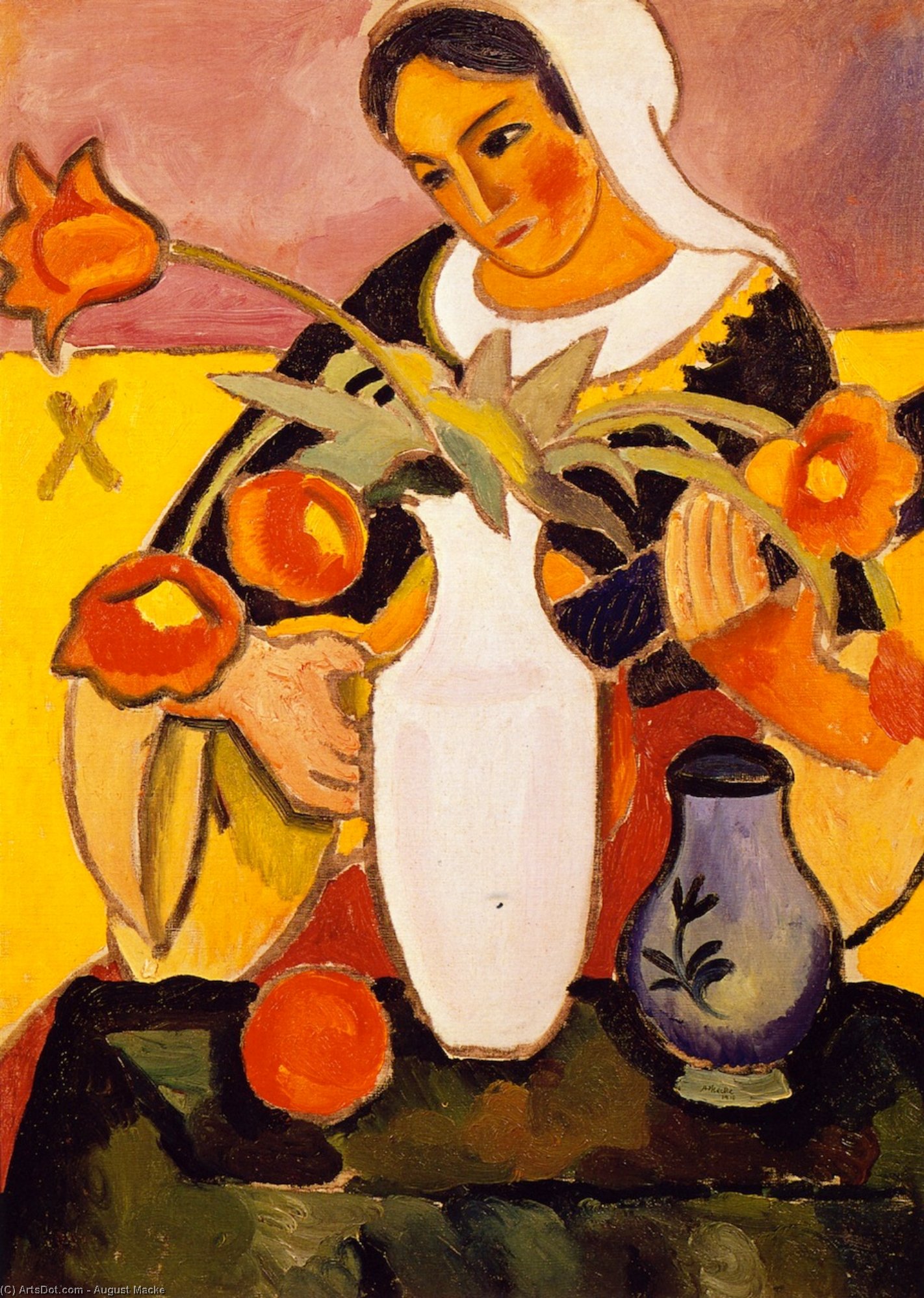
August Macke’s “Portrait of the Artist’s Wife with Hat,” painted in 1909, isn't merely a depiction of a woman; it’s a carefully constructed window into the heart of early German Expressionism and the burgeoning artistic spirit of the time. This captivating work, housed within the Westphalian State Museum of Art and Cultural History, immediately draws the viewer in with its warm palette, intimate setting, and the direct gaze of the…

People by the Lake (1913) by August Macke
5

People by the Lake

1913 · Acrylic On Canvas · Staatliche Kunsthalle, Karlsruhe

People by the Lake – An Expressionist Echo of Summer’s Embrace The painting “People by the Lake,” created in 1913 by August Macke, isn't merely a depiction of a tranquil lakeside scene; it’s a visceral embodiment of Expressionism’s core tenets—a fervent distillation of emotion and experience rendered with audacious color and fractured form. Situated at the Staatliche Kunsthalle Karlsruhe, this oil on canvas masterpiece captures a moment suspended in time,…

Woman Playing the Lute (1910) by August Macke
6

Woman Playing the Lute

1910 · Acrylic On Canvas · Musée d’Art Moderne de la Ville de Paris, Pariis

August Macke’s Woman Playing the Lute: A Portrait of Fragility Amidst Expressionist Boldness The painting “Woman Playing the Lute,” executed by August Macke in 1910, stands as a poignant emblem of German Expressionism's aesthetic sensibilities – a captivating blend of delicate beauty and unsettling psychological depth. More than just a depiction of an instrument and its performer, it’s a meticulously crafted meditation on vulnerability and artistic contemplation within the turbulent…

Reclining female nude by August Macke
7

Reclining female nude

Oil

In this intimate composition, a woman rests upon a bed, her body partially draped in a sheet that softens the contours of her form. She is positioned on her side, her gaze turned away from us toward something unseen beyond the frame. There is a profound sense of stillness here, a moment of private repose captured in a way that feels both fleeting and permanent. The background is a deep,…

Ballet Russes I (1912) by August Macke
8

Ballet Russes I

1912 · Oil On Canvas · Kunsthalle Bremen, Bremen

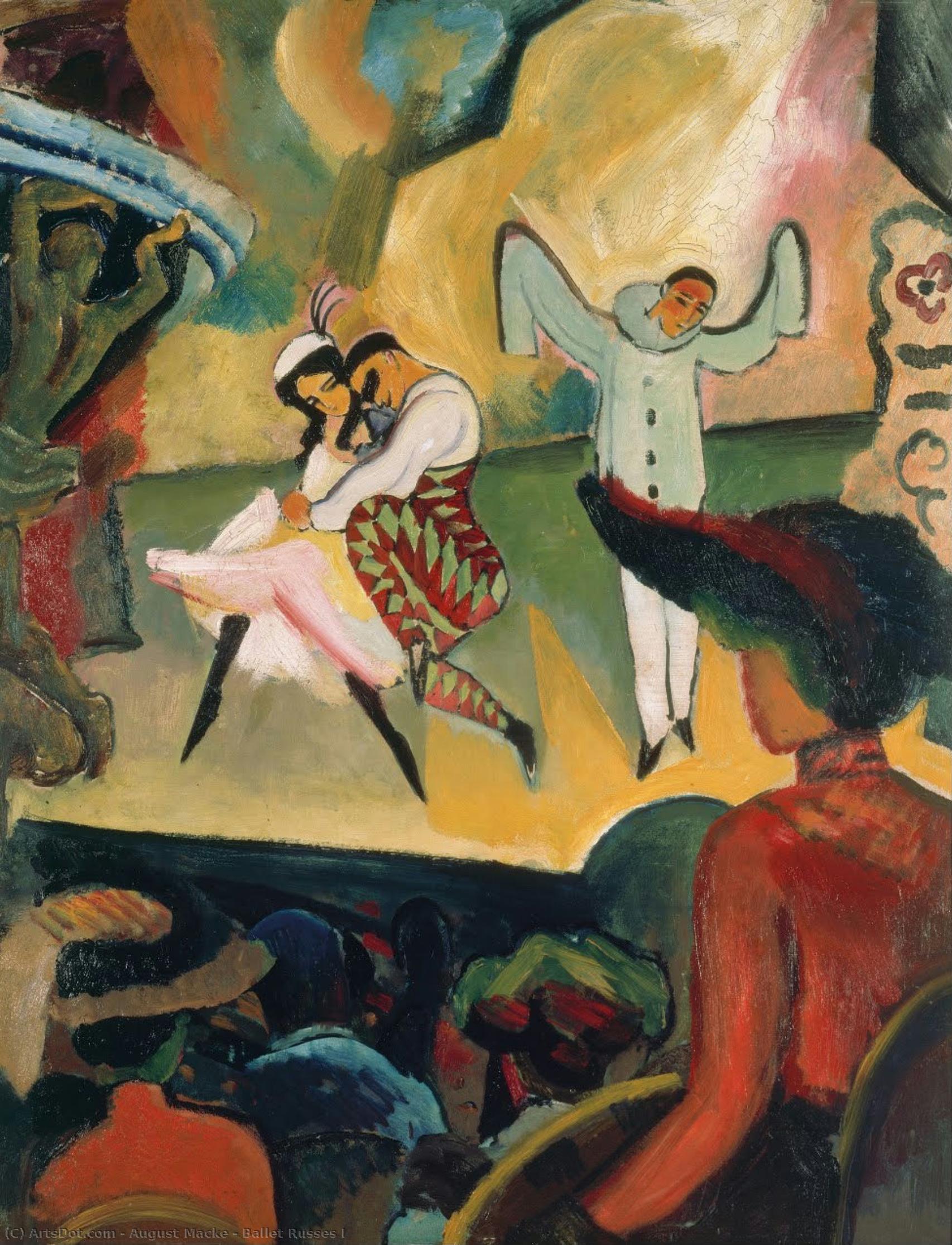
Ballet Russes I is an oil painting on canvas that depicts a dramatic scene from a ballet performance. The composition centers on two principal dancers in a close embrace, illuminated by a warm light source. The figure of Harlequin is shown in the act of abducting the coquettish Columbine. Nearby, the figure of Pierrot is depicted with arms raised in a plaintive gesture of abandonment, a movement echoed by a…

Couple in the woods (1912) by August Macke
9

Couple in the woods

1912 · Acrylic On Canvas

August Macke's "Couple in the Woods," painted in 1912, is more than just a depiction of two figures amidst a woodland setting; it’s a vibrant distillation of the burgeoning Orphism movement and a poignant reflection on the anxieties and aspirations of early 20th-century Germany. Created during a pivotal moment in Macke's artistic development, this work showcases his increasingly bold experimentation with color and form, anticipating the radical shifts that would…

The rest of the August Macke ranking, 11 to 100

Naked Girl with Headscarf (1910) by August Macke
#35

Naked Girl with Headscarf

1910 · Städel Museum

The oil painting titled Naked Girl with Headscarf was created by the German artist August Macke in 1910. This work belongs to the Expressionist movement, utilizing a medium…

Order a reproduction →
Couple on the Forest Track (1913) by August Macke
#36

Couple on the Forest Track

1913 · Lehmbruck Museum

“Couple on the Forest Track,” painted in 1913 by August Macke, is more than just a depiction of two women amidst a woodland scene; it's a poignant encapsulation…

Bring it home →
Leave-taking (1914) by August Macke
#37

Leave-taking

1914

A Bustling Street in Motion Leave-taking unfolds as a lively urban scene where the rhythm of daily life pulses through a crowded thoroughfare. People move in a synchronized…

Order a reproduction →
Landscape near Hammamet (1914) by August Macke
#38

Landscape near Hammamet

1914 · Westfälisches Landesmuseum

This watercolor depicts a serene coastal landscape overlooking the Mediterranean Sea, situated close to Hammamet, Tunisia. The composition features a small boat gliding across calm waters, framed by…

Commission a hand-painted copy →
House in a Landscape by August Macke
#40

House in a Landscape

To gaze upon August Macke’s "House in a Landscape" is to step through a portal into a sun-drenched, almost dreamlike corner of early 20th-century life. The scene unfolds…

Bring it home →
St. Germain near Tunis (1914) by August Macke
#41

St. Germain near Tunis

1914

is a watercolor painting created in 1914. The artwork depicts a cityscape featuring a variety of buildings and structures, including houses with different colors and styles. A woman…

Bring it home →
Hat Shop (1914) by August Macke
#44

Hat Shop

1914 · Museum Folkwang

August Macke's "Hat Shop" (1914) isn’t merely a depiction of a street scene; it’s a carefully constructed distillation of modern experience, rendered with the vibrant energy and emotional…

Commission a hand-painted copy →
Self-Portrait with Hat (1909) by August Macke
#49

Self-Portrait with Hat

1909

August Macke’s Self-Portrait with Hat, painted in 1909, captures more than just a likeness; it arrests a moment of vibrant, almost theatrical engagement. The central figure dominates the…

Order a reproduction →
Tegernsee Landscape (1910) by August Macke
#53

Tegernsee Landscape

1910 · Germanisches Nationalmuseum

August Macke captured the essence of the Bavarian scenery in his 1910 work, Tegernsee Landscape. This oil on canvas presents a specific moment of light and color through…

Bring it home →
Afternoon in the Garden (1913) by August Macke
#54

Afternoon in the Garden

1913

August Macke’s Afternoon in the Garden transports us into a scene steeped in the gentle warmth of early 20th-century leisure. This watercolor captures more than just a gathering;…

Order a reproduction →
Native Sea Fight (1912) by August Macke
#55

Native Sea Fight

1912

August Macke’s Native Sea Fight is not merely a depiction of naval combat; it is a visceral plunge into the heart of human drama played out against the…

Bring it home →
Landscape by the Sea (1914) by August Macke
#56

Landscape by the Sea

1914 · Bavaria riiklikud maalidema kogumikud

The scene unfolds in Landscape by the Sea, an expressive work by August Macke. Created in 1914, this painting captures a coastal moment through a lens of intense…

Commission a hand-painted copy →
Woman in park (1914) by August Macke
#57

Woman in park

1914 · MoMA - Museum of Modern Art

In the fleeting moments before the shadows of the Great War descended upon Europe, August Macke captured a vision of serenity that remains as vibrant today as it…

Commission a hand-painted copy →
Girls under Trees (1914) by August Macke
#62

Girls under Trees

1914 · Staatsgalerie Moderner Kunst

August Macke's “Girls Under Trees” (1914) isn't merely a depiction of children playing in the woods; it’s a vibrant distillation of early 20th-century optimism and a powerful expression…

Order a reproduction →
Parkway (1914) by August Macke
#67

Parkway

1914

To stand before August Macke’s Parkway is to be enveloped by a joyous, almost breathless current of modern existence. This oil on canvas, dating from the pivotal year…

Order a reproduction →
People by the Blue Lake (1913) by August Macke
#69

People by the Blue Lake

1913

The scene unfolds in 1913, a moment frozen in time as August Macke captures a quiet afternoon by the water. In this genre art piece, titled People by…

Bring it home →
Sunny way (1913) by August Macke
#70

Sunny way

1913 · Westfälisches Landesmuseum

In the fleeting moments captured within "Sunny Way," we are transported to a world where the boundaries between nature and humanity dissolve into a vibrant dance of color.…

Bring it home →

August Macke's paintings by period

The subjects August Macke painted most

The four subjects that return most often among these masterpieces, with the finest example of each.

Where to see August Macke's paintings

The 8 museums that hold the most of the paintings on this page.

Museum City Works by August Macke Paintings from this list
Westfälisches Landesmuseum, MünsterWestfälisches Landesmuseum Münster 19 Portrait of the Artist's Wife with Hat, Knight Georg and Dragon, Circus Scene I: Equestrian with Clowns
Lenbachhaus, MünchenLenbachhaus München 17 Portrait Elisabeth Macke, Study for a self-portrait, The Spirit in the House Furniture: Still Life with Cat
Kunstmuseum Bonn, BonniKunstmuseum Bonn Bonni 11 Courtyard of a Villa at St. Germain, Red House in a Park, St. Mary's with Houses and Chimney (Bonn)
Städel Museum, FrankfurtStädel Museum Frankfurt 4 Two Girls, Naked Girl with Headscarf
Thyssen-Bornemisza Museum, MadridThyssen-Bornemisza Museum Madrid 3 Circus, Woman on a Divan
Staatsgalerie Moderner Kunst, MünchenStaatsgalerie Moderner Kunst München 2 Vannetega tüdrukud taustaga linn, Girls under Trees
Bavaria riiklikud maalidema kogumikud, MünchenBavaria riiklikud maalidema kogumikud München 5 Landscape by the Sea
Albertina, ViinAlbertina Viin 4 Sailing boat on the Tegernsee

August Macke through the years: the masterpieces of each year

12 years of August Macke's painting, 1903 to 1914, told year by year through its best-known works.

  1. 1903
  2. 1906
    Self Portrait (1906) by August Macke
    No. 20 of 100

    Self Portrait

    Age 19 · Westfälisches Landesmuseum
  3. 1906
    Self-portrait (1906) by August Macke
    No. 59 of 100

    Self-portrait

    Age 19

    In the quiet, focused gaze of Self-portrait (1906), we encounter a rare moment of stillness from an artist whose life would soon be swept up in the turbulent…

  4. 1907
  5. 1907
  6. 1907
  7. 1908
  8. 1908
  9. 1909
    Portrait of the Artist's Wife with Hat (1909) by August Macke
    #4 of 100

    Portrait of the Artist's Wife with Hat

    Age 22 · Westfälisches Landesmuseum

    August Macke’s “Portrait of the Artist’s Wife with Hat,” painted in 1909, isn't merely a depiction of a woman; it’s a carefully constructed window into the heart of…

  10. 1909
  11. 1909
    Self-Portrait with Hat (1909) by August Macke
    #49 of 100

    Self-Portrait with Hat

    Age 22

    August Macke’s Self-Portrait with Hat, painted in 1909, captures more than just a likeness; it arrests a moment of vibrant, almost theatrical engagement. The central figure dominates the…

  12. 1910
    Woman Playing the Lute (1910) by August Macke
    No. 6 of 100

    Woman Playing the Lute

    Age 23 · Musée d’Art Moderne de la Ville de Paris

    August Macke’s Woman Playing the Lute: A Portrait of Fragility Amidst Expressionist Boldness The painting “Woman Playing the Lute,” executed by August Macke in 1910, stands as a…

  13. 1910
    Portrait Elisabeth Macke (1910) by August Macke
    No. 13 of 100

    Portrait Elisabeth Macke

    Age 23 · Lenbachhaus

    The gaze of Elisabeth Macke meets the viewer in this intimate 1910 portrait, a work titled Portrait Elisabeth Macke. Painted by the artist August Macke, the piece captures…

  14. 1910
  15. 1911
  16. 1911
  17. 1912
    Ballet Russes I (1912) by August Macke
    #8 of 100

    Ballet Russes I

    Age 25 · Kunsthalle Bremen

    Ballet Russes I is an oil painting on canvas that depicts a dramatic scene from a ballet performance. The composition centers on two principal dancers in a close…

  18. 1912
    Couple in the woods (1912) by August Macke
    #9 of 100

    Couple in the woods

    Age 25

    August Macke's "Couple in the Woods," painted in 1912, is more than just a depiction of two figures amidst a woodland setting; it’s a vibrant distillation of the…

  19. 1912
  20. 1913
    Dame kes rohetaske kannab (1913) by August Macke
    No. 1 of 100

    Dame kes rohetaske kannab

    Age 26 · Museum Ludwig

    August Macke – Lady in Green Jacket (1913) August Macke’s “Lady in Green Jacket,” painted in 1913, stands as a cornerstone of German Expressionism and embodies the movement's…

  21. 1913
    Vannetega tüdrukud taustaga linn (1913) by August Macke
    Rank 2 / 100

    Vannetega tüdrukud taustaga linn

    Age 26 · Staatsgalerie Moderner Kunst

    August Macke teos "Vannetega tüdrukud taustaga linn" on lummav meistriteos, mis kehastab 20. sajandi alguse ekspressionismi vaimu. See 1913. aastal valminud maalid on tõend Macke unikaalsest võimest ühendada…

  22. 1913
    Pood müüakse mütsidega (1913) by August Macke
    #3 of 100

    Pood müüakse mütsidega

    Age 26

    August Macke’s ‘The Hat Shop’: A Snapshot of Urban Life in Vibrant Color August Macke’s “The Hat Shop,” painted in 1913, isn't merely a depiction of a woman…

  23. 1914
  24. 1914
  25. 1914

August Macke's paintings: frequently asked questions

What is the most famous August Macke painting?Show the answer

Dame kes rohetaske kannab (1913), Museum Ludwig, Köln. Next come Vannetega tüdrukud taustaga linn (1913) and Pood müüakse mütsidega (1913).

At what age did August Macke paint Dame kes rohetaske kannab?Show the answer

26 years old: Dame kes rohetaske kannab dates from 1913 and August Macke was born in 1887.

Which are the 10 most famous August Macke paintings?Show the answer

Dame kes rohetaske kannab, Vannetega tüdrukud taustaga linn, Pood müüakse mütsidega, Portrait of the Artist's Wife with Hat, People by the Lake, Woman Playing the Lute, Reclining female nude, Ballet Russes I, Couple in the woods and Circus. The ranking above gives the year and the museum of each.

How many paintings by August Macke are there?Show the answer

Our catalogue lists 283 works by August Macke, dated from 1903 to 1914.

Where can I see the most famous August Macke paintings?Show the answer

Most of them are in Westfälisches Landesmuseum (Münster), Lenbachhaus (München) and Kunstmuseum Bonn (Bonni). The table above lists the museums one by one.

In which period did August Macke paint the best-known works?Show the answer

In 1914: 25 of the 100 works on this page date from then, among them Woman with Parrot.

What is the earliest famous August Macke painting, and the latest?Show the answer

The earliest on this page is Portrait of Dr. Ludwig Deubner, writing (1903), the latest Woman with Parrot (1914).

What subjects did August Macke paint?Show the answer

Landscape (16), Trees (9) and People (8), among the 100 works on this page.

What did August Macke paint on, and with what?Show the answer

Oil On Canvas: 26 of the 100 works on this page.

Which movement does August Macke's art belong to?Show the answer

German expressionism, as the paintings on this page show.

What August Macke paintings does the Westfälisches Landesmuseum hold?Show the answer

Portrait of the Artist's Wife with Hat, Knight Georg and Dragon and Circus Scene I: Equestrian with Clowns are among the 12 works on this page held by the Westfälisches Landesmuseum, Münster.

Where can I buy a August Macke reproduction?Show the answer

Yes. Every painting on this page can be ordered as a museum-quality, hand-painted oil reproduction or a fine art print, in the size you choose, from the painting's own page.

August Macke: biography

Varajane elu, pere ja haridus

August Macke lugu algab Saksamaas asuvas Meschede linnas, kus ta sündis 3. jaanupärast 1887. Ta oli ehitusmees August Friedrich Hermann Macke ja Maria Florentine ainuke poeg. Tema lapsepõlve kujendas tema isa ettevõtte pidevalt muutuv õnnestus, mis viis pere esmalt Kölni ja hiljem Bonnisse. Juurde jõudis juba vara visuaalse väljenduse kutse; juba lapsena veetis ta aega joonistades ja kavandades lavakujundusi koolimängudeks, leides viisi oma ümbrivust paberile ümberkujundamiseks veel kaua enne, kui ta astus akadeemiasse.

Tema kunstiline haridus sai tõeliselt alguse Düsseldorf Kunstiakadeemias, kus ta õppis aastatel 1904–1906. Adolf Maenncheni juhendamisel õppis ta traditsioonilise tehnikas disipliini, kuid tema vaim tundis vajadust millegi palju laebempa ja vabadema jälgimiseks. See rahuveerlus viis ta otsima täiendavat teadmist ööõppekursustel Fritz Helmut Ehmke juures. Kunstilise kadalõu ja täpsemalt käsitluste mõistmise himu tõi ta Berlini, kus ta õppis saksa maalari Lovis Corinth juures. Need rangid harjutusaastad andisid tehnilise vundamendi, mille peale ta hiljem oma unikaalse visuaalse keele ehitas, liikudes eemale algse õppeperioodi rangetest piirangutest poole isiklikumale ja vabamale vaatamisviisile.

Prantsuse modernismuse mõju

Pariisi tänavad avaldasid võimsat mõju noore kunstniku peale, tõmmates teda eemale tema klassikalisest harjutustööstruktuuridest. 1907. aastal toimunud esimese linna külastuse ajal jäi ta sügavalt liigutavaks impressionistlikud maalijad. Ta hakkas jälgi oma lähenemistest, püüdes tabada valguse mängu läbi peenelt noktastatud värvigradientide. See ei olnud vaid ajutine huvi; ta naasid Pariisi sageli aastate 1907 ja 1912 vahel, lidades Prantsuse pe capital atmosfääril oma lerratuse ja veenmist uuesti kujundada.

Murdepunkt saabus 1912. aastal, mil ta kohtus Robert Delaunayga. See kohtumine osutus muutmuks, mis muutus fundamentaalselt tema tööd. Ta sai sügava mõjupinda Delaunaya kromaatilisest kubismist – stiilist, mis keskendus värvi ja valguse rütmile. See lähenemine, mis on sageli seotud orfismiyla, julgustas teda liiguma poole dünaamilisema ja mitterepresentatiivsema vaatamisviisi. Ta hakkas eksperimenteerima purunenud värvipindadega, otsides viisi, kuidas tõlkida kaasaegse elu tunnet puhta valguse ja vormi keelde.

Liikumine Der Blaue Reiterid seas

August Macke elu suund pöörduks märkimisväärselt, kui ta jõudis 1909. aastal Müncheni. Just sealund kohtus ta Franz Marciga – kohtumine, mis sünnitas sügava ja peremängu vältmatu sõ 오늘의 sõvra. See side tõid ta sisse mõttemärkide ja loovjõu ringkonda, kes püüdisid murda läbi looduse pelgama imitatsioonist. Kuni 1911. aastani oli August Macke jõudnud mõjuva ekspressionistliku rühmituse, tuntud kui Der Blaue Reiter, juhtkujaks liikmendiks. Ta ei olnud pelgalt liikumuse osaline; ta aitas kuju anda sellele själme, panustades rühmituse näitustesse ja aidates levitada selle radikaalseid ideid.

Tema positsioon selles avant-gardi ringkonnas kinnistus tänu tihedatele sidemeleid ajastu teiste valgusmärkidega. Ta jagas sügava vaimseid seoseid Marciga ja Paul Kleega, leidides nende seltskonna juures ühise püüduse vaimse ja emotsionaalse väljenduse poole. Isegi kui ta liikus läbi modernismi pidevalt muutuvate maastikude, aitasid tema kokkupuuted Robert Delaunaygi moodi figureerivate kunstnikega täiendada tema unikaalset vaatenurka. Kuigi rühmituse teised liikmed uurisid sageli tumedamaid või ärevamaid teemasid, otsis August Macke harmonia ja ilu. Ta vaatas maailma ja nägi valguse ning rõõmu täis kohta, isegi kui Euroopa poliitilised varjud hakkasid pikunema.

Kunstiline tehnika ja stiil

August Macke püüles tabada pigem stseenide sisemist vaimu kui pelgalt asjade välisvaadeldavat pinda. Tema pintstrokesid liikusid eemale reaalsuse objektiivsest reproduktsioonist, eelistades selle asemel väljendada sügavale juurdunud emotsioone ja meelelaineid. Selle saavutamiseks moonutas ta sageli nii värvi kui ka vormi, painutades füüsilist maailma oma emotsionaalsete vajaduste alla. Tema kompositsioonid tuganusid sageli julgelistel värvidele ja geeromeetrilistele kujunditele, luues struktuuri oma teemade ekspressiivse voolu keskel. Ta leidis viisi, kuidas segada Itaalia futurismi dünaamilisust oma kompositsioonidesse, imbuides oma stseenidega liikumise ja kaasaegse energia tunde.

Valgusest ja värvist tulnud see püüdlus jõudis oma peakõrgendusele tema reiside ajal Põhja-Afrikasse. Tema 1914. aasta tunisialased akvarellid paljastavad erakordse värvikasvatusliku meisterlikkuse, püüdes tabada piirkonna intensiivset ja muutuvat valgust.

Nendes teosid tundub pigment pulsas omaenda eluga, liinudes lihtsast esitlusest suunas paremini luminentsse ja vaimsesse olemusse. Ta ei pildistanud vaid maastikku; ta pildistas tunnet, mida see maastik oma sees kandis.

Peateosed ja meistriteosed

Tema visioon laienes ja kümenes, hakkas August Macke pildistama modernsete elurhythmide vaikseid rütme intensiivse värvi prisma läthrough. 1913. aastal loovus Woman in a Green Jacket, teos, mis kiirgab teatud elujõudu oma julge paleti ja enesekindla pintlajõuga. Tema huvi valuse ja linnaruumis käigu vahel viis tema Large Bright Shop Window loomise juurde, kus ta uuris, kuidas valgus filtreerub läbi klaasi. Ta pööris tihti tähelepanu olemasolu lihtsustele, nagu näiteks teoses Bathing girls with town in the backgraund, kus ta püüdis lihtsustatud vormide kaudu portretteerida idüllikat rahu ja lühiajalist vaikuslikkust.

Tema elu viimane periood, mida shapingatsioon reisimine Põhja-Afrikasse, tõi temi lerridele uue sulavuse. Tunisia reisid andsid ellu seeria teoseid, mida paljud peavad tema suuremaid saavutusi, eriti märkimisväärselt teost Türkisches Café. See periood sünnitas ka teose Market in Tunis, mis müüs hiljem 2000. aasta Auktsioonil 4,1 miljonit dollarit (2,86 miljonit naela). Isegi siis, kui sõja varjud hakkasid levima, jätkas ta ilu leidmist intiimsetes olukordades, nagu näiteks teoses The Couple at a Garden Table, mis müüdi 1997. aastal Christie'si asteekonnal 2 miljoni naunaga.

  • 1913: Woman in a Green Jacket
  • 1914: Market in Tunis
  • 1914: The Couple at a Garden Table

Häda ja tragöödia: Viimased aastad

Aasta 1914 tõi endasasse valguses, mida August Macke püüdis tabada, ootamatut ja drastikat muutust. Keval, mil ta rändas koos Paul Klee ja Louis Moillietiga Tunisiid, avas talle uue maailma, kus päikeseloomus oli täiesti teistmoodi – see oli intensiivsem, valgem ja söörvav. See ekskursioon jäi tema kunstilisele pärandile määravaks, kuna see luministlik lähenemine, mis keskendus valguse ja värvi dünaamilisele suhtele, defineeris tema viimaseid töid. Kuid ta naasid Euroopasse, mis oli kiiresti kukkumas u huskasse. Kui esimene Suur sõda oli möödunud, leidis kunstnik end olevat kohustuse tunne tõttu sõja keskmepunktis, vabatahtlikult rünnakule astudes.

Lõpp tuli hämmastavava kiirusega. Juurde kaheksandmes sõja kuus surdi August Macke rintjel Prantsusmaal. Ta jäi alla Perthes-lès-Hurlus lähedal 26. septembril 1914, olles alles vaid 27-aastane. Tema surm puudutas kunstikunsti just siis, kui tema visuaalne keeles oli algamas uinev selgus ja valguse täiskujuline avastamine. Tema äigsud ja varastatud elu jäi tühimaks Saksa avangardide ringkondades, lõtkades keset uurinud ja otsivat vaim, mis oli olnud tema kogu kunstilise olemuse süda.

Pärand ja mõju

Kuigi tema päikesereis oli lühike, on August Macke jäänus 20. sajandil toimunud suuremate kunstiliste liikumiste ajaloos sügav ja vähimatu. Ta kindlustas oma koha ajalooos kui ekspressionismi märkimisväärne tegelane, pakkudes vaatenurka, mis pidas sageli otsima harmooniat seal, kus teised leidsid vaid dissonantsi. Tema võime sünteesida oma kaaspäevaste radikaalseid ideid isikulikuks visuaalseks keeleks tagasasid, et tema kunstiline visioon ei kaduks Great War'i varjudesse.

Tema panuse tähtsust tunnustati ametlikult palju pärast tema surma, mis viis 1959. aastal August Macke auhja loomiseni. See auhind austab tänapäevani tema loovliku uurimise vaimu. Isegi täna on tema kohalolu tunda måhel viisil måõdus, kuidas kaasaegsed kunstnikud jätkavad sügavate seoste uurimist värvi ja inimliku emotsiooni vahel. Ta õpetas, et valgus ja värvitoon võivad rääkida inimese sisemilisest seisundist – õppetund, mis kõlab läbi aastakümnete.

Kus tema teoseid tänapäeval näha saab

Tema vaimu jälgi saab otsida Teutonima rüütelites, rändades Bonni linna, Saksamaale. Seal seisab August Macke’i maja kui püha varjupaik, säilitades meenutust mehest just neis seinides, kus ta kunagi elas ja töötas. Just selles majas leidis ta oma stuudio – ruumi, mis lubas tema loomingulisele energiaga õitsemist enne sõja varjuli ulatumist. Lähedal asub ka Bonn Kunstmuseum, mis hoiab oma kogumikus tema maalid, tagades, et tema visioon jääks kättesaadavaks neile, kes otsivad seda valgust, mida ta nii hoolikalt tabas.

Tema kohalolu on tunda paljudes piirideks, kandes end endas suurete institutsioonide kogumistes. Kölnis hoiab oma kogumust Museum Ludwig, samal ajal kui Essenis on Museum Folkwang reserveeritud tema linate vaatamiseks. Tema jälgi saab leida ka Müncheni Staatsgalerie Moderner Kunst galerii seinadest, kus tema värvid räägivad endavoolu raamides. I even Zürichis säilitab osa tema pärandist Kunsthaus Zürich, hoides oma kogumuses maalid, mis peegeldavad tema unikaalset maailmapilti.

  • Bathing girls with town in the backgraund (umbes 1913)
  • Woman in a Green Jacket (1913)
  • Landscape with Cows and Camel (1914)
  • Türkisches Café (1914)

All 283 works by August Macke →