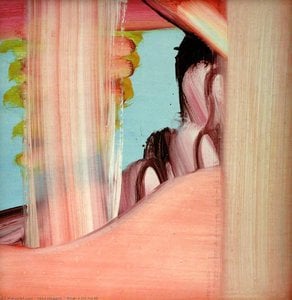
The Tactile Resonance of Mike Hoggett
In the realm of contemporary abstract expressionism, few artists command the canvas with as much visceral energy as Mike Hoggett. Born in 1964, Hoggett’s artistic identity is deeply rooted in the rugged, atmospheric landscapes of the Yorkshire Dales. This early immersion in the natural world provided more than just a scenic backdrop; it instilled in him a profound understanding of how light interacts with texture and how vast, open vistas can evoke deep-seated emotional responses. His journey from observing the shifting mists of Northern England to mastering the complexities of gestural abstraction represents a seamless evolution of spirit, where the external landscape is continually transformed into an internal, psychological terrain.
Hoggett’s technical prowess is most notably defined by his masterful use of impasto. Rather than merely applying pigment to a surface, he builds a sculptural topography upon his canvases. By layering thick, heavy applications of paint, he creates palpable surfaces that catch the light and cast their own subtle shadows, lending a three-dimensional vitality to his work. This method allows him to capture the raw movement of a brushstroke, turning each mark into a permanent record of an emotional moment. His palette often oscillates between the serene and the turbulent, utilizing bold, primary contrasts to drive the viewer's eye through compositions that feel both spontaneous and meticulously balanced.
Influences and Artistic Evolution
The lineage of Hoggett’s vision can be traced back to the titans of mid-century abstraction. He draws significant inspiration from the expressive, often aggressive brushwork of Willem de Kooning and the stark, structural intensity of Franz Kline. From these masters, he inherited a fascination with the power of the gesture—the idea that a single, decisive movement of paint can communicate more than a thousand carefully rendered details. As his career progressed, Hoggett expanded his repertoire beyond traditional oils to include acrylics and mixed media, allowing him to experiment with different drying times and viscosities to further enhance the textural complexity of his pieces.
Throughout his development, Hoggett has moved toward themes that grapple with the human condition, specifically focusing on:
- Solitude and Contemplation: Using fragmented landscapes to mirror the quiet, introspective moments of life.
- Emotional Intensity: Employing swirling patterns and energetic color shifts to represent internal psychological states.
- The Complexity of Experience: Utilizing layered textures to symbolize the multifaceted nature of memory and identity.
Legacy and Recognition
Hoggett’s contribution to contemporary art lies in his ability to bridge the gap between the physical sensation of paint and the abstract concept of emotion. His celebrated works, such as “What’s On No.26” (1997), serve as quintessential examples of his ability to use a vibrant interplay of blues and reds to create a sense of rhythmic motion. These pieces do not merely ask to be seen; they demand to be felt, inviting the viewer into an intimate dialogue with the artist's hand.
Having garnered critical acclaim and exhibited his work on international stages, Mike Hoggett has secured his place as a significant voice in modern abstraction. His paintings remain a testament to the enduring power of texture and the belief that through the raw application of color and gesture, one can touch upon the universal truths of human existence.
Küsimused ja vastused
Milliseid värve kasutas Mike Hoggett kõige sagedamini?
Mike Hoggett värvikasutust teostes, mis on loetletud see veebileht lehel, saab uurida kunstniku Palettide genoom lehel.
Kust saan näha Mike Hoggett teoseid kronoloogilises järjekorras?
Kunstniku Teoseline ajaline joon lehel on esitatud Mike Hoggett teosed ajastatud järjekorras, aasta aastale.
Kust leida Mike Hoggett teoseid kunstisuunali grupitult?
Lehel Kõik suunad on Mike Hoggett teosed gruppitud kunstisuunadega.