


x
Iga küsimuse kohta on ainult üks õige vastus.
Randall Vernon Davey, born in East Orange, New Jersey in 1887, emerged from a modest upbringing to become a significant figure in early 20th-century American art. His journey was one of artistic discovery, fueled by a restless spirit and a deep connection to the landscapes of the United States – particularly the Southwest. Davey’s career spanned several decades, marked by a dedication to capturing the essence of the natural world through meticulous observation and a distinctive painterly style. Initially hesitant about pursuing art professionally, his encounter with Robert Henri at Cornell University proved pivotal, igniting a passion that would ultimately define his life's work.
Davey’s artistic education began formally under Henri, who instilled in him an appreciation for direct observation and the importance of portraying the world as it truly is. Following Henri’s departure to establish his own school, Davey continued his studies with Charles W. Hawthorne at the Taos Society of Artists, absorbing influences from both instructors. This period laid the groundwork for his later development, shaping his understanding of color, composition, and the expressive potential of landscape painting. His early works reflected a burgeoning interest in capturing the dynamic qualities of light and shadow, as well as the rugged beauty of the American West.
The 1910s marked a period of significant artistic growth for Davey. He gained recognition within the New York art scene, exhibiting alongside prominent figures like George Bellows and Stuart Davis. The Armory Show in 1913 provided him with invaluable exposure, solidifying his place among the emerging modernists. Following this pivotal event, Davey embarked on a series of expeditions west, traveling to Santa Fe, Arizona, and other Southwestern locales – experiences that profoundly influenced his artistic vision. These journeys instilled in him a deep respect for the unique geological formations, vibrant colors, and dramatic light of the region.
Davey’s artistic output encompassed a diverse range of subjects, including still lifes, horse-racing scenes (a reflection of his personal interests), nudes, and expansive landscapes. He was particularly drawn to the Southwest, where he created numerous paintings depicting mesas, canyons, and desert vistas. His technique involved layering thin washes of color to build up atmospheric effects and capture the subtle nuances of light. His brushwork was characterized by a loose, expressive quality that conveyed both the grandeur and fragility of the natural world. He often depicted horses in motion, capturing their power and grace with remarkable skill.
Despite facing periods of artistic stagnation following World War I, Davey persevered, establishing himself as a respected teacher at various institutions across the United States – including the Broadmoor Art Academy, Chicago Institute of Art, Kansas City Art Institute, and the University of New Mexico. His dedication to art education extended beyond the classroom; he was an avid polo player, a passion reflected in many of his paintings. Tragically, Davey’s life was cut short in 1964 when he died in a car accident while traveling to California. Despite this untimely demise, his legacy as a pioneering landscape painter and influential teacher endures, reminding us of the enduring power of art to capture the beauty and spirit of the American West.
Randall Vernon Davey’s work represents an important chapter in the development of American landscape painting. His commitment to direct observation, coupled with his distinctive style, helped to establish a new visual language for depicting the American West. He played a role in fostering appreciation for the region's natural beauty and contributed significantly to the burgeoning art scene of the early 20th century.
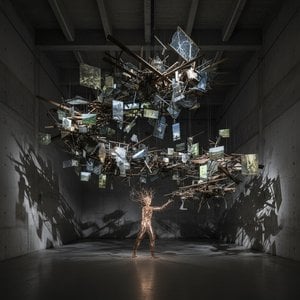
Explore Richard Wilson's groundbreaking landscape paintings & his enduring influence on contemporary installation art. Discover investment opportunities, provenance insights & the materiality of memory in this expert analysis.

Explore the dynamic world of contemporary art movements with WahooArt.com's expert guide. Discover key artists, influential styles & build a visionary collection. Learn about investment potential and appraisal.
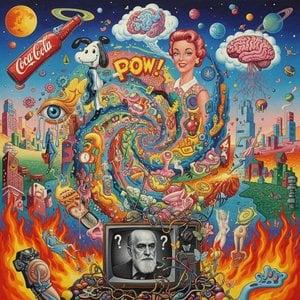
Explore the captivating world of Pop Surrealism with WahooArt. Discover key artists like George Condo & Robert Williams, investment potential, and the movement's cultural impact. Expert insights for collectors.


Püsige kursis viimaste kunstiuudistega, eksklusiivsete pakkumistega ja sisustamisideetega.
Kirjeldage meile oma projekti ja meie kunstieksperdid pakuvad teile 3 isikupärast kunstiettepanekut.
Laske meil koostada just teile mõeldud 3 valikut – tasuta!


