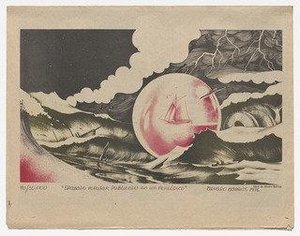
The Graphic Soul of a Visionary: The Art of Álvaro Barrios
In the vibrant tapestry of Colombian art history, few threads are as intricately woven and intellectually stimulating as those spun by Álvaro Barrios. Born on October 27, 1945, in the historic coastal city of Cartagena, Barrios carries within his lineage a profound connection to the cultural richness of his homeland. Though his roots trace back to Cartagena, his spirit was shaped by the streets of Barranquilla, where he lived from infancy and found his first artistic inspirations. His journey is not merely one of technical mastery but a lifelong pursuit of a unique visual language—a language that dares to bridge the gap between the playful, accessible world of comic strips and the rigorous, often esoteric realms of conceptual art.
The foundations of Barrios’ aesthetic were laid in his childhood, where the simple joy of drawing and painting at the Barranqurolla School of Fine Arts began to merge with a fascination for sequential storytelling. This early obsession with the narrative power of comics would become the cornerstone of his mature style. As he matured, his academic pursuits took him far beyond the borders of Colombia, leading him to study Art History in the storied cities of Perugia and Venice. These European encounters provided him with a deep reservoir of art historical knowledge, which he would later revisit through a lens of intelligent irony and subversive wit. This synthesis of local Colombian identity and global art historical consciousness allows his work to resonate on both a personal and universal scale.
A Convergence of Comics and Concept
To encounter the work of Álvaro Barrios is to enter a space where the boundaries between high art and popular culture dissolve. He emerged as a pioneer of conceptual art in Colombia, most notably with his 1968 work “Environmental Spaces,” which challenged the traditional spectatorship of the era. Yet, unlike many of his contemporaries who sought purely abstract or austere expressions, Barrios embraced the graphic vitality of characters like Dick Tracy. He utilized the bold lines and dramatic pacing of the comic strip to explore complex philosophical themes, creating a dialogue between the nostalgic charm of mid-century illustration and the avant-garde provocations of the late twentieth century.
His technical repertoire is as diverse as his conceptual interests. Barrios does not confine himself to a single medium; instead, he moves fluidly between:
- Drawing and Printmaking: Where the precision of line meets the textured depth of lithography and woodcut styles.
- Collage and Photography: Tools used to layer historical references with contemporary reality.
- Installation and Assemblage: Creating immersive environments that, much like his early "boxes," evoke the sacredness of nativity cribs while deconstructing them through a modern lens.
This versatility allows him to tackle themes ranging from political critique and literature to identity and surrealist symbolism. His work often possesses a deceptive simplicity; a piece may appear as a straightforward graphic illustration, yet upon closer inspection, it reveals layers of Duchampian irony or profound reflections on the nature of representation itself.
Legacy and Historical Significance
The historical significance of Álvaro Barrios lies in his ability to democratize the conceptual experience. By utilizing the visual vocabulary of the masses—the cartoon, the print, the popular image—he invites the viewer into a sophisticated intellectual game. His exhibitions, such as the landmark 1977 solo show at the Museo de Arte Moderno in Bogotá, demonstrated his ability to command both critical respect and public engagement. Through works like his "Popular Prints," he has managed to capture the essence of folk art while simultaneously critiquing the mechanisms of fame and art history.
Today, Barrios remains a singular figure whose influence continues to ripple through the Latin American art scene. He stands as a testament to the idea that art can be profoundly cerebral without losing its capacity for play, and that the most profound truths are often found in the intersection of the unexpected. His legacy is one of continuous exploration, reminding us that the artist's role is to find the extraordinary within the ordinary, and to find the eternal within a single, well-drawn line.
Küsimused ja vastused
Kas saan Álvaro Barrios teoseid meeleheade järgi sirvida?
Kunstniku Tunnetunoodete tuba lehel on Álvaro Barrios teosed koondatud vastavalt nende atmosfäärile.
Kuidas saan vaadata kõiki Álvaro Barrios teoseid?
Kõiki Álvaro Barrios teoseid see veebileht lehel saab vaadata artisti Kõik teosed lehelt.
Kas kunstniku Álvaro Barrios teoste 3D-virtuaaltuuri on saadaval?
Álvaro Barrios teoseid saab vaadata 3D-galeriis tema 3D-galeria lehel.