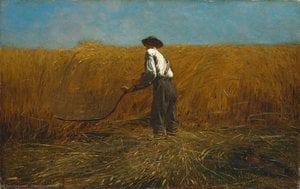
Winslow Homer: Ameerika Realismi Võlu ja Merejõud
Winslow Homer, Bostonis 1836. aastal sündinud kunstnik, ei saanud oma kunstiakadeemilist haridust traditsiooniliselt Euroopas, vaid kujunes pigem Ameerika kogemusest – praktilisest vaatlusest ja otsekohesisest lähenemisest. Tema tee algas mitte suurejooneliste ajalooliste maalidega, vaid illustraatorina Harper's Weekly ajakojas juba kaksteaastaselt. See varajane õppetöö oli määravaks, teravdades eristuvat võimekust tabada vaatepilte selgus ja detailis – oskused, mis said tema küpse kunsti tuntuks tunnuseks. Ta ei õppinud perspektiivi Pariisis; ta õppis nägema Ameerikat, selle inimesi ja selle arenemist. Boston'i rahvarohked tänavad, maalilised New Englandi maaelu vaikne väärikus – need olid tema esimesed teemad, mis on esitatud täpsusega, mis sündis vajadusest printsuhkru ajakirjandusliku nõudmiste järgimiseks. See alus võimaldas tal liikuda maalimaailma, alguses vesivärvides, enne kui ta täielikult omaks võttis õlimaalide väljendusrikka potentsiaali.
Sõjast Merejõuni: Kunstniku Teekond
Homeri varased maalid kujutasid sageli idüllilisi vaatepilte – lapsi mängimas, talunikke oma põlde harides, vaikseid hetki koduelus. Need tööd, kuigi võluvad, viitasid sügavamale kunstilise tundlikkuse poole, mis ootaski ennast valla laskmist. Katalüüsiks sellele muutumisele oli kahtlemata Ameerika sisepõlgus. Harper's Weekly ajakirja sõjaväekorrespondendina oli Homeril võimalust silmitseda konfliktide brutaalse reaalsusega. Ta ei keskendunud kangelaslikele lahingutele ega strateegiatele; pigem dokumenteeris ta sõdurite ja tsiviilisikude igapäevaelu, leina ja vastupanuvõime vaikseid hetki kaos keskel. See kogemus muutis sügavalt tema kunstilist visiooni. Maalilised vaated jäid varjuks keerulisemate teemade ees: traagikat kogenud veteranid, vabadusel navigeerivad endised orjad ja loodusmaastike karmi ilu, mida puudutab kannatus. Ta hakkas uurima võitlust, eraldust ja inimkonna hapnikku suhteid loodusega – teemasid, mis valitsesid tema jõulisemaid töid. Tema stiil arenes ka, muutudes julgemaks ja otsekohesemaks, kajastades seda raudseda emotsionaalset mõju, mida ta oli näinud.
Valgus, Tekstuuri ja Ameerika Maastik: Meisterlikkus
Winslow Homeri kunstniku tehnika on koheselt äratuntav oma tugevuse ja tekstuuriga. Ta ei olnud huvitatud ajutistest muljetest; ta soovis luua lõuendi peale käegakatsutava reaalsustunde. Tema õlimaalidel iseloomulikud on otsekaaseline maalimisviis – kihtide värvi rakendamine enesekindlalt, mis loob sügavuse ja valgusküllasus. Tal oli erandusuus võime tabada valgust, olgu see päikese särav särgus ookeanil või pehme kuma maaelu kohal. See oskus laienes ka vesivärvidele, kus ta saavutas märkimisväärseid atmosfäärilisi efekte elavate värvide ja õrna pesemise abil.
Breezing Up (A Fair Wind), maalitud aastal 1876, on selle oskuse tippnäide – quintessentsiaalne kujutus Ameerika mereelust, mis pulbitab energiat ja liikumist.
The Gulf Stream, loodud aastakümneid hiljem, on võib-olla tema ikoonilisem teos, võimas ja sümboliline kujutamine ühest mehest, kes võitleb looduse jõudude vastu – metafoor inimvõitluseks ülekaaluliste raskuste vastu. Ta ei maalind lihtsalt seda, mida nägi; ta edastas tunde, emotsionaalse tõe inimese olukorra kohta.
Pärand Ameerika Realismis
Kuigi Homer imestas Euroopa kunstnike, nagu Barbizoni koolkonna esindajate töid – tuntud oma realistlike kujutuste poolest maaliliste maaelu vaadete kohta –, ja tunnistas Courbet' ja Millet' mõju, ta lõi lõpuks omaette eraldi Ameerika tee. Ta keelas ära valitseva akadeemilise konventsiooni ja keskendus sellele, et tabada oma riigi ainulaadset vaimu. Tema pärand peitub tema võimes kujutada Ameerikat ausalt ja autentseks, seda ei romantiseerides ega idealiseerides. Ta ei tahtnud jäljendada Euroopa stiile; ta soovis luua kunsti, mis on ainulaadselt Ameerika, kajastades selle maastikke, inimesi ja väljakutseid.
Innocence, poeetiline kujutus lapsest looduse taustal, ja
Man of Science, näidates tema oskust tabada inimpsühholoogiat, on tõendid sellele pühendumusele. Tema mõju võib näha hilisemate Ameerika kunstnike töödes, kes püüdsid kujutada oma maad sarnase otsekohesusega ja emotsionaalse sügavusega.
Püsiv Mõjutus: Homeri Histooline Tähtsus
Winslow Homeri kunst pakub sügava aknana 19. sajandi Ameerikasse, andes väärtuslikku sissevaadet tema aja sotsiaalsele, poliitilisele ja kultuurile. Tema maalitud teosed ei ole mitte ainult kaunid kujutised; need on võimsad avaldused inimeste vastupanuvõime kohta, looduse ilu ja jõu kohta ning Ameerika kogemuse keerukuse kohta. Ta suri aastal 1910, jättes maha rikkaliku teose, mis jätkab publiku seas kõlanud helisid tänapäevani. Tema võime tabada rahvus muutuvat vaimu – kodusõja järelajast kuni uue sajandi alguseni – tagab tema koha Ameerika ühe olulisema ja püsivaima kunstnikuna. Ta ei maalind lihtsalt pilte; ta dokumenteeris hetke ajas, säilitades selle tulevatele põlvedele.
- Tema töö jätkab kaasaegsete kunstnike inspireerimist.
- Homer jääb oluliseks tegelaseks Ameerika realismi arengus.



 Eelvaade
 Osta käsitsi maalitud maal
 Saada
Saada Jaga
Jaga
 Teave teose kohta

 Laadi alla
 Sarnased teosed
 Röntgenuuring
 Slaidietendus
 Statistika

 Loe lähemalt






































 Klaasivalik on saadaval ainult suuruses kuni 110 cm