

Muuseumikvaliteediga giclée- või kangasprint kiire tootmisega ja paindlikud viimistlusvõimalused. ( Osta käsitsi maalatud teos Lülita digitaalse pildi juurde)





























Vali meie eelmääratud suurused, mis vastavad teose algupärastele proportsioonidele.

Sisestage vajalik laius ja kõrgus, et see sobiks teie raamile või seinale. Trükki saab ainult lõigata, seda ei saa kunagi pildist suuremaks teha, seega ka erineva mustega suurus kaotab osa pildist. Enne trükkimist saadame teile kinnitamiseks digitaalse näidisprojektsiooni. Sellel lehel näidatud pilt ei kujuta reaalset lõiget — seda näitab ainult näidisprojektsioon.
Ülemaailmne tarne () 2 nädala jooksul, tavalise 4/5 nädala asemel. (17 november)
Before
Reproduktsiooni suurus
Two figures rest within a patch of dappled sunlight, their world bounded by the soft textures of grass and the shade of distant trees. A man in blue clothing leans toward a woman dressed in red, their postures suggesting a quiet, shared ease. The light falls across them in precise gradations, caught through the meticulous etching and engraving technique that defines this scene. Every line of the landscape, from the blades of grass to the heavy limbs of the trees, is rendered with a sharp, observational clarity.
The air feels still, yet certain objects whisper of movement and change. A clock hangs upon a wall, its presence marking the steady, unyielding passage of time against this temporary peace. Nearby, a book rests, a silent weight of knowledge amidst the leisure. In the upper left and lower right corners, birds watch from their perches, small emblems of innocence settled within the greenery.
Beneath the surface of this pastoral scene lies a subtle critique of Georgian England. The composition uses dramatic chiaroscuro to pull the figures from the shadows, highlighting a moment of relaxation that masks deeper social anxieties regarding virtue and reputation. This work belongs to a period of intense scrutiny, where the textures of clothing and nature were used to document the complexities of everyday life.
The emotional pull of the piece resides in its tension between serenity and reflection. It captures a fleeting sense of connection, yet the inclusion of symbols like the clock invites a confrontation with mortality and the consequences of pleasure. The scene remains a quiet study of human behavior, caught in the light before the shadows shift.
Teose „Before“, autor William Hogarth registreeritud populaarsusaste on Recognized.
William Hogarth korduvad teemad hõlmavad moral critique, classical tradition, social observation, urban life style, satirical narrative; teos "Before" keskendub romanticism, comedy, social commentary, domestic scene, clock, landscape backdrop, human behavior.
Teose „Before“, autor William Hogarth reproduktsiooni kasutamist on soovitatav Conversation jaoks. See soovituse on tulenev teose motiivist, meelelojast ja värvigabast.

London, 1697. Bartholomew Close õhk on täis kasvava metropooli kohinat ja müminat. Siin astub William Hogarth maailma, kus stabiilsus on habras ja ebakindel. Tema isa, Richard Hogarth, püüab toime tulla latini koolmeisteri ja õpikauthorina, kuid pere majanduslik olukord on pidevas muutumises; ühel hetkel on Richard silmitsi Fleet'i vangla karmilise reaalsusega, kuhu ta on võlgede tõttu vangistatud. See varane kokkamine linnaelu ebakindluse ja äärmuslike olukordidega jätab süva jälje. William Hogarth kasvab üles jälgides sotsiaalsete klasside vahelist lõiget – vaatepunkt, mis määrab hiljasti tema karjääri maaliarstina, graveerija, satiiriku, karikatuuristi ja kirjanikuna.
Poisi tee ei ole päranditud rikkuse või kerge meelepidamise teel kulgemine. Selle asemel on see elu, mida on vormitud linna kareduse ja pragiga. Ta liigub läbi Londoni tänavate, jälgides inimesi, kes täidavad kohvikuid ja targid. Tema ema, Anne Gibbons, pakub kodust ankrut elule, mida sageli iseloomustavad ajastu majanduslikud kõlinalised. Kuni ta jõuab hetkuni, mil ta hakkab oma nime maailma pärima, on ta juba mitmekülgne meister, kes kasutab tint ja värvi, et dissemeerida just seda ühiskonda, mis ta on suvanud.
London, 1697. William on täitumas latini kooli õpetaja ja ajandajakirjeliku kirjutaja Richard Hogarthi poega, kasvades keskmel muutuva õnne ja linna rasketu elu rütmis. Pere siseelamuse ebakindlus saab dramaatiliseks pööriseks, kui Richard satub viieks aastaks Fleet'i vanglasse võlgaide tõttu. See raskete periood, mida isvestas perese majandiline ebakindlus, jätab süva ja püsiva jälje metropoli noorele vaatlejale.
Kuni 1714. aastal on tähelepanu keskpunktis käsitletav käsitöö tehnilised nüanssid. Hogarth alustab õppetööd Ellis Gamble'i juures, kes oli Leicester Fieldsis tegutlev kuld- ja hõbetrabaja. Ta õpib täpsust, mida nõuavad reklaamikaardid ja sarnased tooted, arendades samal ajal vankat kontrolli vaseplaadi üle. See tehniline alus annab talle tööriistad karjääriks, mis liigub eventually kaugele pelgast kommersiaalsest reproduktsioonist.
Tema elutee muutub, kui ta suunas oma huvid püsivama kunstilise õppimise poole. 1720. aastal registreerub ta St Martin's Lane Academiale. Tema kunstiline haridus laieneb veelgi Sir James Thornhilli all, kes oli kuningas George I peamaalik. Thornhilli õppetööde käigus liigub tähelepanu väikese mõõduga täpsest graveerimisest suuremate maali- ja kompositsioonite loogika juurde. Ta astub sammudega eemale käsitöömeeste täpiksest, liikudes suurema ja väärtuslikuma fine'i kunsti suunas.
William Hogarth liigub sujuvalt realistliku portreemalingu täpsuse ja koomiliste sarjade kiire, sekveneeritud energia vahel. Ta ei pelgalt maali; ta loob narratiive. See lähenemine jõuab oma peaküsimuse juurde tema arendades "kaasaegsed moraalsed teemad" – meetodi, kus ta kasutab visuaalset jutustamist ühiskondliku tekstuuri kritiseerimiseks. Ta kohtub lina ja veega nagu lavaga, kus avaneb dramaatika, kasutades sageli humori ja terava satiiri sümbioosi, et oma sõnumid vaataja hingeavusse suruda.
Tema loominguline alus on müstiline graveerimise meisterlikkus. Ta mõistab joone kaali ja printi võimekust jõuda masspublikasini. 1753. aastal astub ta visuaalse kunsti juurest teoreetilise maailma, avaldades teose Analysis of Beauty. Siin liigub ta pelgast jälglemisest oma esteetika teoide kodustamise suunas, rõhutades eriliselt "serpentiinjoone" olulisust kui kaune ja liikumise põhilist printsiipi.
Tema loomingulise jõu tipppunkt on "kaasaegsed moraalsed teemad" – maalistuste sarjad, mis on loodud toimima visuaalsete romaandidena. 1731/1732. aastal avaldatud A Harlot's Progress (Lootuse kadutus) jälgab tragöödiaga lõppevat noore naise teekonda, kes saabub Londoni täis lootust, kuid langeb lõpuks linna kiusatuste ohjule. Sarnane sotsiaalne languse mustri jätkub 1735. aastal teoses A Rake's Progress (Lõbusmehe kadutus), mis kirjeldab Tom Rakewelli tragöödiat, kes pillerdab oma pärandi kumalatust mängu, debaušis ja lõpuks madnessuses. Need teosed ei kujusta pelgalt stseene, vaid kaartavad moraalset lagunemist läbi ääretult detailset detailide ja sügava sümbolika.
Tema loovus liigub edasi üksiklikust hukkusest sotsiaalsete klasside kokroosoni, mida näitame sarjas Marriage A-la-Mode (Lootuse kadutus), mis loodi aastate 1743–1745 vahel. Siin kasutab kunstnik teravalt välja sotsiaalse staatuse pursuitimise ja järjestatud abielude katastroofsed tagajärjed. Äärkujuline pinge rikkade lopsikate sisekujunduste ja vaestuse rängaste reaalsuste vahel muutub tema loomingus korduvaks teemaks. Isegi tema hilisematel aastatel on tema kommentaar jääv erakordseks teravaks. 1748. aastal käsitleb O the Roast Beef of Old England rahvuslikku identiteeti, samal ajal kui 1750. aasta teos The March of the Guards to Finchley esitab militaarpide elu kaotilise ja mürdikendava vaate, kontrasteerides kauge orjadest nähtav disiplineeritud rida eesplaanis toimiva sõdade rühusliku käitumisega.
18. sajand on nn eripärase Briti kunstikooli sünnik, liikumise, mille teeliseks jõukustamiseks oli Hogarthi keeldumine sõltuda Euroopa mandri koolkonnadest. Ta astus välja puhtast välisstiilide imiteerimisest, et luua visuaalne keeles, mis oli juurdunud sügavalt Londoni tänavates. See muutus on survev; ta sai oma põlvkonna kõige olulisemaks inglise kunstnikuks. Tema mõju on nii laialt levinud, et terminit "hogarthian" hakati kasutama sõnavarus, et kirjeldada tema eripärast satiirilist vaatlemist.
Tema edu komersiaalne realiteet tõi kaasa uue liigi konflikte. Kui tema graveerised saavutasid massilise populaarsuse, tõid need ka kaasa lüta loavate, lubaeta reproduktsioonide laine. Plagiaat muutus pidevaks ohuks tema elupõlvile. See pinge sundis esile kehtestama õigusliku vastastuasetu, mis muutus intellektuaalse omandiõiguse maastiku. Ta lobis 1735. aasta autoriõiguste seaduse eest – samm, mis kinnitas loovkrijaide õigused neile, kes sooviksid ilma loata nende töödest kasum saada.
Tema meetod, mis põhineb järjekujulise visuaalse narratiivi loomisel, on loonud blueprint'i tuleviku meediale. Ta toimib kaasaegse poliitilise karikääri ja trükikomiksi otsesena eeltulevikuna. Kasutades piltide sarja ühiskondliku käitumise lahkustamiseks, pakkus ta šablooni visuaalsetele lugudele, mis nõuavad vaatajalt rohkem kui lihtsalt pilgu suunatamist – need nõuavad lugemist. Tema mõju ulatub 1700-ndate satiirilistest trükisedest kuni popkultuuri sügavatesse vundamentidesse.
William Hogarthi sotsiaalsete kriitika füüsilised jäljed on hajutanud üle maailma suuremate kunstimuuseumide. Londonis hoiab National Gallery osa Marriage à la Mode sarjast, säilitades visuaalse narratiivi ühiskondlikust lagunemisest. Vahetult selle lähedal asub Tate Britain, mis hoiab Satan, Sin and Death (A Scene from Milton teost – näidis, mis demonstreerib tema võimet tõlkida keerulisi kirjanduslikke teemasid visuaalseks vormiks. Samuti on linnas kohal Foundling Museum, mis säilitab teose The March of the Guards to Finchley, mis püüab kinni 18. sajandi militaarpide kaotilise energia.
Tema loominguline mõju ulatub kaugele ka Ühendkuningriigi piiridele. New Yorkis säilitab Frick Collection portreeti Miss Mary Edwards, mis peegeldab tema oskust vangistada üksik inimlik iseloom. Need kolleksioonid pakuvad võimalust kohtuda tema graveerimiste ja maalide spetsiifiliste detailidega nende algsetes kontekstides. Külastajad võivad märkata tema pärandit måhel viisil – måhel måttes, kuidas need institutsioonid haldavad pingeid fine'i kunsti ja populaarse satiiri vahel.

1697 - 1764 , Suurbritannia
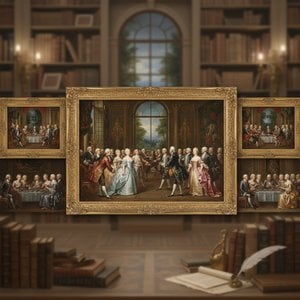
Explore the timeless elegance of formal gatherings through the lens of art history. Discover how master painters captured social grace, status, and atmosphere in iconic group portraits and ballroom scenes.

Explore 25 iconic William Hogarth masterpieces. From satire to engraving, discover his legacy. Explore the full collection on WahooArt.com.
 Eelvaade
 Saada
Saada Jaga
Jaga
 Teave teose kohta
 Juhend

 Laadi alla
 Sarnased teosed
 Röntgenuuring
 Slaidietendus
 KÜSIMUSED JA VASTUSID
 Statistika


 Loe lähemalt









 Klaasivalik on saadaval ainult kuni 110 cm suuruses teostes


