EelvaadeEelvaade AR-eelvaadeAR-eelvaade Osta käsitsi maalitud maal Osta käsitsi maalitud maalÜlemineks digitaalse pildiga müügi kanalisse Ülemineks digitaalse pildiga müügi kanalisse SaadaSaada
Teave teose kohtaTeave teose kohta Lisa lemmikutesse Lisa lemmikutesse Laadi allaLaadi alla Sarnased teosedSarnased teosed RöntgenuuringRöntgenuuring SlaidietendusSlaidietendus StatistikaStatistika

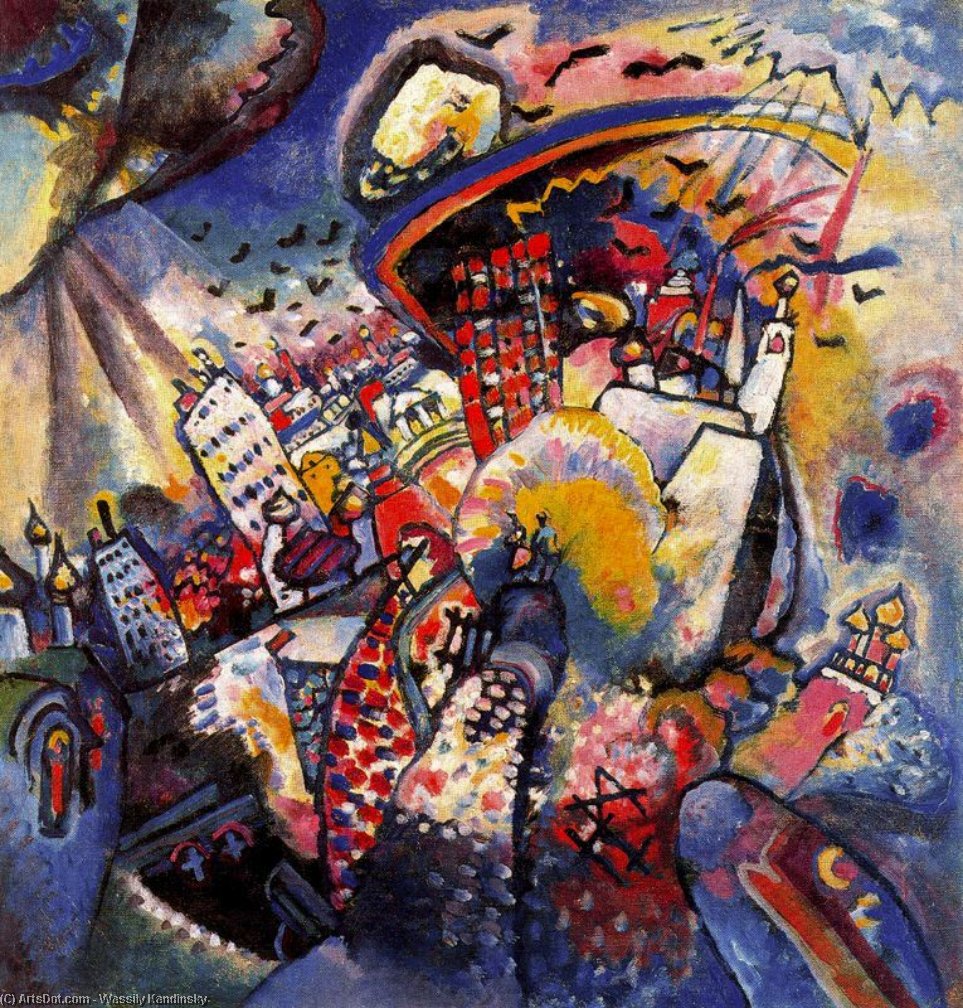
Moscow

Explore Wassily Kandinsky’s ‘Moscow’! A vibrant Expressionist cityscape capturing urban life with bold colors & dynamic composition. Discover its legacy at WahooArt.

"Vassily Kandinsky oli abstrakti kunstiliikumise suur nimi ja maailma esimene värvikas ekspressjonist! Tema täielikud maalilõpptööd, nagu "Murnau koos pruuniga" ja "Tempered Elan", on maailma suurimas kunstigaleriis."

Giclée / Kunstiprint

Muuseumikvaliteediga giclée- või kangasprint kiire tootmisega ja paindlikud viimistlusvõimalused. (Osta käsitsi maalitud maal Osta käsitsi maalitud maalÜlemineks digitaalse pildiga müügi kanalisse Ülemineks digitaalse pildiga müügi kanalisse)

P118B $10
P118H $10
P118W $10
P438Z $10
P508JH $12
P508YH $12
P805H $10
P805Z $10
P919BZ $10
P919G $10
P919XJ $10
P959ZH $10
P968JZ $12
W106C $8
W218G $10
W218JH $8
W218Y $10
W307PJ $10
W316G $10
W316PJ $8
W316Y $10
W398PJ $8
W4111J $10
W500HY $15
W500JH $15
W692G $12
W849H $8
W940BG $15
W953PJ $8

Standardne
kohandatud
CM
INCH

Vali meie eelmääratud suurused, mis vastavad teose algupärastele proportsioonidele.

laius
kõrgus

Saate sisestada oma mõõdud, et need sobiks konkreetse raami või ruumi sisse. Kui valitud suurus ei vasta originaalteose proportsioonidele, lõigame teose ära või laiendame pilti peegeldatud või ühtlase servaga. Enne tootmisprotsessi algust saadetakse Teie kinnitamiseks digitaalne näidis.
Palun märka, et ekraanil kuvatav eelvaade ei kajasta tegelikku lõigamist või laiendamist. Ainult näidis kujutab täpselt lõplikku kompositsiooni.
Kuigi erimõõdu on saadaval, soovitame originaaproportsioonide säilitamiseks valida mõõt ette määratud nimekirjast.

Ülemaailmne tarne () 2 nädala jooksul, tavalise 4/5 nädala asemel. (9 september)

why_choose_icon
Tasuta ekspresssaatmine üle maailma
why_choose_icon
Kõrgekvaliteediline linakangas
why_choose_icon
Täielik transpordikindlustus
why_choose_icon
Tollimaksude tagastamise garantii
why_choose_icon
Värvitoime täpsuse garantii
why_choose_icon
100 päeva tagastusõigus (ainult tootmisdefektide korral)
why_choose_icon
100% raha tagasi garantii
why_choose_icon
Hulgusoodustus

Kogu summa

$ 68

reproduction

Moscow

Giclée / Kunstiprint

Reproduktsiooni suurus

-

Kogusumma

$ 68

Teave teose kohta

  • notable elements:
    • buildings
    • people
    • birds
    • clock
  • title: Moscow
  • style: Expressionistic
  • movement: Expressionism, Abstract art
  • influences:
    • Henri Matisse
    • Pablo Picasso
  • subject: cityscape

Kunstiviktoriin

Iga küsimuse kohta on ainult üks õige vastus.

Küsimus 1:
Wassily Kandinsky is widely considered a pioneer of what artistic movement?
Küsimus 2:
The painting 'Moscow' utilizes which primary medium?
Küsimus 3:
What artistic style is most prominently displayed in Kandinsky’s 'Moscow'?
Küsimus 4:
The image description notes a strong sense of what within the composition of 'Moscow'?
Küsimus 5:
Kandinsky’s artistic journey was initially influenced by exposure to the works of which artists in Paris?

A Vibrant Echo of Urban Life: Exploring Kandinsky’s “Moscow”

Wassily Kandinsky's "Moscow" is more than just a cityscape; it’s a dynamic and emotionally charged interpretation of early 20th-century Russia, rendered with the pioneering spirit that would define his contribution to abstract art. This painting encapsulates a pivotal moment in both the artist’s journey and the evolution of modernism itself.

Subject & Composition: A City in Motion

The artwork presents a bustling urban scene, teeming with abstracted buildings, figures, and birds. Unlike traditional cityscapes focused on realistic representation, Kandinsky prioritizes conveying the *feeling* of Moscow – its energy, its chaos, and its vibrant life force. The composition is deliberately fragmented and dynamic, utilizing strong diagonal lines that propel the viewer’s eye through the canvas. A prominent clock tower serves as a focal point, subtly hinting at the relentless passage of time within this urban environment.

Style & Technique: Embracing Expressionism

“Moscow” is firmly rooted in the principles of Expressionism, an artistic movement that sought to depict subjective emotions and experiences rather than objective reality. Kandinsky employs a bold palette of clashing colors – reds, blues, yellows, and browns – applied with thick, impasto brushstrokes. This technique creates a textured surface and enhances the painting’s emotional intensity. The forms are distorted and abstracted, moving away from representational accuracy towards a more symbolic language. Oil on canvas was Kandinsky's preferred medium for this period, allowing him to build layers of color and texture that contribute to the artwork’s depth.

Historical Context: A Turning Point in Art History

Painted around 1916, “Moscow” reflects a time of significant upheaval in Russia – on the cusp of revolution. Kandinsky had already begun his exploration of abstraction, influenced by encounters with artists like Matisse and Picasso during a trip to Paris. He returned to Moscow briefly during World War I but soon found himself at odds with the emerging Soviet aesthetic. This painting represents a transitional phase in his work, bridging representational elements with the burgeoning abstract style that would become his signature.

Symbolism & Interpretation: Decoding the Urban Landscape

While Kandinsky increasingly moved towards non-objective art, traces of symbolism remain within “Moscow.” The towering structures could be interpreted as representations of power or societal constraints, while the swirling patterns and abstracted figures evoke a sense of collective energy. The birds often symbolize freedom or spiritual aspiration, adding another layer of meaning to the composition. Ultimately, the painting invites viewers to project their own emotions and interpretations onto the scene.

Emotional Impact & Legacy: A Lasting Resonance

“Moscow” evokes a complex range of emotions – excitement, anxiety, disorientation, and perhaps even alienation. It’s a powerful expression of urban life's inherent contradictions: its vibrancy alongside its anonymity, its energy coupled with its potential for chaos. Kandinsky’s innovative use of color and form profoundly impacted the development of abstract art, inspiring generations of artists to explore new ways of representing inner experience.

Exploring Further

  • Discover related works by Wassily Kandinsky, such as “Woman in Moscow” and “Moscow. Zubovskaya Square. Study.”.
  • Delve deeper into the world of Expressionism and its key figures.
  • Consider how “Moscow” might complement a modern or contemporary interior design scheme, adding a touch of artistic sophistication and historical significance.
This painting is not merely a depiction of a city; it’s an invitation to experience the world through the eyes – and emotions – of a true visionary.

Kunstniku elulugu

A Life Immersed in Color and Spirit

Wassily Wassilyevich Kandinsky, born in Moscow in 1866, was a revolutionary figure who irrevocably altered the course of modern art. His journey wasn’t one of immediate artistic calling; initially destined for a career in law and economics at the University of Moscow, it was a profound encounter with Impressionist painting – specifically Claude Monet's “Haystacks” – and a deeply moving experience witnessing Wagner’s opera "Lohengrin" that ignited within him an irrepressible desire to pursue art. This pivotal moment, occurring around age thirty, marked not merely a career change but a complete transformation of perspective, setting him on a path toward pioneering abstraction.

Early influences included Russian folk art, gleaned from an ethnographic expedition to the Vologda region in 1889, which instilled a fascination with vibrant color palettes and symbolic imagery. This foundation would prove crucial as he began to develop his unique artistic language. These early explorations weren’t simply about aesthetic preference; they were rooted in a deep cultural connection and a burgeoning understanding of how art could communicate beyond the literal.

The Dawn of Abstraction: From Expressionism to Inner Necessity

Kandinsky’s early works reveal a strong expressionistic bent, characterized by bold colors and emotional intensity – pieces like “Papeln (Poplars)” from 1902 exemplify this period. However, he wasn't content with merely representing the external world; he sought to express inner realities, spiritual truths that transcended mere visual depiction. This quest led him gradually away from representational art and toward a revolutionary exploration of color, form, and their emotional resonance.

He began to believe that colors possessed inherent psychological effects, capable of evoking specific feelings and sensations in the viewer. This conviction was deeply intertwined with his burgeoning interest in Theosophy, a spiritual movement emphasizing esoteric knowledge and universal brotherhood. As he delved deeper into these ideas, Kandinsky’s paintings became increasingly non-objective, shedding recognizable forms in favor of abstract compositions driven by an “inner necessity.” This wasn't simply about abandoning representation; it was about discovering a new visual language capable of expressing the intangible realms of emotion and spirituality.

Geometric Harmony and Spiritual Resonance

The period following his involvement with the influential artist group Der Blaue Reiter (The Blue Rider), which he co-founded in Munich in 1911, saw a further evolution in Kandinsky’s style. While earlier works often featured fluid, organic shapes, he began to explore geometric abstraction, focusing on the interplay of circles, triangles, and squares. “Several Circles” (140 x 140 cm) stands as a prime example of this phase – a dynamic composition where color and form interact in a harmonious yet energetic dance.

This wasn't cold or sterile geometry; rather, it was imbued with spiritual significance. Kandinsky believed that geometric shapes possessed inherent symbolic meaning, and their arrangement within the canvas could evoke specific emotional responses. His theoretical writings, most notably “Concerning the Spiritual in Art” (1911), articulated these beliefs, laying the groundwork for a new understanding of abstract art as a vehicle for expressing profound spiritual truths. He argued that art should not aim to imitate nature but rather to reveal the artist’s inner world and connect with the viewer on a deeper, more intuitive level.

Bauhaus Influence and Lasting Legacy

The outbreak of World War I forced Kandinsky's return to Russia in 1914, but following the Russian Revolution, he found himself increasingly at odds with the prevailing artistic climate. In 1920, he accepted a teaching position at the Bauhaus school in Germany, where he profoundly influenced generations of artists with his theories on color, form, and abstraction. The Bauhaus provided an ideal environment for Kandinsky to further develop his ideas and explore new creative avenues.

He continued to experiment with geometric forms and vibrant colors, often incorporating layered impasto techniques to create textured surfaces that added depth and complexity to his compositions – as seen in later works like “An Intimate Party” (1942). After the closure of the Bauhaus by the Nazi regime in 1933, Kandinsky moved to France, where he remained for the rest of his life. His impact on modern art is immeasurable; he is widely recognized as a pioneer of abstract expressionism and a key figure in the development of non-representational painting. His works are held in major museums worldwide, including the Tretyakov Gallery in Moscow, which houses his monumental “Composition VII,” a testament to his artistic vision and enduring legacy.

Kandinsky’s exploration of color, form, and spirituality continues to inspire artists today, solidifying his place as one of the most important figures in 20th-century art history. He didn't just paint pictures; he painted emotions, ideas, and the very essence of the human spirit.

Vasili Vassiljevich Kandinski

Vasili Vassiljevich Kandinski

1866 - 1944 , Venemaa

Lühikesed faktid

  • Artistic Movement Or Style: Abstract art, Expressionism
  • Artists Or Movements Influenced By This Artist: ['Abstract Expressionism']
  • Artists Who Influenced This Artist:
    • Claude Monet
    • Richard Wagner
  • Date Of Birth: 1866
  • Date Of Death: 1944
  • Full Name: Wassily Wassilyevich Kandinsky
  • Nationality: Russian, French
  • Notable Artworks:
    • Murnau with Rainbow
    • Tempered Elan
    • Several Circles
  • Place Of Birth: Moscow, Russia
Avastage teoseid, mis on koondatud teemade, stiilide ja omaduste kaupa.