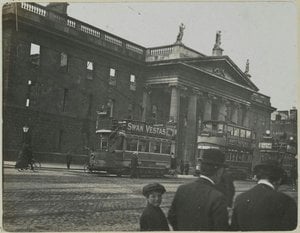
Eden Quay (1916) autor Thomas Johnson Westropp, meistri poolt käsitsi maalatud õlimaali reproduktsioon
Lülita trükkitoodetele Lülita digitaalse pildi juurde Saada
Teave teose kohta Juhend Lisa lemmikutesse Laadi alla Sarnased teosed Slaidietendus KÜSIMUSED JA VASTUSID Presentation Statistika

Eden Quay Käsitsi maalatud õlimaal reproducing

Thomas Johnson Westropp’s stark black and white photograph, ‘Eden Quay,’ captures the devastating aftermath of the 1916 Easter Rising in Dublin, showcasing urban ruin and resilience through documentary photography. Explore this poignant image and its historical significance – a powerful piece to own.

Thomas Johnson Westropp (1860-1922): Irish antiquarian, archaeologist & folklorist. Known for detailed sketches of monuments & folklore, influencing the Irish Folklore Commission. Explore his historical Irish art.

Käsitsi valmistatud õlimaalireproduktsioon

Meie kunstnike poolt tellimusel valmistatud käsitsi maalitud õli-kainaste teos teie soovitud suuruses ja raamis. ( Lülita trükkitoodetele Lülita digitaalse pildi juurde)

Standardne suurus
kohandatud
CM
INCH

Vali meie eelmääratud suurused, mis vastavad teose algupärastele proportsioonidele.

laius
kõrgus

Sisestage vajalik laius ja kõrgus, et teos sobiks teie raamile või seinale. Kuna tegu on käsipainatud teosega, siis erineva kujuga suuruse korral võib kunstnik jätta pildi ümber veidi rohkem marginaali või lõigata osa ära — valik on teie. Enne maali alustamist saadame teile kinnitamiseks digitaalse näidisprojektsiooni. Sellel lehel näidatud pilt ei kajasta tegelikku tulemust — seda näitab ainult näidisprojektsioon.

Näited muudetavatest elementidest: asenda nägu kliendi fotoga; lisa lemmikloom (nt asenda kass koeraga); lisa taustale peidetud sõnum; muuda tausta maastikku või elemente.
Pärast tellimust saadab WahooArt.com meeskond kliendile e-posti juhised ning esitab eelvaate kavandi

Maailmline tarne 3–4 nädala jooksul tavalise 5 nädala asemel. (6 november). Kvaliteedis kompromisse ei tehta.

Tasuta ekspresssaatmine üle maailma
Kõrgekvaliteediline lina-kangas
Täielik transpordikindlustus
Tollimaksude tagastamise garantii
Värvitoime täpsuse garantii
100 päeva tagastusõigus (ainult valmistusdefektide korral)
100% raha tagasi garantii
Hulgusoodustus

Kogu summa

€ 265

Eden Quay

Reproduktsiooni tehnika

Reproduktsiooni suurus

-

Koguhind

€ 265

Teave teose kohta

  • Location: Private Collection
  • Notable elements or techniques: Aerial view; Detailed documentation
  • Artistic style: Documentary
  • Subject or theme: Urban Destruction
  • Medium: Photography

Kunstiteaduse kvartett

Iga küsimuse kohta on ainult üks õige vastus.

Küsimus 1:
What is the primary subject matter depicted in this photograph?
Küsimus 2:
The photograph utilizes what type of perspective to emphasize depth and scale?
Küsimus 3:
What is the dominant color palette employed in this black and white print?
Küsimus 4:
Which artistic technique contributes to the photograph's somber mood?
Küsimus 5:
What historical event is commemorated by this artwork?

Eden Quay - A Chronicle of Ruin and Resilience

Thomas Johnson Westropp’s “Eden Quay” isn't merely a photograph; it’s a frozen moment in time—a visceral testament to the devastation wrought by the Easter Rising of 1916. Captured on May 17th, just weeks after Dublin endured the brutal bombardment of British forces during the rebellion, this monochrome image transcends documentation and becomes an emblem of loss interwoven with an undeniable spirit of defiance.

The composition is strikingly simple yet profoundly effective. A long, straight street dominates the frame, receding into a hazy distance—a deliberate choice that amplifies the sense of scale and underscores the immensity of the destruction surrounding it. Buildings loom large in the background, their facades scarred by explosions and fires, forming a jagged skyline that speaks volumes about the conflict’s destructive force. At the forefront stands a horse-drawn carriage, providing a grounding element against which the grandeur of ruin is contrasted.

Westropp's masterful use of light contributes significantly to the photograph’s mood. Diffused illumination softens shadows and minimizes harsh contrasts, fostering an atmosphere of solemn contemplation rather than dramatic spectacle. This understated lighting emphasizes textures—the rough cobblestones beneathfoot, the crumbling brickwork of the buildings—drawing the viewer into a detailed sensory experience.

  • Style: Documentary Photography – Westropp’s aim was to record an event with unwavering accuracy, prioritizing visual truth over artistic embellishment. This aligns perfectly with the photographic practices prevalent during the early 20th century, reflecting a commitment to capturing reality as it unfolded.
  • Technique: The photograph utilizes one-point perspective, guiding the eye along the street’s converging lines towards a vanishing point—a technique that enhances depth and reinforces the impression of vastness. Careful attention was paid to detail, ensuring that every element within the frame contributes to the overall narrative.
  • Materials Used: The image was produced using photographic film (likely glass plate negative), reflecting the technological limitations of the era. Subsequent processing involved chemical developers and printing methods—processes meticulously executed to preserve the photograph’s tonal range and clarity.

Beyond its technical merits, “Eden Quay” resonates with powerful symbolic significance. The ruined buildings serve as poignant reminders of human vulnerability in the face of overwhelming power – a visual representation of fragility against the backdrop of historical upheaval. Yet, amidst the devastation, figures populate the sidewalk, symbolizing enduring life and resilience—a subtle but crucial element that elevates the photograph beyond mere depiction to profound contemplation.

Ultimately, “Eden Quay” compels us to confront not only the horrors of war but also the capacity for beauty to emerge from ruin. It’s a hauntingly evocative piece that invites viewers to consider themes of loss, memory, and the enduring spirit of humanity—a timeless image destined to inspire admiration and contemplation for generations to come.

Korduvad küsimused

Millised on teose "Eden Quay" reprodutseerimissõjaõigused Trinity College Dublini raamatukogu kogumuses?

Originaalteos "Eden Quay" asub Trinity College Dublini raamatukogu kogumuses ning teos on avalikus õiguses – selle autoriõigud onหมดunud.

Kas teos „Eden Quay“, autor Thomas Johnson Westropp on värvikas või tumeda toonidega?

Perseptsioonilt on teose „Eden Quay“, autor Thomas Johnson Westropp ereonim brilliant.

Mis on teose „Eden Quay“, autor Thomas Johnson Westropp materjal ja valmimisaeg?

Teose „Eden Quay“, autor Thomas Johnson Westropp tehnika on Giclée Print ning selle valmimisajaks on märgitud 1916.


Kunstniku elulugu

Thomas Johnson Westropp: Life and Legacy

Early Life and Education

Thomas Johnson Westropp was born on August 16, 1860, at Attyflin Park, Patrickswell, County Limerick, Ireland. His ancestors were landowners of English origin who had resided in the area since the mid-16th century. From a young age, Westropp displayed a keen interest in antiquities, meticulously documenting topography, ancient buildings, and folk life during family trips throughout neighboring counties.

He pursued higher education at Trinity College Dublin, earning an MA in 1882. He furthered his studies with a degree in civil engineering in 1885, subsequently apprenticing under Bindon Blood Stoney, who was overseeing the expansion and dredging of the Dublin port entrance.

Career Shift and Archaeological Pursuits

Despite his initial training as an engineer, Westropp soon abandoned professional practice to dedicate himself fully to archaeological research. He became assistant surveyor for County Meath briefly but quickly prioritized his passion for uncovering Ireland’s past. For the remainder of his life, he focused on researching antiquities along the western seaboard of Ireland.

Artistic Work and Documentation

Westropp is renowned for his incredibly detailed sketches of buildings, grave slabs, and other archaeological remains found throughout Ireland. These drawings are not merely artistic representations; they serve as invaluable historical records. Many of these sketches are now preserved by the Royal Irish Academy.

His work extended beyond visual documentation to include the collection of folklore and local traditions, providing a rich tapestry of cultural insights into 19th and early 20th-century Ireland.

Influences and Artistic Development

Westropp’s initial engineering training likely influenced his meticulous approach to documentation and precise rendering of architectural details. His mentor, Bindon Blood Stoney, a prominent engineer involved in significant infrastructural projects, instilled a sense of technical precision. However, it was his innate curiosity and passion for Irish history that truly shaped his artistic development.

His work can be seen as part of a broader movement of antiquarianism prevalent during the Victorian era, where there was growing interest in preserving and understanding historical artifacts and traditions.

Major Achievements and Historical Significance

  • Extensive Archaeological Documentation: Westropp created an unparalleled visual record of Irish archaeological sites.
  • Folklore Collection: His gathering of folklore provided valuable insights into Irish cultural heritage.
  • Influence on the Irish Folklore Commission: His work significantly informed and influenced the establishment and early activities of the Irish Folklore Commission.

Legacy

Thomas Johnson Westropp died in 1922, leaving behind a substantial body of work that continues to be studied by historians, archaeologists, and folklorists today. His detailed sketches and meticulous notes remain essential resources for understanding Ireland’s rich past. He is remembered as a dedicated scholar who played a crucial role in preserving Irish cultural heritage.

His publications are widely accessible in libraries throughout the west of Ireland, ensuring his contributions continue to inspire future generations.

Thomas Johnson Westropp

Thomas Johnson Westropp

1860 - 1922 , Ireland

Lühikest infot

  • Name: Thomas Johnson Westropp
  • Movement: Antiquarianism, Archaeology, Folklore Studies
  • Birth Date: 1860-08-16
  • Death Date: 1922
  • Influenced: Irish Folklore Commission
  • Birth Place: Attyflin Park, Patrickswell, County Limerick, Ireland
  • Nationality: Irish
  • Date Of Birth: 1860
  • Date Of Death: 1922
  • Influenced By: Bindon Blood Stoney
  • Notable Works: The GPO from summit of Nelson, The GPO Sackville Street, Eden Quay (sketches and documentation of Irish monuments)
  • Place Of Birth: Dublin, Ireland