


Lentekadmed ja fine art trükised alates €42 suuruses 36 x 28 cm
Käsinmaalitud õlireproduktsioon alates €162
Muuseumikvaliteediga giclée- või kangasprint kiire tootmisega ja paindlikud viimistlusvõimalused. ( Hand-painted õli-maal Digitaalne pilt
)
Meie soodsam trükk: sama pilt trükitud 240 g/m² polüesterlõendile puuvillase asemel, tarnitav rullitud tüübina torus postiga 3–5 nädala jooksul. Ainult rullitud (ilma pingekraamiga ja raamita) ning kiirendatud tootmiseta, suurustele, kus vähemalt üks külg on 80 cm või väiksem. Umbes 30% soodsam kui puuvillane linaprint.
See suurus ei ole saadaval: vähemalt üks külg peab olema 80 cm või väiksem.
Vain rullituna: vali see trükis, et tellida lõend rullitud tüübis.
Saadaval suurustes, kus vähemalt üks külg on 100 cm või väiksem. Suuremate suuruste puhul trükatakse print matt puuvillasele linale.
Matte archival canvas ei ole selle suuruse jaoks saadaval: vähemalt üks külg peab olema 100 cm või väiksem. Teie trükis on selle asemel kasutatud matt puuvillakanget.





























Vali meie eelmääratud suurused, mis vastavad teose algupärastele proportsioonidele.

Sisestage vajalik laius ja kõrgus, et see sobiks teie raamile või seinale. Trükki saab ainult lõigata, seda ei saa kunagi pildist suuremaks teha, seega ka erineva mustega suurus kaotab osa pildist. Enne trükkimist saadame teile kinnitamiseks digitaalse näidisprojektsiooni. Sellel lehel näidatud pilt ei kujuta reaalset lõiget — seda näitab ainult näidisprojektsioon.
Ülemaailmne tarne () 2 nädala jooksul, tavalise 4/5 nädala asemel. (6 detsember)
Economy poly-canvas trükis, mis saadetakse tavapäraviis postiga, ei ole kättesaadav kiirtootmise ja ekspress-kulleritega.
Self-Portrait
Reproduktsiooni suurus
Ülemaailmne tarne () tavapostiga 3–5 nädalas. (13 detsember)
This oil-on-canvas painting is titled Self-Portrait. It is a work by the artist Albert Lang, who was born in 1847 in Karlsruhe, Germany. The composition presents a bust-length view of the artist himself, rendered in a realistic style that emphasizes the physical presence of the subject through a controlled application of paint.
Albert Lang lived a life that spanned several European cities, moving from his birthplace in Karlsruhe to various centers of artistic activity. He eventually settled in München, where he remained until his death in 1933. His technical background in architecture, which he studied in Karlsruhe and Berlin, informs the structured approach seen in his later painterly works. This specific portrait, created about 1878, captures the artist in a moment of quietude, focusing on the interplay of light and shadow across the features of the face.
This bust-length portrait presents a man positioned slightly off-center within the frame. He is depicted in a realistic style, facing the viewer with a contemplative expression. The subject's gaze is directed forward, meeting the observer directly. The composition focuses on the head and shoulders, utilizing a dark, undifferentiated background that lacks any specific architectural or natural elements. This void pushes the figure into the foreground, emphasizing the physical presence of the subject.
The lighting is directional, originating from the upper left. This light source illuminates one side of the face while casting the other side into deep shadow, creating a sense of three-dimensional volume. The color palette is dominated by dark, earthy tones, including deep browns, blacks, and muted greys. These shadows contrast with the warm flesh tones of the face and a small touch of red visible in the necktie. The textures of the beard, hair, and fabric of the jacket are defined by controlled brushwork, while the shadows remain soft and blended.
This oil-on-canvas work is executed in a realistic style. The medium of oil paint is applied with controlled brushwork that defines the specific textures of the skin, hair, and cloth. The color palette is dominated by dark, earthy tones, including deep browns, blacks, and muted greys. These shades contrast with the warm flesh tones of the face and a small touch of red in the necktie.
The lighting is directional, originating from the upper left. This light source illuminates one side of the face while casting the other side into deep shadows. Such lighting creates a sense of three-dimensional depth and volume against a dark, undifferentiated background. The lines are soft and blended within the shadows, while more defined strokes are used to establish the texture of the beard and the fabric of the jacket.
The artist's body of work includes several pieces that demonstrate a focus on landscape and human subjects. In 1874, he painted Italienische Küste. Later, in 1883, he produced Junges Mädchen and An der Quelle. His output during the late 1880s includes Fahrendes Volk from 1889 and Flusslandschaft, also from 1889.
Lang continued to produce various compositions throughout his career. He created a Selbstbildnis in 1911 and another Selbstbildnis in 1927. His later works include the 1917 oil painting Sitzender Pan.
Trükis: teos Self-Portrait on reprodukteeritud giclée-trükkina puuvillasel lærvarõkkal või Epson'i arhivipaberil.
Originaali mõõtmed on 54.0 x 42.0cm. Suurused on vahemikus 36.2 x 27.6 cm (€42) kuni 247.5 x 189.0 cm (€325); sellel lehel olev tabel on toodud peamised sammud ja nende hinnad.
Trükise print on rullitud torus ja saub see tasuta tavapostiga 3–5 nädalaga; pingutatud või raamitud trükise täitub tellimine 4–5 nädalaga ning sellel lehel on saadaval ka kiirkättesaamise võimalus. Toote võib 100 päeva jooksul ilma tingimusteta tagastada ja saada täielik hüüve.
Originaalakade on Staatliche Kunsthalle Karlsruhe kollektsioonis, Karlsruhe.
Oil On Canvas

Discover how custom historical portraits transcend decor to become profound expressions of identity. Explore the artistry of bespoke oil reproductions, from Renaissance mastery to modern reimagining, and learn to transform personal legacies into museum-quality fine art masterpieces.

Explore the profound psychological depth of master portraiture through expert analysis. Discover the true essence of the human spirit today.
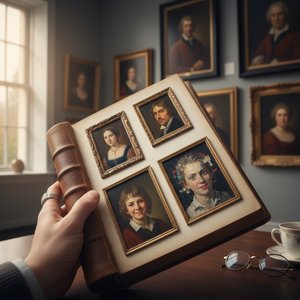
Master the nuances of portrait composition with our expert guide for collectors. Discover how light, gaze, and texture create emotional depth in fine art, from classical masterpieces to bespoke oil commissions.

 Eelvaade

 Saada
 Jaga
 Teave teose kohta
 Teave teose kohta


 Laadi alla
 Sarnased teosed
 Röntgenuuring
 Slaidietendus
 KÜSIMUSED JA VASTUSID

 Statistika


 Self-Portrait täielik kirjeldus









 Klaasivalik on saadaval ainult kuni 110 cm suuruses teostes


