A Moment of Divine Revelation: Botticelli’s Cestello Annunciation
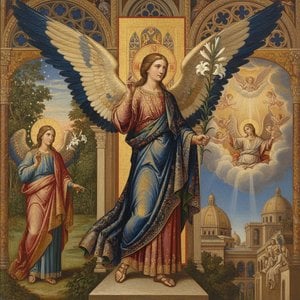
Sandro Botticelli's *Cestello Annunciation*, painted in 1489, is a breathtaking embodiment of Early Renaissance artistry. This tempera on panel masterpiece doesn’t merely depict a biblical scene; it invites viewers into a deeply spiritual and emotionally resonant encounter with one of Christianity’s most pivotal moments – the announcement by the Archangel Gabriel to Mary that she will conceive and bear the Son of God.
Botticelli: A Florentine Master
Sandro Botticelli (1445-1510) was a leading figure in Florence's artistic blossoming during the Renaissance. Trained initially as a goldsmith, he later apprenticed under Fra Filippo Lippi, absorbing the prevailing aesthetic while developing his own uniquely lyrical and elegant style. His work, often commissioned by the powerful Medici family, reflects both the humanist ideals of the era and a profound spiritual sensibility. Botticelli’s influence extends far beyond his time, continuing to inspire artists and captivate audiences today.
Decoding the Scene: Subject & Symbolism
The painting portrays the precise instant Gabriel delivers his message to Mary. Botticelli masterfully captures Mary's poised grace and humble acceptance, contrasted with Gabriel’s reverent gesture of offering a lily – a traditional symbol of purity and innocence. The setting itself is rich in symbolism. The enclosed garden, visible through the window, represents Mary’s protected virtue and alludes to the *hortus conclusus*, or walled garden, from the Song of Songs. The landscape beyond hints at the world awaiting redemption through Christ's birth. Even the architectural details – the carefully rendered columns and arches – contribute to a sense of sacred space.
Technique & Style: Early Renaissance Innovation
Botticelli’s *Cestello Annunciation* exemplifies the hallmarks of the Early Renaissance. He employs
linear perspective, though subtly, creating depth within the composition without sacrificing its inherent grace. The figures are rendered with a delicate naturalism, their forms elongated and flowing, characteristic of Botticelli's style. His use of tempera allows for meticulous detail and vibrant color, particularly in the angel’s wings and Mary’s richly colored garments. The painting showcases
humanism through its focus on the emotional experience of both figures, portraying them not as distant icons but as relatable individuals experiencing a profound moment. The overall effect is one of serene beauty and spiritual contemplation.
Historical Context & Provenance
Originally created for the Church of San Cestello (now Santa Maria Maddalena de' Pazzi) in Florence, the painting was commissioned by Benedetto di Ser Giovanni Guardi. This placement underscores its intended function as a devotional object meant to inspire faith and reverence within the monastic community. Today, it resides in the prestigious
Uffizi Gallery in Florence, a testament to its enduring artistic significance. Botticelli painted several versions of the Annunciation; comparing this work with his other interpretations (such as those in Glasgow and New York) reveals subtle variations in composition and emotional emphasis.
Emotional Resonance & Interior Design
The *Cestello Annunciation* evokes a sense of tranquility, reverence, and hope. Its delicate beauty and spiritual depth make it an ideal focal point for any space. Its muted color palette – blues, reds, and golds – complements both traditional and contemporary interiors. The painting’s vertical format lends itself well to hallways or above mantels, while its serene subject matter creates a calming atmosphere in bedrooms or meditation spaces. A high-quality reproduction of this masterpiece can bring the timeless beauty and spiritual power of Botticelli's vision into your home.
Further Exploration
- Explore other notable works by Sandro Botticelli: *The Birth of Venus*, *Primavera*, *Virgin and Child with Six Angels*.
- Discover the rich artistic heritage of Florence at the Uffizi Gallery.
- Delve deeper into the symbolism of Renaissance art to unlock hidden meanings within this iconic work.
Küsimused ja vastused
Kas on õpilaste jaoks olemas infoleht teose „Cestello Annunciation“, autor Sandro Botticelli kohta?
Teosele „Cestello Annunciation“, autor Sandro Botticelli on saadaval Juhend leht: trüvitav infoleht teose kohta, mis on loodud õpilasteks ja klassiruumis kasutamiseks.
Kas teos "Cestello Annunciation" autorilt Sandro Botticelli kuulub avalikku omandisse ja miks?
Teos „Cestello Annunciation“, autor Sandro Botticelli on avalikus õiguses – selle autoriõigud onหมดunud. Tegijakeskuse kaitse lõpp määratakse kunstniku surmaaja järgi, mis toimus aastal 1510.
Mis on teose „Cestello Annunciation“, autor Sandro Botticelli luminants?
Teose "Cestello Annunciation" värvid näitavad Kerge vari luminantsi.



 Vaata sisu
 Lülita trükkitoodetele
 Jaga teost
 Jaga
Jaga
 Detailid
 Õppekate juhend

 Laadi alla
 Sarnased teosed
 Röntgenuuring
 Slaidietendus
 Statistika

 Loe lähemalt






































 Klaasivalik on saadaval ainult kuni 110 cm suuruses teostes