Alessandro di Mariano: Firenze Renessansi Küllus ja Hingeline Ilu
Sandro Botticelli, kelle pärisnimi oli Alessandro di Mariano Filipepi, sündis umbes 1445. aastal Firenzes, Itaalias, ajal, mil linn oli renessanssi kultuurilise õitsemise epitsentrum. Tema elu ja looming olid tihedalt seotud Firenze linna vaimuga; ta ei lahkunud kunagi oma Ognissanti naaberkonnast, mis näitab nii perekondlikke sidemeid kui ka elavat loova keskkonda, mis teda toitis. Tema isa Mariano Filipepi, algselt kullassepp ja hiljem nahavabriku omanik, tutvustas talle juba noorelt käsitööd ja tähelepanelikkust detailide suhtes – omadusi, mis mõjutasid sügavalt Botticelli kunstilist lähenemist. Kuigi esialgsete andmete järgi õppis ta kullasseppa, leidis ta peagi oma kutsumuse Fra Filippo Lippi juhendamisel. See õpipaigastus osutus võtmetäheks, sukeldades teda florentse kooli tehnikatesse ja esteetikasse ning samal ajal ühendades ta mõjukaate patroonidega, nagu Medici perekond.
Botticelli loominguline stiil on koheselt äratuntav lüürilise ilu poolest, mida iseloomustavad elegantsed jooned, voolavad kontuurid ja õrn värvitoonide kasutamine. Ta ületas oskuslikult hilisgoti traditsioonide ja kasvava renessansiaegse esteetika vahet, omades mõjutusi sellistelt meistritena Fra Angelico ja Paolo Uccello poolt, kuid kujundades samas ainulaadse isikliku visiooni. Tema tegelased on eeterlikud, sageli kujutatud pikendatud proportsioonidega ja viisakatel poosidel, mis väljendavad nii rahu kui ka õrna melanhooliast. Tema tööde eripäraks on sagedane klassikalise mütoloogia kasutamine – peegeldus renessanssiaegsete Firenze inimeste huvi vastu. Ta ei illustreerinud neid muistseid lugusid lihtsalt; ta andis neile uusi tähendustasandeid, uurides armastuse, ilu ja vaimulise igatsuse teemasid. Botticelli kasutas uuenduslikke tehnikaid oma ajale omaselt. Ta kasutas sageli hõbekirjutusmeetodit (silverpoint) esimaalinguna, mis aitas kaasa tema lõuendi valgusrikkale ja õrnale detailile. Temperavärvide kasutamine võimaldas talle täpset kujutamist ja erksaid värve, samas kui hilisemad katsetused õlivärviga laiendasid tema väljendusvõimalusi.
"Venus sünd" ja "Primavera": Sümbolid Renessansi Ideaalidest
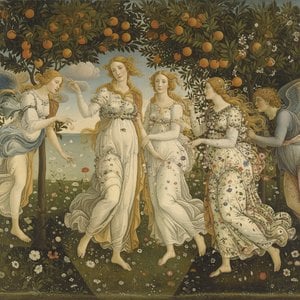
Botticelli jääb ajalukku tänu mõnedele ikoonilistele maalidele, mis jätkavad sajandeid publikut vaimustades. Umbes 1486. aastal valminud „Venuse sünd“ on võib-olla tema tuntuim teos – allegoriline kujutus jumalannast, kes kerkib merekarbist, kehastas renessanssiaegsete ilu ja harmoonia ideaale. Selle graatsiline kompositsioon, õrn värvipalett ja erootiline sümbolism on muutnud selle ajastu kütkivaks sümboliks. Samavõrra tuntud on „Primavera“, mis valmis umbes 1482. aastal – keeruline ja salaperane maal, mis tähistab kevadet ja armastust ning mida täidavad klassikalisest mütoloogiast pärit sümbolilised tegelased. Need tööd näitavad Botticelli meisterlikkust kompositsioonis, tema võimet luua atmosfäärset sügavust ja tema sügavat inimhinge mõistmist. On arvatud, et kunstnik kujutas „Venuse sünnil“ oma armastatut Simonetta Vespuccit, Firenze kaunimat naist. Kuigi selle hüpoteesi on kahtluse alla seadnud kunstiajaloolased, jääb see romantiliseks legendiks, mis lisab maalile veelgi võlu.
Savonarola Mõju ja Hilisem Looming
1490. aastatel mõjutas Botticelli loomingut Girolamo Savonarola, dominikaani munk ja jutlustaja, kes südaselt moralistlik mees, tegutses Firenzes. Savonarola hoiatas Firenze dekadentsuse ja moraalse korruptsiooni eest ning see mõjutas Botticelli hilisemat loomingut, mis muutus karmimaks ja vaimulisemaks. See periood andis sündmusele rohkem sisukate ja emotsionaalselt laetud töödele, mis peegeldavad kasvavat vaimulikku intensiivsust. Tema teoste värvipalett muutus tumedamaks ning kujutised väljendasid sügavamat piinlikkust ja kahtlust.
Unustuse Varjudest Uue Avastamiseni
Botticelli surma järel aastal 1510 kadus tema maine järk-järgult unustusse. Pea kolm sajandit olid tema tööd varjutatud Leonardo da Vinci ja Michelangelo nagu High Renaissance meistrite saavutuste poolt. Kuid 19. sajandi lõpus toimus märkimisväärne taastamine Pre-Raphaelite vennaskonna tõttu – rühm inglise kunstnikke, kes keelasid ära akadeemilised konventsioonid ja otsisid inspiratsiooni varase Itaalia renessansi kunstist. Nad olid vaimustunud Botticelli lineaarse graatsia, erksate värvide ja poeetliku tundlikkuse üle, tunnistasid teda vennaks. See uuenenud hindamine põhjustas tema töö laialdase ümberhindamise, mis kindlustas tema koha ühe olulisema renessanssiaegse kunstnikuna. Tänapäeval tähistatakse Botticelli oma ainulaadse kunstilise visiooni, meisterliku tehnikaga ja jätkuva võime poolest ärgata ilu, emotsioone ja vaimulikku kaitsmist. Tema mõju on näha järgmistes põlvkondades kunstnike seas, kes on püüdnud oma töödes sama graatsiat ja elegantsi jäädvustada. Ta jääb Firenze kunsti saavutuse sümboliks ja tõestuseks renessanssi humanismi võimsast mõjust.
Peamised Teosed
- "Venuse sünd" (umbes 1486): Ikoneiline kujutus, mis kehastas renessanssiaegsete ilu ideaale.
- "Primavera" (umbes 1482): Keeruline allegoriline maal, mis tähistab kevadet ja armastust.
- "Magi kummardamine" (1475–1476): Näitab varajast meisterlikkust kompositsioonis ja perspektiivis.
- "Vaimulik Jõulud" (1501): Peegeldab tema hilisemas karjääris vaimuliste teemade poole muutumist.



 Eelvaade
 Lülita trükkitoodetele
 Saada
Saada Jaga
Jaga
 Teave teose kohta

 Laadi alla
 Sarnased teosed
 Röntgenuuring
 Slaidietendus
 Statistika

 Loe lähemalt






































 Klaasivalik on saadaval ainult suuruses kuni 110 cm