Sellel lehel kuvatav kunstiteos on kaitstud autoriõigusega, mis tähendab, et meil ei ole seaduslikku õigust luua või müüa identset reproduktsiooni. Seda kaitset rakendatakse rahvusvaheliste kokkulepete alusel, nagu näiteks Berne konventsioon ning riiklike seadustega, sealhulgas nendega, mida on sätestatud USA autoriõiguse seadus – 17. peatükk.
See meetod järgib täielikult autoriõiguse reegleid, kuna see ei põhine kaitstud kunstiteose kopeerimisel või dupliteerimisel. Selle asemel on tegu loova reinterpreetatsiooniga – uue maaldisega, mis on algteosest inspireeritud, kuid ei ole sellest identiline.
Muuseumikvaliteediga giclée- või kangasprint kiire tootmisega ja paindlikud viimistlusvõimalused. ( Osta käsitsi maalatud teos Lülita digitaalse pildi juurde)





























Vali meie eelmääratud suurused, mis vastavad teose algupärastele proportsioonidele.

Sisestage vajalik laius ja kõrgus, et see sobiks teie raamile või seinale. Trükki saab ainult lõigata, seda ei saa kunagi pildist suuremaks teha, seega ka erineva mustega suurus kaotab osa pildist. Enne trükkimist saadame teile kinnitamiseks digitaalse näidisprojektsiooni. Sellel lehel näidatud pilt ei kujuta reaalset lõiget — seda näitab ainult näidisprojektsioon.
Ülemaailmne tarne () 2 nädala jooksul, tavalise 4/5 nädala asemel. (10 november)
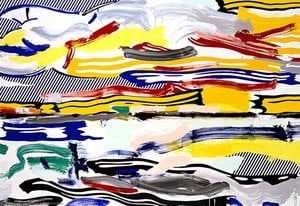
Bull (2) (1973)
Reproduktsiooni suurus
Roy Lichtenstein's “Bull (2),” created in 1973, is more than just a depiction of an animal; it’s a potent distillation of the artist’s signature Pop Art style—a vibrant explosion of color, simplified forms, and a deliberate engagement with the visual language of advertising and comic books. This particular iteration, part of a series exploring the motif of the bull, stands as a testament to Lichtenstein's ability to imbue seemingly mundane subjects with layers of meaning and emotional resonance. The painting immediately commands attention through its striking use of yellow and red – colors traditionally associated with energy, passion, and even danger – creating a dynamic visual tension that draws the viewer in.
The composition itself is deceptively simple. A stylized bull dominates the canvas, rendered in broad, flat areas of color rather than meticulously detailed brushstrokes. This technique, borrowed directly from Ben-Day dots used extensively in commercial printing, gives the image a graphic, almost mechanical quality. The repetition of these small squares creates an illusion of depth and texture, mimicking the effect of printed images. It’s a deliberate move away from traditional representational painting, signaling Lichtenstein's rejection of academic art conventions and his embrace of the visual culture surrounding him.
To fully appreciate “Bull (2),” it’s crucial to understand the context in which it was created. The 1970s were a period of significant social and cultural change, marked by consumerism, mass media saturation, and a growing skepticism towards established institutions. Pop Art emerged as a direct response to this environment, challenging traditional notions of artistic value and exploring the relationship between art and everyday life. Roy Lichtenstein’s work was deeply influenced by artists like Andy Warhol, who similarly appropriated imagery from advertising and popular culture. However, Lichtenstein's approach differed in its deliberate use of Ben-Day dots and his exploration of themes beyond mere replication – he sought to imbue these borrowed images with a sense of narrative and psychological depth.
Born in Manhattan in 1923, Roy Fox Lichtenstein’s artistic journey began with an interest in realistic drawing and painting. His early training at the Art Students League and subsequent studies at Ohio State University provided him with foundational skills, but it was his encounter with Reginald Marsh, a pioneering realist painter, that truly shaped his approach. Marsh's emphasis on direct observation and capturing the essence of subjects through simplified forms proved to be a key influence on Lichtenstein’s later work. His marriage to Dorothy Herzka (née Lichtenstein), also an artist and art historian, further enriched his intellectual and artistic life.
While superficially resembling a commercial print, “Bull (2)” invites deeper interpretation. The bull itself is a potent symbol – often associated with strength, virility, and aggression, but also with fertility and protection. In this context, it can be seen as representing primal forces or perhaps even the anxieties of a rapidly changing society. The vibrant yellow and red colors intensify these associations, creating a sense of urgency and dynamism. The simplified form, devoid of intricate detail, suggests an emotional state rather than a literal representation.
Interestingly, Lichtenstein’s exploration of the bull motif coincided with his interest in mythology and folklore. He frequently referenced ancient stories and symbols in his work, adding layers of historical and cultural significance to his Pop Art images. The series as a whole can be viewed as an investigation into the enduring power of archetypal imagery – how these fundamental symbols continue to resonate across time and cultures.
WahooArt offers meticulously crafted, hand-painted reproductions of “Bull (2)” that capture the essence of Lichtenstein’s original work with remarkable fidelity. Our artists utilize traditional oil painting techniques to faithfully recreate the bold colors, graphic textures, and dynamic composition of this iconic piece. Whether you're a seasoned art collector or seeking to add a touch of Pop Art flair to your interior design scheme, our reproductions provide an authentic and affordable way to bring Lichtenstein’s vision into your home or office.
The scale and color palette of “Bull (2)” make it exceptionally versatile for various settings. Consider pairing it with complementary neutrals to allow the artwork's vibrancy to truly shine, or juxtapose it with more muted tones for a sophisticated contrast. Explore our range of sizes and framing options to find the perfect fit for your space – and experience the enduring appeal of this Pop Art masterpiece.
Roy Fox Lichtenstein korduvad teemad hõlmavad comic book aesthetics, consumerism, american iconography, popular culture, critique of mass media, pop art experimentation, bold colors, lichtenstein’s signature style”; teos "Bull (2) (1973)" keskendub pop art, yellow red, stripes, figure, graphic, bold, lichtenstein.
Teosele "Bull (2) (1973)" on saadaval täiendatud reaalne eelvaade: teose AR-eelvaade teose kohta leht näitab seda teie enda ruumis ühilduval seadmel.
Teos „Bull (2) (1973)“, autor Roy Fox Lichtenstein kuulub kunstilooliselt suunale Pop Art ja on pärit Modern ajastust.


1923 - 1997 , USA

Explore the profound psychological depth of Roy Lichtenstein's color theory. An expert analysis for art collectors on how bold palettes and Ben-Day dots redefine modern aesthetics and luxury interior curation.

Explore the profound impact of the Pop Art Revolution on modern aesthetics. From Lichtenstein’s dots to Warhol’s icons, gain expert insights into how this vibrant movement redefined culture through consumerism and mass media. A definitive guide for art lovers and collectors.
 Eelvaade
 Saada
Saada Jaga
Jaga
 Teave teose kohta
 Juhend

 Laadi alla
 Sarnased teosed
 Röntgenuuring
 Slaidietendus
 KÜSIMUSED JA VASTUSID
 Statistika

 Loe lähemalt









 Klaasivalik on saadaval ainult kuni 110 cm suuruses teostes