
TASUTA KUNSTIKONSULTATSIOON

x
Tellimaks maali Tellimaks maaliOsta digipilt Osta digipilt SaadaSaada
DetailsDetails Lisa lemmikutesse Lisa lemmikutesse Laadi allaLaadi alla Sarnased teosedSarnased teosed X-RayX-Ray SlaidietendusSlaidietendus

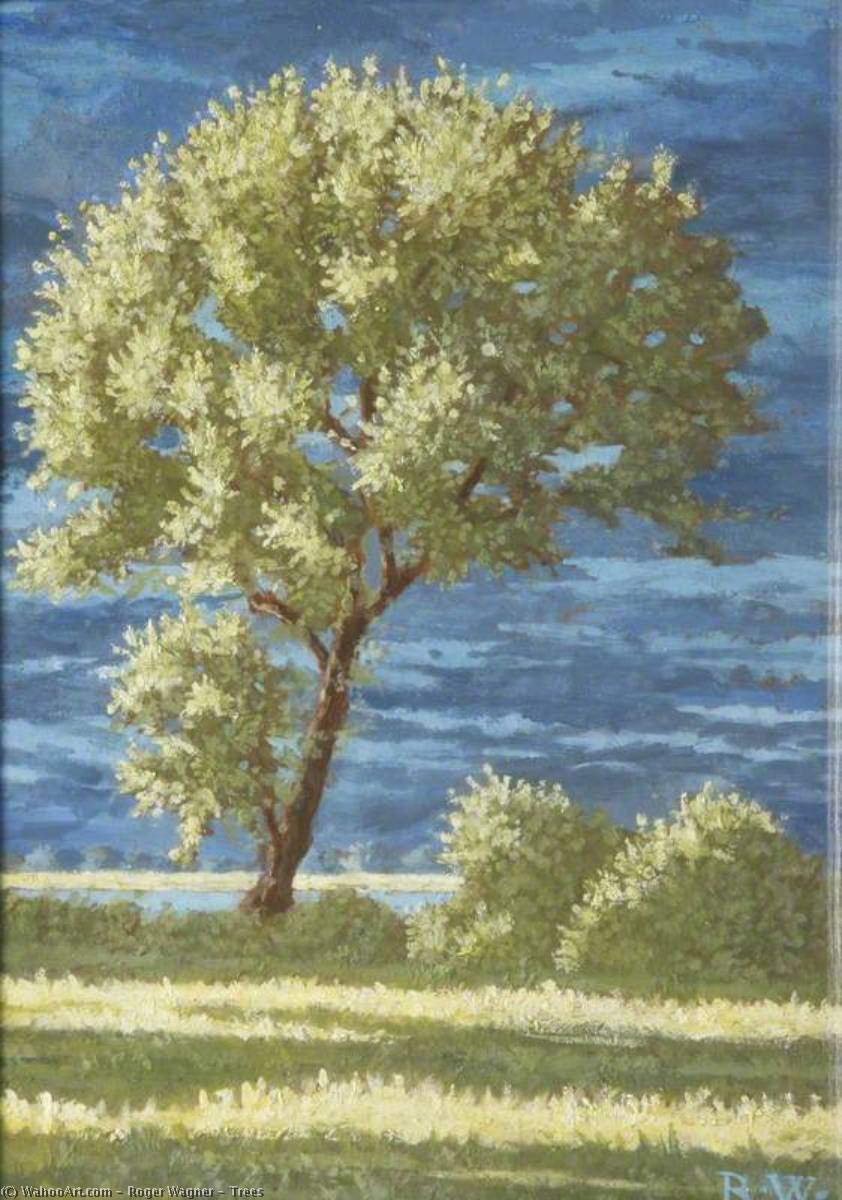
Trees

Explore the captivating art of Roger Wagner (born 1957), an English artist known for his unique fusion of metaphysical, religious, and modern themes in paintings, wood-engravings, stained glass & poetry. Discover his mythic style influenced by de Chi

Giclée / Kunstiprint

Muuseumikvaliteediga giclée- või kangasprint kiire tootmisega ja paindlikud viimistlusvõimalused.

Standard
custom
CM
INCH

Vali meie eelmääratud suurused, mis vastavad teose algupärastele proportsioonidele.

laius
kõrgus

Saate sisestada oma mõõdud, et need sobiks konkreetse raami või ruumi sisse. Kui valitud suurus ei vasta originaalteose proportsioonidele, lõigame teose ära või laiendame pilti peegeldatud või ühtlase servaga. Enne tootmisprotsessi algust saadetakse Teie kinnitamiseks digitaalne näidis.
Palun märka, et ekraanil kuvatav eelvaade ei kajasta tegelikku lõigamist või laiendamist. Ainult näidis kujutab täpselt lõplikku kompositsiooni.
Kuigi erimõõdu on saadaval, soovitame originaaproportsioonide säilitamiseks valida mõõt ette määratud nimekirjast.

Ülemaailmne tarne () 2 nädala jooksul, tavalise 4/5 nädala asemel. (2 juuli)

why_choose_icon
Tasuta ekspresssaatmine üle maailma
why_choose_icon
Kõrgekvaliteediline linakangas
why_choose_icon
Täielik transpordikindlustus
why_choose_icon
Tollimaksude tagastamise garantii
why_choose_icon
Värvitoime täpsuse garantii
why_choose_icon
60-päevane tagastusõig: ainult tootmisdefektide korral
why_choose_icon
100% raha tagasi garantii
why_choose_icon
Hulgusoodustus

Kogu summa

-

reproduction

Trees

Giclée / Kunstiprint

Reproduktsiooni suurus

-

Kogusumma

-


Kunstniku elulugu

Early Life and Influences

James Dickson Innes, born on February 27, 1887, in the small farming community of Claremont, Ontario, was a figure shrouded in both mystery and enduring artistic legacy. His early life, though relatively undocumented, laid the groundwork for his distinctive style – a potent blend of observation, emotion, and a deep connection to the Canadian wilderness. Growing up on a farm near the Bruce Peninsula instilled within him a profound respect for nature, a skill honed through hunting, fishing, and close study of the surrounding landscape. The family’s musical inclinations—singing in the church choir and playing instruments—suggested an appreciation for harmony and rhythm that would later find expression in his art. His father, John Thomson, was a practical man, while his mother, Margaret Matheson, fostered a love of learning and literature within the household, providing him with a rich intellectual environment.

The influence of his upbringing extended beyond mere observation; it involved direct engagement with the natural world. His cousin, Dr. William Brodie, a renowned naturalist, introduced young Innes to the intricacies of botany and zoology, cultivating a keen eye for detail and an understanding of ecological relationships. This early exposure shaped his artistic vision, imbuing his paintings with a sense of authenticity and reverence for the wilderness.

Following his education at Christ College in Brecon, Wales, Innes’s path led him to Toronto, where he enrolled in the Slade School of Art in London. This period marked a crucial turning point, exposing him to European artistic trends—particularly Impressionism and Post-Impressionism—and providing him with formal training in drawing and painting techniques. The vibrant art scene of late 19th and early 20th century London offered a stimulating contrast to the quiet solitude of his rural upbringing.

The Years in Toronto and the Northwest

Upon returning to Canada, Innes found himself immersed in a burgeoning artistic community in Toronto. He worked as an engraver for Maring & Ladd, a prominent printing firm specializing in advertising and commercial art. This experience honed his technical skills and exposed him to a diverse range of subjects—from portraits and landscapes to illustrations and decorative designs. However, the regimented nature of commercial work ultimately proved unsatisfying for the artistically inclined Innes.

Seeking inspiration and a more fulfilling creative outlet, he joined his brothers Ralph and Henry in Seattle, Washington, where they had established the Acme Business College. This move marked a significant shift in his artistic trajectory, as he began to focus on painting landscapes—capturing the rugged beauty of the Pacific Northwest. The region’s dramatic topography, dense forests, and expansive skies provided an endless source of subject matter for his evolving style.

During this period, Innes developed a distinctive approach characterized by bold colors, loose brushwork, and a sense of immediacy. He drew inspiration from the works of Turner and Constable, but ultimately forged his own unique voice—one that reflected both the grandeur of the natural world and the emotional intensity of his personal experience.

The Development of Style and Artistic Vision

Returning to Canada in 1904, Innes settled in Leith, a small village on the Bruce Peninsula. This period proved pivotal in shaping his artistic vision, as he spent countless hours immersed in the wilderness, observing and documenting the ever-changing light and atmosphere of the landscape. He began to experiment with new techniques—particularly watercolor—and developed a more expressive and emotionally charged style.

His work during this time is characterized by a vibrant palette, loose brushwork, and a sense of spontaneity. He sought to capture not just the visual appearance of the landscape but also its underlying mood and energy. The influence of Impressionism is evident in his use of broken color and fleeting effects of light, while his compositions often convey a feeling of solitude and introspection.

In 1908, Innes’s health began to deteriorate, prompting him to seek treatment in Europe. He spent several years traveling through France and Spain, immersing himself in the artistic traditions of these countries. These experiences further broadened his artistic horizons and contributed to the development of his distinctive style.

Later Years and Legacy

Despite facing ongoing health challenges, Innes continued to paint throughout his life, producing a significant body of work that is now recognized as one of the most important examples of Canadian landscape painting. His paintings are characterized by their emotional intensity, vibrant colors, and evocative depictions of the Canadian wilderness.

In 1914, James Dickson Innes died at Swanley, Kent, England, at the age of 27. His untimely death cut short a promising career, but his legacy endures through his paintings, which are held in numerous public and private collections across Canada and beyond. Today, Innes is celebrated as a pioneering figure in Canadian art—a visionary artist who captured the spirit of the wilderness and left an indelible mark on the nation’s artistic landscape.

His work continues to resonate with viewers today, offering a powerful reminder of the beauty and fragility of the natural world.

roger wagner

roger wagner

1914 - 1992

Lühikesed faktid

  • Artistic Movement Or Style: Landscape painting
  • Artists Or Movements Influenced By This Artist: ['Modern painting']
  • Artists Who Influenced This Artist:
    • Turner
    • Constable
    • Cotman
  • Date Of Birth: 27 February 1887
  • Date Of Death: 22 August 1914
  • Full Name: James Dickson Innes
  • Nationality: Welsh
  • Notable Artworks:
    • Infant Jesus
    • Apparition
    • Promenade
  • Place Of Birth: Llanelly, Wales



































