Meie kunstnike poolt tellimusel valmistatud käsitsi maalitud õli-kainaste teos teie soovitud suuruses ja raamis. ( Osta print Osta pilt)





























Vali meie eelmääratud suurused, mis vastavad teose algupärastele proportsioonidele.

Sa võite sisestada oma mõõtmed konkreetse raami või ruumi sobivuse tagamiseks. Kui teie valitud suurus ei vasta originaalpildi proportsioonidele, siis kärvime kunstiteost või laiendame maali täiendavate käsitsi maalitud elementidega. Enne tootmise algust saadetakse teile heakskiitmiseks digitaalne eelvaade.
Palun pidage meeles, et ekraanil kuvatav eelvaade ei kajasta tegelikku kärpimist või laiendamist. Ainult eelvaade näitab täpselt lõplikku kompositsiooni.
Kuigi on saadaval kohandatud suurused, soovitame originaalproportsioonide säilimiseks valida mõõdud eelmääratletud nimekirjast.
Maailmline tarne 3–4 nädala jooksul tavalise 5 nädala asemel. (7 september). Kvaliteedis kompromisse ei tehta.


The first day
Reproduktsiooni suurus
René Magritte's "The First Day," painted in 1943, is not merely a depiction of a man playing the violin; it’s an immersion into the unsettling realm of the subconscious, a quintessential example of Surrealist exploration. This captivating artwork, brimming with ambiguity and quiet drama, invites viewers to confront the very nature of perception and representation – themes central to Magritte's oeuvre. The scene unfolds with a deliberate simplicity that belies its profound psychological depth. A solitary figure, clad in a striking blue jacket, occupies the foreground, his posture suggesting both concentration and a peculiar detachment. He holds his violin aloft, seemingly attempting to play through his nose or mouth – an act simultaneously absurd and deeply evocative.
Created during a period of intense artistic experimentation following World War II, “The First Day” reflects the broader concerns of the Surrealist movement. Magritte, deeply influenced by thinkers like Freud, sought to challenge conventional notions of reality, believing that the subconscious held greater truths than the rational mind. His work aligns with the Surrealists’ desire to liberate art from the constraints of logic and reason, embracing dreamlike imagery and unexpected juxtapositions. Born in 1898 in Lessines, Belgium, Magritte's early life was marked by a significant personal tragedy – his mother’s suicide – an event that profoundly shaped his artistic vision and fueled his fascination with hidden meanings and obscured realities. This formative experience is subtly echoed in the veiled figures and enigmatic scenes that would become hallmarks of his style.
The precise symbolism within “The First Day” remains open to interpretation, a characteristic feature of Magritte’s work. The man playing the violin could represent a multitude of things – perhaps lost innocence, thwarted ambition, or simply the futile attempt to impose order on chaos. The two figures in the background, deliberately indistinct, add another layer of mystery, suggesting the presence of unseen forces or alternative realities. The act of attempting to play through the nose is particularly intriguing, potentially symbolizing a desire to bypass conscious thought and access deeper levels of understanding – a common theme within Surrealist art. Magritte’s deliberate refusal to provide definitive answers encourages viewers to actively engage with the artwork and construct their own interpretations.
Magritte employed a meticulous, almost photographic technique in “The First Day,” utilizing oil paints on canvas with careful attention to detail. His brushstrokes are generally smooth and blended, creating an illusion of realism that paradoxically enhances the painting’s surreal quality. WahooArt.com offers meticulously crafted hand-painted reproductions of this iconic artwork, ensuring that you experience the full impact of Magritte's vision. Our skilled artisans replicate the original technique with exceptional precision, capturing every nuance of color and texture. Each reproduction is created using archival materials, guaranteeing lasting beauty and preserving the integrity of this timeless masterpiece for generations to come.

René Magritte, born René François Ghislain Magritte on November 21, 1898, in Lessines, Belgium, emerged from a childhood profoundly shaped by tragedy – the untimely death of his mother when he was merely thirteen. This formative experience instilled within him an unwavering fascination with mystery, loss, and the unsettling power of what remains unseen; it would subtly permeate his artistic vision throughout his prolific career.
Despite initial inclinations toward Impressionism, Magritte swiftly recognized its limitations in conveying the complexities he wished to explore. He enrolled at the Académie Royale des Beaux-Arts in Brussels, seeking a more rigorous training but ultimately rejecting its formal conventions. Recognizing the influence of Giorgio de Chirico’s *The Song of Love* (1922), Magritte discovered a new aesthetic path—one where familiar landscapes could transform into dreamlike realms and commonplace objects could provoke unsettling questions about reality.
Magritte's commitment to Surrealism solidified in 1926 with *Le Jockey Perdu*, marking his decisive departure from traditional artistic styles. Embracing the principles of automatism championed by André Breton, he sought to liberate creativity from conscious control, mirroring the broader intellectual currents of the era. His distinctive approach distinguished him from many fellow Surrealists; Magritte wasn’t interested in delving into subconscious anxieties through free association but rather in meticulously crafting visual paradoxes that disrupted viewers' perceptions.
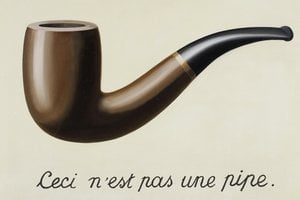
Magritte’s oeuvre is characterized by a masterful manipulation of illusion and representation. *The Treachery of Images (This is not a pipe)* (1929) exemplifies his genius—a deceptively simple depiction that compels us to reconsider the relationship between image and object, mirroring the core tenets of Surrealist thought. Similarly, *Les Amants* (1927-1928), featuring shrouded figures, echoes the trauma of his mother’s death while simultaneously exploring themes of concealment and intimacy. Masterpieces like *Time Transfixed* (1938) and *The Human Condition* (1933) further demonstrate Magritte's ability to unsettle viewers with unsettling juxtapositions and visual puzzles.
René Magritte’s artistic legacy extends far beyond the confines of Belgian art history. His pioneering exploration of Surrealism profoundly impacted subsequent generations of artists—from Pop Art luminaries like Andy Warhol to Minimalist sculptors such as Donald Judd—establishing him as a cornerstone of 20th-century visual culture. Today, his paintings reside in prestigious museum collections worldwide, including the Musées royaux des beaux-arts de Belgique and the Magritte Museum, ensuring that his visionary aesthetic continues to inspire awe and provoke contemplation for decades to come.

1898 - 1967 , Belgia

Master the nuances of Giclée printing with our expert guide. Discover how pigment-based inks and museum-grade substrates create fade-resistant, high-fidelity art reproductions designed for discerning collectors seeking unparalleled quality and longevity.

Delve into the profound mysteries of René Magritte’s Surrealism. Explore an expert analysis of 'The Treachery of Images,' decoding the philosophical paradoxes and visual subversions that redefined modern art history for collectors and connoisseurs alike.

 Eelvaade
 Saada
Saada Jaga
Jaga
 Teave teose kohta

 Laadi alla
 Sarnased teosed
 Röntgenuuring
 Slaidietendus

 Loe lähemalt







 Klaasivalik on saadaval ainult suuruses kuni 110 cm