Eelvaade AR-eelvaade Lülita trükkitoodetele Osta käsitsi maalitud maal Saada
Teave teose kohta Lisa lemmikutesse Laadi alla Sarnased teosed Röntgenuuring Slaidietendus Statistika

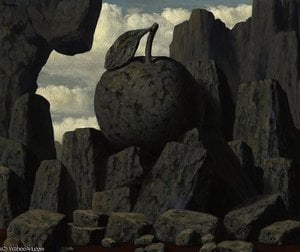
The beautiful realities

René Magritte's 'The Beautiful Realities' captivates with its surreal depiction of an apple floating in air, questioning perception and reality through enigmatic symbolism & dreamlike imagery.

René Magritte (1898–1967) – belgia sürrealist kunstnik, tuntud teostega nagu "The Lovers" ja "Ceci n’est pas une pipe". Tema pilkupüüdvad kompositsioonid sepitavad reaalsust ja kujutist, mõjutades pop-kunsti ja kontseptuaalset kunsti.

Ostke kõrglahutusel ja täiustatud digitaalne pilt, mis on oluliselt parem kui veebilehel näidatud eelvaade.

Iga fail on meie spetsialistide poolt hoolikalt ette valmistatud, kasutades kaasaegseid tööriistu ja professionaalset käsitsi retušeerimist. Tagame, et igal pildil on erakordne selgus, täpne värvitäpsus ja peen detail.

Lõplik fail saadetakse e-posti teel 72 tunni jooksul, olles optimeeritud koheseks kasutamiseks professionaalsetes, toimetuslikes ja trüki keskkondades. See on sama kvaliteet, mida usaldavad tipptasemel disainistuudiod, kirjastused ja galeriid.

Digitaalne kunstiteos

Laadi alla kõrge resolutsiooniga fail isiklikuks vaatamiseks, trükkimiseks ja loomingulisteks projektideks. ( Lülita trükkitoodetele Osta käsitsi maalitud maal)

Lõppsumma

$ 24,90

Sisse kuulub iga digitaalse pildi tellimusega

Eksperdi digitaalne kohaletoimetamine, garanteeritud

Valides WahooArt.com, ei saa sa lihtsalt pilti – saad professionaalselt parandatud digitaalse teose, mida on valmistatud täpsusega ja mis on toetatud rahuldamatusgarantiiga. Siin on kõik, mis sinu tellimusega automaatselt kaasneb:

shipping_icon
Kiire digitaalne saatmine

Teie kõrge resolutsiooniga digitaalne pildifail saadetakse teile e-posti 72 tunni jooksul pärast tellimist – kohe kasutamiseks valmis.

canvas_icon
Tehisintellektiga täiustatud digitaalne fail

Teie teos on professionaalselt optimeeritud arenenud tehisintellekti tööriistade ja käsitsi redigeerimise abil, tagades maksimaalse detailitaseme, selguse ja värvitäpsuse.

insurance_icon
Tasuta eluaegne uuesti saatmine

Kas kustutasid faili kogukalu unustamisel või kustutamisel? Puudub mure – saad selle uuesti igal ajal ilma lisatasuta.

tax_icon
Puuduvad importimaksed – alati

Nautige oma teoseid koheselt ilma tolli-, maksude või tarnimaskuludeta – digiletchargused on alati maksuvabadud.

color_icon
Värvitäpsuse garantii

Me tagame, et teie digitaalne pilt kajastaks originaali värve professionaalsete tööriistade ja värvihalduse abil võimalikult täpselt.

return_icon
100 päeva rahuldamatuse garantii

Kui te ei ole oma digitaalse pildi eest rahul, siis me parandame seda või tagastame 100% summast 100 päeva jooksul – küsimusteta.

guarantee_icon
100% raha tagastamise garantii

Ei ole rahul? Saate täielise tagastaja 100 päeva jooksul pärast digitaalse faili kättesaamist – ilma küsimusteta.

discount_icon
Suurema tellimuse soodustused

Osta 3 pilti, säästa 10% - Osta 5, säästa 15% - Osta 10+, säästa 20%. Sobib suurepäraselt loomingulisteks projektideks, galeriideks ja agentuurideks.

Teave teose kohta

  • Movement: Surrealism
  • Artist: René Magritte
  • Artistic Style: Dreamlike, Symbolic
  • Medium: Painting
  • Influences:
    • De Chirico
    • Magritte
  • Subject: Still Life, Mystery

Kunstiviktoriin

Iga küsimuse kohta on ainult üks õige vastus.

Küsimus 1:
What is the primary surrealist technique employed in René Magritte’s ‘The Beautiful Realities’?
Küsimus 2:
The image depicts an apple floating in the air. What does this seemingly impossible scenario primarily represent, according to Magritte’s artistic intentions?
Küsimus 3:
René Magritte was a prominent figure in which artistic movement?
Küsimus 4:
Considering René Magritte’s biography, what significant event in his childhood likely influenced his artistic themes of mystery and hidden realities?
Küsimus 5:
Which of the following best describes the overall mood or atmosphere conveyed by ‘The Beautiful Realities’?

The Enigmatic Allure of René Magritte’s “The Beautiful Realities”

René Magritte's "The Beautiful Realities," a deceptively simple painting featuring an apple suspended in mid-air above a white tablecloth, is far more than a visual trick. It’s a profound meditation on perception, representation, and the very nature of reality itself – a cornerstone of Surrealist thought that continues to resonate with viewers today. Painted around 1928-1929, during Magritte's intensely productive period in Paris, this work exemplifies his signature style: an unsettling juxtaposition of familiar objects placed within illogical or dreamlike contexts. The painting immediately challenges our assumptions about how we see the world; it’s a deliberate disruption designed to provoke questions rather than offer easy answers.

Magritte's artistic journey leading up to this iconic piece was marked by a fascinating evolution. Initially drawn to Impressionism, he later embraced Cubism and Futurism, absorbing their innovative techniques while simultaneously developing his own distinct visual language. The influence of Giorgio de Chirico, with his enigmatic cityscapes and unsettling figures, is particularly evident in the painting’s mood – a sense of melancholy and mystery that permeates the scene. The subtle details, like the slightly blurred edges of the apple and tablecloth, contribute to this feeling of unreality, suggesting that what we perceive isn't necessarily what *is*.

Deconstructing Reality: Symbolism and Technique

At its core, “The Beautiful Realities” operates as a visual paradox. The apple, a symbol of temptation, knowledge, and even mortality throughout art history, is rendered weightless, defying gravity and existing in a space that shouldn’t allow it to float. This deliberate suspension isn't merely a technical exercise; it represents the breakdown of logical expectations. The white tablecloth, typically associated with domesticity and order, becomes an ambiguous surface – a barrier between the viewer and the apple, or perhaps a representation of the limitations of our understanding.

Magritte’s technique is meticulously controlled yet subtly unsettling. He employed a precise, almost photographic realism in his rendering of the objects, creating a startling contrast with their illogical arrangement. The smooth brushstrokes and careful attention to detail heighten the sense of artificiality, reinforcing the painting's central theme: that representation can be deceptive. He utilized a limited palette – primarily muted greens, whites, and browns – further contributing to the painting’s dreamlike quality. This restrained approach allows the symbolic weight of the objects to take center stage.

A Legacy of Questioning

“The Beautiful Realities” is not simply a charming visual puzzle; it's a key work in understanding Magritte’s broader artistic project. He wasn’t interested in creating beautiful images for their own sake, but rather in exposing the mechanisms by which we construct our perception of reality. His paintings consistently challenge viewers to question what they see and to consider alternative ways of interpreting the world around them.

The painting's influence extends far beyond the Surrealist movement. It has resonated with artists across various disciplines, including Pop Art (particularly Andy Warhol’s use of familiar imagery) and Conceptual Art, where the idea behind the artwork is often more important than its aesthetic qualities. Reproductions of “The Beautiful Realities” continue to be popular choices for interior design, bringing a touch of intellectual intrigue and surreal beauty to any space. Its enduring appeal lies in its ability to spark conversation and invite viewers to contemplate the mysteries of existence – a testament to Magritte’s genius as one of the 20th century's most profound artists.

Bringing “The Beautiful Realities” Home

WahooArt offers meticulously crafted, hand-painted reproductions of René Magritte’s "The Beautiful Realities," ensuring that you experience the full impact of this iconic artwork. Our skilled artisans replicate Magritte's precise technique and subtle nuances with exceptional care, capturing the painting's dreamlike atmosphere and symbolic depth. Whether you are an art collector, a design enthusiast, or simply someone seeking to add a touch of intellectual stimulation to your surroundings, our reproduction provides a beautiful and authentic representation of this seminal work.

Explore our high-resolution digital reproductions and hand-painted versions – each meticulously crafted to preserve the original’s captivating mystery. Discover how “The Beautiful Realities” can transform your space into a realm of contemplation and artistic appreciation.


Kunstniku biograafia

René Magritte (1898–1967): Exploring the Surrealist Landscape

René Magritte, born René François Ghislain Magritte on November 21, 1898, in Lessines, Belgium, emerged from a childhood profoundly shaped by tragedy – the untimely death of his mother when he was merely thirteen. This formative experience instilled within him an unwavering fascination with mystery, loss, and the unsettling power of what remains unseen; it would subtly permeate his artistic vision throughout his prolific career.

Early Artistic Explorations: Impressionism and Beyond

Despite initial inclinations toward Impressionism, Magritte swiftly recognized its limitations in conveying the complexities he wished to explore. He enrolled at the Académie Royale des Beaux-Arts in Brussels, seeking a more rigorous training but ultimately rejecting its formal conventions. Recognizing the influence of Giorgio de Chirico’s *The Song of Love* (1922), Magritte discovered a new aesthetic path—one where familiar landscapes could transform into dreamlike realms and commonplace objects could provoke unsettling questions about reality.

The Surrealist Breakthrough: Challenging Perception

Magritte's commitment to Surrealism solidified in 1926 with *Le Jockey Perdu*, marking his decisive departure from traditional artistic styles. Embracing the principles of automatism championed by André Breton, he sought to liberate creativity from conscious control, mirroring the broader intellectual currents of the era. His distinctive approach distinguished him from many fellow Surrealists; Magritte wasn’t interested in delving into subconscious anxieties through free association but rather in meticulously crafting visual paradoxes that disrupted viewers' perceptions.

Iconic Works and Recurring Themes: Paradoxical Imagery

Magritte’s oeuvre is characterized by a masterful manipulation of illusion and representation. *The Treachery of Images (This is not a pipe)* (1929) exemplifies his genius—a deceptively simple depiction that compels us to reconsider the relationship between image and object, mirroring the core tenets of Surrealist thought. Similarly, *Les Amants* (1927-1928), featuring shrouded figures, echoes the trauma of his mother’s death while simultaneously exploring themes of concealment and intimacy. Masterpieces like *Time Transfixed* (1938) and *The Human Condition* (1933) further demonstrate Magritte's ability to unsettle viewers with unsettling juxtapositions and visual puzzles.

Legacy and Influence: A Surrealist Pioneer

René Magritte’s artistic legacy extends far beyond the confines of Belgian art history. His pioneering exploration of Surrealism profoundly impacted subsequent generations of artists—from Pop Art luminaries like Andy Warhol to Minimalist sculptors such as Donald Judd—establishing him as a cornerstone of 20th-century visual culture. Today, his paintings reside in prestigious museum collections worldwide, including the Musées royaux des beaux-arts de Belgique and the Magritte Museum, ensuring that his visionary aesthetic continues to inspire awe and provoke contemplation for decades to come.

René Magritte

René Magritte

1898 - 1967 , Belgia

Lühikesed faktid

  • Artistic Movement Or Style: Surrealism
  • Artists Who Influenced This Artist: ['Giorgio de Chirico']
  • Date Of Birth: November 21, 1898
  • Date Of Death: August 15, 1967
  • Full Name: René François Ghislain Magritte
  • Nationality: Belgian
  • Notable Artworks:
    • Les Amants
    • The Treachery of Images
    • Time Transfixed
  • Place Of Birth: Lessines, Belgium