Eelvaade AR-eelvaade Lülita trükkitoodetele Ülemineks digitaalse pildiga müügi kanalisse Saada
Teave teose kohta Lisa lemmikutesse Laadi alla Sarnased teosed Röntgenuuring Slaidietendus Statistika

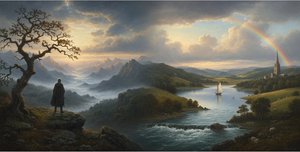
Le domaine d'arnheim

A surrealist landscape featuring a moonlit mountain and an eagle perched above an egg captures the enigmatic spirit of Rene Magritte's 1962 masterpiece, inviting you to explore this profound vision of reality.

René Magritte (1898–1967) – belgia sürrealist kunstnik, tuntud teostega nagu "The Lovers" ja "Ceci n’est pas une pipe". Tema pilkupüüdvad kompositsioonid sepitavad reaalsust ja kujutist, mõjutades pop-kunsti ja kontseptuaalset kunsti.

Käsitsi valmistatud õlimaalireproduktsioon

Meie kunstnike poolt tellimusel valmistatud käsitsi maalitud õli-kainaste teos teie soovitud suuruses ja raamis. ( Lülita trükkitoodetele Ülemineks digitaalse pildiga müügi kanalisse)

P118B $10
P118H $10
P118W $10
P438Z $10
P508JH $12
P508YH $12
P805H $10
P805Z $10
P919BZ $10
P919G $10
P919XJ $10
P959ZH $10
P968JZ $12
W106C $8
W218G $10
W218JH $8
W218Y $10
W307PJ $10
W316G $10
W316PJ $8
W316Y $10
W398PJ $8
W4111J $10
W500HY $15
W500JH $15
W692G $12
W849H $8
W940BG $15
W953PJ $8

Standardne
kohandatud
CM
INCH

Vali meie eelmääratud suurused, mis vastavad teose algupärastele proportsioonidele.

laius
kõrgus

Sa võite sisestada oma mõõtmed konkreetse raami või ruumi sobivuse tagamiseks. Kui teie valitud suurus ei vasta originaalpildi proportsioonidele, siis kärvime kunstiteost või laiendame maali täiendavate käsitsi maalitud elementidega. Enne tootmise algust saadetakse teile heakskiitmiseks digitaalne eelvaade.
Palun pidage meeles, et ekraanil kuvatav eelvaade ei kajasta tegelikku kärpimist või laiendamist. Ainult eelvaade näitab täpselt lõplikku kompositsiooni.
Kuigi on saadaval kohandatud suurused, soovitame originaalproportsioonide säilimiseks valida mõõdud eelmääratletud nimekirjast.

Näited muudetavatest elementidest: asenda nägu kliendi fotoga; lisa lemmikloom (nt asenda kass koeraga); lisa taustale peidetud sõnum; muuda tausta maastikku või elemente.
Pärast tellimust saadab WahooArt.com meeskond kliendile e-posti juhised ning esitab eelvaate kavandi.

Maailmline tarne 3–4 nädala jooksul tavalise 5 nädala asemel. (18 september). Kvaliteedis kompromisse ei tehta.

why_choose_icon
Tasuta ekspresssaatmine üle maailma
why_choose_icon
Kõrgekvaliteediline linakangas
why_choose_icon
Täielik transpordikindlustus
why_choose_icon
Tollimaksude tagastamise garantii
why_choose_icon
Värvitoime täpsuse garantii
why_choose_icon
100 päeva tagastusõigus (ainult tootmisdefektide korral)
why_choose_icon
100% raha tagasi garantii
why_choose_icon
Hulgusoodustus

Kogu summa

$ 272

reproduction

Le domaine d'arnheim

Reproduktsiooni tehnika

Reproduktsiooni suurus

-

Kogusumma

$ 272

Teave teose kohta

  • Location: Royal Museums of Fine Arts of Belgium, Brussels
  • Artist: René Magritte
  • Title: Le domaine d’Arnheim
  • Artistic style: Symbolic painting
  • Influences: Edgar Allan Poe
  • Notable elements or techniques: Eagle head motif; juxtaposition of landscape and still life.
  • Dimensions: 35 x 27 cm

Kunstiviktoriin

Iga küsimuse kohta on ainult üks õige vastus.

Küsimus 1:
What literary work inspired René Magritte to create ‘Le Domaine d’Arnheim’?
Küsimus 2:
Which artistic movement is ‘Le Domaine d’Arnheim’ primarily associated with?
Küsimus 3:
What prominent element appears in the painting's composition, referencing Edgar Allan Poe's story?
Küsimus 4:
What is the dominant color scheme used in ‘Le Domaine’?
Küsimus 5:
René Magritte famously explored themes of perception and reality. How does 'Le Domaine d’Arnheim' contribute to this exploration?

A Surrealist Echo of Poe's Imagination

René Magritte’s “Le Domaine d’Arnheim,” painted in 1962, stands as a quintessential example of surrealist art—a deceptively simple composition brimming with layered symbolism and intellectual provocation. More than just a landscape depiction, it is an invitation to contemplate the elusive nature of reality itself. The piece draws profound inspiration from Edgar Allan Poe’s haunting tale, “The Domain of Arnheim,” which explores themes of idealized beauty and the inherent impossibility of achieving perfection. In this visual dialogue, Magritte translates literary melancholy into a silent, breathtaking landscape that lingers in the mind long after the first glance.

The painting presents a mountain range dominated by a solitary eagle perched atop a rocky outcrop, set against a sky where a moon hangs with quiet authority. Below this majestic scene lies an egg nestled on the ground, symbolizing potential and nascent life—a subtle mirror to the protagonist's ambition in Poe's story. The composition creates a sense of mystery and wonder, inviting viewers to step into a realm where the boundaries between reality and dream dissolve into a quiet, unsettling beauty.

Technique and the Art of Ambiguity

Executed in gouache on paper, Magritte utilized a technique known for its opacity and ability to achieve rich, saturated colors. This medium allowed him to create a visual tension that is central to the work's emotional impact; the muted blues of the sky contrast sharply with the earthy, grounded tones of the mountain. His meticulous attention to detail is evident in the delicate rendering of the eagle’s feathers and the subtle, soft shading on the rock face, demonstrating a dedication to capturing an idealized, almost hyper-real vision.

Magritte’s mastery lies in his ability to use familiar objects in unexpected contexts. By placing these elements—the bird, the egg, the moon—within a landscape that feels both vast and claustrophobic, he provokes questions about the nature of representation. For collectors and interior designers, this piece offers a sophisticated focal point, bringing an intellectual depth to any space. It is not merely a decoration but a conversation starter, a window into the cerebral magic that Magritte perfected during his mature period.

Symbolism and Emotional Resonance

Every element within Le Domaine d’Arnheim serves a symbolic purpose, weaving together a narrative of aspiration and limitation. The eagle, a symbol of majesty and vigilance, represents an unwavering determination; yet, its position atop the mountain suggests a ceiling to such greatness—it cannot ascend further, mirroring the futility of striving for unattainable perfection. This duality is what makes the work so profoundly moving, capturing the human struggle between our grandest dreams and our physical realities.

The presence of the egg adds a layer of poignant hope, suggesting that even within the limitations of existence, there is always the seed of something new. For those seeking to adorn their homes with art that inspires contemplation, this reproduction offers more than aesthetic pleasure; it provides an emotional anchor. It is a piece that embodies the "architect of ambiguity," making it an exquisite choice for those who appreciate art that challenges the eye and touches the soul.


Kunstniku elulugu

René Magritte (1898–1967): Exploring the Surrealist Landscape

René Magritte, born René François Ghislain Magritte on November 21, 1898, in Lessines, Belgium, emerged from a childhood profoundly shaped by tragedy – the untimely death of his mother when he was merely thirteen. This formative experience instilled within him an unwavering fascination with mystery, loss, and the unsettling power of what remains unseen; it would subtly permeate his artistic vision throughout his prolific career.

Early Artistic Explorations: Impressionism and Beyond

Despite initial inclinations toward Impressionism, Magritte swiftly recognized its limitations in conveying the complexities he wished to explore. He enrolled at the Académie Royale des Beaux-Arts in Brussels, seeking a more rigorous training but ultimately rejecting its formal conventions. Recognizing the influence of Giorgio de Chirico’s *The Song of Love* (1922), Magritte discovered a new aesthetic path—one where familiar landscapes could transform into dreamlike realms and commonplace objects could provoke unsettling questions about reality.

The Surrealist Breakthrough: Challenging Perception

Magritte's commitment to Surrealism solidified in 1926 with *Le Jockey Perdu*, marking his decisive departure from traditional artistic styles. Embracing the principles of automatism championed by André Breton, he sought to liberate creativity from conscious control, mirroring the broader intellectual currents of the era. His distinctive approach distinguished him from many fellow Surrealists; Magritte wasn’t interested in delving into subconscious anxieties through free association but rather in meticulously crafting visual paradoxes that disrupted viewers' perceptions.

Iconic Works and Recurring Themes: Paradoxical Imagery

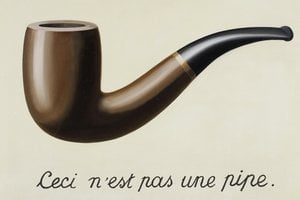
Magritte’s oeuvre is characterized by a masterful manipulation of illusion and representation. *The Treachery of Images (This is not a pipe)* (1929) exemplifies his genius—a deceptively simple depiction that compels us to reconsider the relationship between image and object, mirroring the core tenets of Surrealist thought. Similarly, *Les Amants* (1927-1928), featuring shrouded figures, echoes the trauma of his mother’s death while simultaneously exploring themes of concealment and intimacy. Masterpieces like *Time Transfixed* (1938) and *The Human Condition* (1933) further demonstrate Magritte's ability to unsettle viewers with unsettling juxtapositions and visual puzzles.

Legacy and Influence: A Surrealist Pioneer

René Magritte’s artistic legacy extends far beyond the confines of Belgian art history. His pioneering exploration of Surrealism profoundly impacted subsequent generations of artists—from Pop Art luminaries like Andy Warhol to Minimalist sculptors such as Donald Judd—establishing him as a cornerstone of 20th-century visual culture. Today, his paintings reside in prestigious museum collections worldwide, including the Musées royaux des beaux-arts de Belgique and the Magritte Museum, ensuring that his visionary aesthetic continues to inspire awe and provoke contemplation for decades to come.

René Magritte

René Magritte

1898 - 1967 , Belgia

Lühikesed faktid

  • Artistic Movement Or Style: Surrealism
  • Artists Who Influenced This Artist: ['Giorgio de Chirico']
  • Date Of Birth: November 21, 1898
  • Date Of Death: August 15, 1967
  • Full Name: René François Ghislain Magritte
  • Nationality: Belgian
  • Notable Artworks:
    • Les Amants
    • The Treachery of Images
    • Time Transfixed
  • Place Of Birth: Lessines, Belgium
Avastage teoseid, mis on koondatud teemade, stiilide ja omaduste kaupa.