Meie kunstnike poolt tellimusel valmistatud käsitsi maalitud õli-kainaste teos teie soovitud suuruses ja raamis. ( Osta print Osta pilt)





























Vali meie eelmääratud suurused, mis vastavad teose algupärastele proportsioonidele.

Sa võite sisestada oma mõõtmed konkreetse raami või ruumi sobivuse tagamiseks. Kui teie valitud suurus ei vasta originaalpildi proportsioonidele, siis kärvime kunstiteost või laiendame maali täiendavate käsitsi maalitud elementidega. Enne tootmise algust saadetakse teile heakskiitmiseks digitaalne eelvaade.
Palun pidage meeles, et ekraanil kuvatav eelvaade ei kajasta tegelikku kärpimist või laiendamist. Ainult eelvaade näitab täpselt lõplikku kompositsiooni.
Kuigi on saadaval kohandatud suurused, soovitame originaalproportsioonide säilimiseks valida mõõdud eelmääratletud nimekirjast.
Maailmline tarne 3–4 nädala jooksul tavalise 5 nädala asemel. (7 september). Kvaliteedis kompromisse ei tehta.


Key To The Fields
Reproduktsiooni suurus
To gaze upon this scene is to confront the very nature of perception itself. It presents what appears at first glance to be a tranquil domestic moment—a window opening onto a verdant, distant landscape framed by gentle curtains. Yet, beneath the veneer of pastoral serenity lies an unsettling undercurrent, characteristic of the master Surrealist, René Magritte. The composition invites the viewer into a space that is simultaneously inviting and deeply mysterious. The open window acts as a threshold, suggesting passage from one reality to another, or perhaps merely between the sheltered interior life and the vast unknown outside.
What elevates this piece beyond mere landscape painting are those scattered fragments of broken glass. These shards are not incidental; they are crucial narrative elements. In Magritte’s lexicon, nothing is accidental. The shattered panes disrupt the otherwise seamless illusion of the view, forcing the eye—and the mind—to acknowledge the artificiality of the scene. They represent fractured perception, moments where the comforting solidity of reality gives way to sharp, unexpected truths. Are these broken memories? Are they glimpses into a subconscious landscape? Magritte compels us to question what we take for granted when we look out of any window.
The technique employed here masterfully balances meticulous realism with dreamlike dislocation. The rendering of the distant trees and the soft folds of the curtain suggest a highly skilled, almost academic approach to representation. This technical proficiency is what makes the surreal elements—the broken glass, the ambiguous framing—so jarringly effective. It is this tension between flawless execution and illogical placement that defines the emotional resonance of the work. The atmosphere is one of quiet contemplation, tinged with an exquisite melancholy.
For the discerning collector or interior designer, this reproduction offers more than just decoration; it offers a philosophical anchor for any room. It speaks to those who appreciate art that provokes thought rather than merely soothing the eye. Placing such a piece in a space—be it a drawing-room or a study—suggests an appreciation for intellectual depth and the beauty found within ambiguity. It is a conversation starter, whispering secrets about perception and the fragile boundary between what we see and what truly is.

René Magritte, born René François Ghislain Magritte on November 21, 1898, in Lessines, Belgium, emerged from a childhood profoundly shaped by tragedy – the untimely death of his mother when he was merely thirteen. This formative experience instilled within him an unwavering fascination with mystery, loss, and the unsettling power of what remains unseen; it would subtly permeate his artistic vision throughout his prolific career.
Despite initial inclinations toward Impressionism, Magritte swiftly recognized its limitations in conveying the complexities he wished to explore. He enrolled at the Académie Royale des Beaux-Arts in Brussels, seeking a more rigorous training but ultimately rejecting its formal conventions. Recognizing the influence of Giorgio de Chirico’s *The Song of Love* (1922), Magritte discovered a new aesthetic path—one where familiar landscapes could transform into dreamlike realms and commonplace objects could provoke unsettling questions about reality.
Magritte's commitment to Surrealism solidified in 1926 with *Le Jockey Perdu*, marking his decisive departure from traditional artistic styles. Embracing the principles of automatism championed by André Breton, he sought to liberate creativity from conscious control, mirroring the broader intellectual currents of the era. His distinctive approach distinguished him from many fellow Surrealists; Magritte wasn’t interested in delving into subconscious anxieties through free association but rather in meticulously crafting visual paradoxes that disrupted viewers' perceptions.
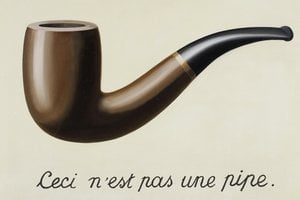
Magritte’s oeuvre is characterized by a masterful manipulation of illusion and representation. *The Treachery of Images (This is not a pipe)* (1929) exemplifies his genius—a deceptively simple depiction that compels us to reconsider the relationship between image and object, mirroring the core tenets of Surrealist thought. Similarly, *Les Amants* (1927-1928), featuring shrouded figures, echoes the trauma of his mother’s death while simultaneously exploring themes of concealment and intimacy. Masterpieces like *Time Transfixed* (1938) and *The Human Condition* (1933) further demonstrate Magritte's ability to unsettle viewers with unsettling juxtapositions and visual puzzles.
René Magritte’s artistic legacy extends far beyond the confines of Belgian art history. His pioneering exploration of Surrealism profoundly impacted subsequent generations of artists—from Pop Art luminaries like Andy Warhol to Minimalist sculptors such as Donald Judd—establishing him as a cornerstone of 20th-century visual culture. Today, his paintings reside in prestigious museum collections worldwide, including the Musées royaux des beaux-arts de Belgique and the Magritte Museum, ensuring that his visionary aesthetic continues to inspire awe and provoke contemplation for decades to come.

1898 - 1967 , Belgia

Embark on a visual journey through the subconscious. Explore our expert guide to Surrealist landscapes, uncovering the dreamlike techniques of masters like Dalí to deepen your appreciation for this captivating art movement.

Embark on a visual journey through the luminous world of stained glass art. Discover the exquisite craftsmanship, historical significance, and captivating beauty of masterworks from Art Nouveau to the Gothic era, curated for the discerning fine art enthusiast.

 Eelvaade
 Saada
Saada Jaga
Jaga
 Teave teose kohta

 Laadi alla
 Sarnased teosed
 Röntgenuuring
 Slaidietendus

 Loe lähemalt







 Klaasivalik on saadaval ainult suuruses kuni 110 cm