Kunstniku elulugu
Pieter Cornelis Mondriaani Elu ja Kunst: Geomeetrilise Abstraktsiooni Pühitsemine
Pieter Cornelis Mondriaan, hiljem tuntud kui Piet Mondrian (1872–1944), oli hollandi kunstnik, kes muutis radikaalselt kunsti maailma. Tema teekond algas Amersfoortis, Hollandis, kus ta kasvas üles perekonnas, mis väärtustas nii kunsti kui ka haridust – isa oli kooli direktor ja onu juba tuntud maalikunstnik. Noore Mondriaani varased tööd peegeldavad traditsioonilist hollandi maalimaastikku, tuues esile Haagi koolkonna mõju ning rõhutades realistlikke vaatepilte ja õrnade värvitoonide kasutamist. Kuid juba sel perioodil oli näha noore kunstniku sisemist pinget – soov lahti saada lihtsast jäljendamisest ja jõuda midagi sügemat, universaalset väljendama. Ta katsetas erinevate stiilidega, alustades punktillismist kuni fauvismini, kuid kumbki ei suutnud täielikult rahuldada tema kasvavat vajadust lihtsustamise järele. See periood oli oluline eelviimine tema hilisemale revolutsioonilisele lähenemisele kunstile.
Pariisi Avangard ja Neoplastitsismi Sünd
1912. aastal Pariisi kolimine kujutas endast murdepunkti Mondriaani elus. Prantsuse pealinn oli tollaseks muutunud avangardi keskuseks, kus noored kunstnikud üritasid vabaneda traditsioonist ja luua uut kunsti. Siin kohtas Mondrian kubismi, mis mõjutas tema loomingut sügavalt. Ta hakkas kujusid dekonstrueerima, jagades need geomeetrilisteks elementideks ning liikudes kaugemale objekti lihtsa esitlusest – ta püüdis väljendada oma vaatenurka ja maailma sisemisi seoseid. Kuid Mondriaani teekond kubismi kaudu oli pigem etapp tema isikliku filosoofia poole liikumisel. Tema sügav huvi Theosooofia vastu, mis keskendus universaalsetele vaimsetele tõdedele, viis ta lõpuks neoplastitsismi loomiseni – kunstivoolu, kus värvid ja vormid on redutseeritud nende kõige lihtsama vormini: sirgjooned, täisnurksed kujud ning peamiselt punane, sinine ja kollane. Neoplastitsism ei olnud tema jaoks mitte ainult stiil, vaid ka vahend universumi harmooniat väljendada – visuaalne manifestatsioon vaimse korrastuse kohta.
De Stijl Liikumine ja Geomeetrilise Püha Vormi Tõestamine
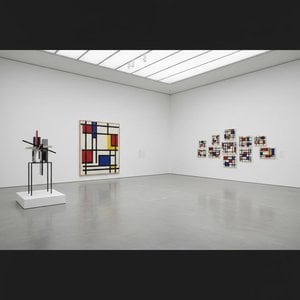
Mondriaani ideed said veelgi jõulisema väljendusvormi, kui ta koos Theo van Doesburgiga asutas *De Stijl* liikumise. See oli rohkem kui kunstnikerühm – see oli manifestatsioon uue esteetilise maailmavaate kohta, mis püüdis ühendada kunsti, arhitektuuri ja disaini ühtseks tervikuks. *De Stijl* liikmed uskusid, et lihtsus ja selgus on võtmevabad universumi tõe väljendamiseks. Mondriaani maalidele iseloomustav rangelt geomeetriline struktuur – mustad jooned, mis piiritlevad värvilisi ristkülikke – ei ole mitte ainult esteetilise valiku tulemus, vaid ka sügavalt filosoofiline avaldus. Ta nägi selles vormis universumi aluseid, vaimset korda, mida kunstniku ülesandeks oli visuaalselt väljendada. Tema teosed *Ko kompositsioon punase, sinise ja kollasega* ning *Tableau nr 2 Kompositsioon V* on selle filosoofia silmapaistvad näited – nad kehastavad neoplastitsismi ideaale täiuslikus vormis.
Viimased Tööd ja New Yorki Rütmid
Teise maailmasõja puhkemisel oli Mondriaan sunnitud Euroopast põgenema ning ta leidis varjupaiga New Yorgis. See ümbruskond, eriti linna võre-tänavate struktuur, avaldas tema kunstile uut mõju. Tema hilisemad tööd, nagu *Broadway Boogie Woogie*, näitavad selget nihkumist – kuigi ta säilitas neoplastitsismi põhilised elemendid, lisas ta oma teostele dünaamilisust ja rütmi, mis peegeldab New Yorgi pulssivat elanikkonda ja džässmuusikat. Täisnurksed kujud hakkasid tantsima ja ristuma, luues uue energiatunde. See oli nagu Mondriaani kunstikeel oleks leidnud uued väljendusvõimalused, võimaldades tal väljendada kaasaegse linnaelu keerukust geomeetrilise abstraktsiooni abil. Tema surmani 1944. aastal jätkas ta oma stiili arendamist, jättes maha pärandi, mis on inspireerinud põlvi kunstnikke ja disainereid.
Pärand: Abstraktse Kunsti Monument
Piet Mondriaani mõju kunstimaailmale on tohutu. Ta ei olnud ainult maalikunstnik; ta oli visionäär, kes muutis radikaalselt abstraktsiooni potentsiaali väljendada universaalseid tõdesid. Tema töö on sügavalt mõjutanud paljusid kunstiliikumisi, nagu abstraktne ekspressionism, minimalism ja värvipinnalikkus. Kuid tema mõju ulatub kaugemale lõuendi piiridest – neoplastitsismi põhimõtted, nagu lihtsus, selgus ja geomeetriline korrastatus, on tunginud arhitektuurisse, disaini ja moeni. Alates mööblist ja tekstiilidest kuni hoonete fassaadideni ja graafiliste kujundusteni – Mondriaani esteetika jätkab meie visuaalset maailma vormistamist. Ta jääb ikooniks kaasaegses kunstis, abstraktse kunsti otsingu sümbolina ning vankumatu usuga kunsti muutvussejõusse.



 Eelvaade
 Lülita trükkitoodetele
 Saada
Saada Jaga
Jaga
 Teave teose kohta

 Laadi alla
 Sarnased teosed
 Röntgenuuring
 Slaidietendus
 Statistika

 Loe lähemalt






































 Klaasivalik on saadaval ainult suuruses kuni 110 cm