


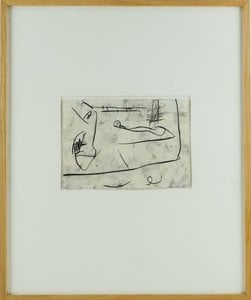
 1992
1992 22.0 x 30.0 cm
 Culturgest - Fundação Caixa Geral de Depósitos
Ostke kõrglahutusel ja täiustatud digitaalne pilt, mis on oluliselt parem kui veebilehel näidatud eelvaade.
Iga fail on meie spetsialistide poolt hoolikalt ette valmistatud, kasutades kaasaegseid tööriistu ja professionaalset käsitsi retušeerimist. Tagame, et igal pildil on erakordne selgus, täpne värvitäpsus ja peen detail.
Lõplik fail saadetakse e-posti teel 72 tunni jooksul, olles optimeeritud koheseks kasutamiseks professionaalsetes, toimetuslikes ja trüki keskkondades. See on sama kvaliteet, mida usaldavad tipptasemel disainistuudiod, kirjastused ja galeriid.
Laadi alla kõrge resolutsiooniga fail isiklikuks vaatamiseks, trükkimiseks ja loomingulisteks projektideks. ( Osta print Osta käsitsi maalitud maal)
Valides WahooArt.com, ei saa sa lihtsalt pilti – saad professionaalselt parandatud digitaalse teose, mida on valmistatud täpsusega ja mis on toetatud rahuldamatusgarantiiga. Siin on kõik, mis sinu tellimusega automaatselt kaasneb:

Teie kõrge resolutsiooniga digitaalne pildifail saadetakse teile e-posti 72 tunni jooksul pärast tellimist – kohe kasutamiseks valmis.

Teie teos on professionaalselt optimeeritud arenenud tehisintellekti tööriistade ja käsitsi redigeerimise abil, tagades maksimaalse detailitaseme, selguse ja värvitäpsuse.

Kas kustutasid faili kogukalu unustamisel või kustutamisel? Puudub mure – saad selle uuesti igal ajal ilma lisatasuta.

Nautige oma teoseid koheselt ilma tolli-, maksude või tarnimaskuludeta – digiletchargused on alati maksuvabadud.

Me tagame, et teie digitaalne pilt kajastaks originaali värve professionaalsete tööriistade ja värvihalduse abil võimalikult täpselt.

Kui te ei ole oma digitaalse pildi eest rahul, siis me parandame seda või tagastame 100% summast 100 päeva jooksul – küsimusteta.

Ei ole rahul? Saate täielise tagastaja 100 päeva jooksul pärast digitaalse faili kättesaamist – ilma küsimusteta.

Osta 3 pilti, säästa 10% - Osta 5, säästa 15% - Osta 10+, säästa 20%. Sobib suurepäraselt loomingulisteks projektideks, galeriideks ja agentuurideks.

Born in Porto, Portugal, in 1963, Pedro Sousa Vieira’s artistic journey is one of relentless exploration and a profound engagement with the materiality of drawing. He isn't merely a drawer; he’s an investigator, pushing the boundaries of this seemingly simple medium to reveal complex layers of meaning and experience. His work, spanning drawing, painting, photography, sculpture, and installation art, reflects a deeply personal and often obsessive process – a dedication that has yielded over thirty thousand drawings, meticulously sifted down to a select three hundred, each imbued with a quiet intensity.
Vieira’s early life in Porto provided fertile ground for his artistic sensibility. While details of his upbringing remain somewhat private, the city's rich cultural heritage – its maritime history, its vibrant art scene, and its connection to Portugal’s past – undoubtedly shaped his perspective. He moved to Braga in the early 1990s, establishing a studio within a historic house, transforming it into a dedicated space for drawing. This environment—characterized by bare walls covered in charcoal sketches—became central to his creative process. As described in an article from Culturgest, the studio was “a small space for such work done obsessively from morning to night,” a testament to the demanding nature of his practice.
Central to understanding Vieira’s art is the nature of his drawing itself. He deliberately declines the verb "to draw," seeking instead to explore what emerges when drawing is divorced from conscious analysis. This approach, documented in a Google Arts & Culture piece, reveals a process driven by intuition and gesture—a deliberate abandonment of critical judgment. The resulting drawings are not simply representations but rather embodiments of an internal state, a distillation of experience captured through the slow, deliberate application of charcoal.
The technique is remarkably consistent: sheets of paper drawn on both sides, aged by time and the absorption of charcoal. This aging process isn’t considered detrimental; instead, it's embraced as integral to the work’s character. The subtle ghosting of previous drawings—the faint echoes of past iterations—creates a layered complexity, suggesting a continuous dialogue between the artist and his subject. As one observer noted, these drawings “are perhaps the most impressive set in a drawing-centred project carried out over recent years,” embodying a profound understanding of material and process.
While Vieira’s work resists easy categorization, certain influences are discernible. The influence of traditional charcoal drawing techniques is undeniable, yet he transcends mere replication. His work echoes the intensity of artists like João Queiroz and Ângelo de Sousa, both Portuguese masters known for their meticulous and deeply personal drawings. The collection at Culturgest, featuring a series of untitled works from the early 1990s, exemplifies this approach – a concentrated body of drawings that speak to a singular, almost meditative state.
Notable pieces include “Untitled” (1992), a work characterized by its dense layering and subtle shifts in tone. The sheer volume of his output—over thirty thousand drawings—suggests an ongoing exploration of form, texture, and the inherent qualities of charcoal. His work has been exhibited nationally and internationally, solidifying his position as a significant contemporary Portuguese artist.
Pedro Sousa Vieira’s dedication to drawing has garnered critical recognition throughout his career. He was awarded the 10th Amadeo de Souza-Cardoso Award in 2015, a prestigious prize recognizing excellence in Portuguese art. His work is held in prominent collections including Ar.Co, Caixa Geral de Depósitos, and Serralves Foundation, demonstrating its enduring value and significance within the broader context of contemporary visual arts.
Beyond his individual achievements, Vieira’s practice represents a powerful affirmation of drawing as a vital artistic medium—a means of exploring inner landscapes, capturing fleeting moments, and engaging with the fundamental materiality of art itself. His work invites viewers to slow down, observe closely, and contemplate the quiet power of charcoal on paper.
1963 - , Portugal

 Eelvaade
 Saada
Saada Jaga
Jaga
 Teave teose kohta

 Laadi alla
 Sarnased teosed
 Röntgenuuring
 Slaidietendus
 Loe lähemalt


