


Muuseumikvaliteediga giclée- või kangasprint kiire tootmisega ja paindlikud viimistlusvõimalused. ( Osta käsitsi maalitud maal Osta pilt)





























Vali meie eelmääratud suurused, mis vastavad teose algupärastele proportsioonidele.

Saate sisestada oma mõõdud, et need sobiks konkreetse raami või ruumi sisse. Kui valitud suurus ei vasta originaalteose proportsioonidele, lõigame teose ära või laiendame pilti peegeldatud või ühtlase servaga. Enne tootmisprotsessi algust saadetakse Teie kinnitamiseks digitaalne näidis.
Palun märka, et ekraanil kuvatav eelvaade ei kajasta tegelikku lõigamist või laiendamist. Ainult näidis kujutab täpselt lõplikku kompositsiooni.
Kuigi erimõõdu on saadaval, soovitame originaaproportsioonide säilitamiseks valida mõõt ette määratud nimekirjast.
Ülemaailmne tarne () 2 nädala jooksul, tavalise 4/5 nädala asemel. (7 september)


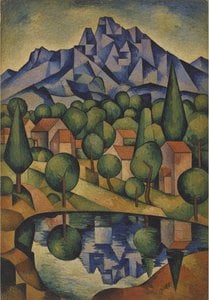
Jourdan's Cottage
Reproduktsiooni suurus
Cézanne's approach to painting was revolutionary. Rejecting the fleeting effects of light and atmosphere championed by Impressionists like Monet, he sought instead to represent objects as they *appear* to the eye—a process that involved fracturing them into geometric planes and layering these planes upon one another. This technique isn’t merely about accuracy; it's an attempt to capture the underlying structure of reality itself, a concept Cézanne termed “forme intérieure” – inner form.
The composition is deceptively simple: a modest cottage dominates the canvas, its yellow exterior radiating warmth against the cool tones of the surrounding landscape. Two windows punctuate the side wall, offering glimpses into interior space and inviting contemplation. A smaller building sits in the background, adding depth to the scene and anchoring it within the broader panorama. Cézanne meticulously rendered the tree branches reaching upwards from the foreground, their contours subtly distorted—a hallmark of his Cubist style.
The watercolor medium perfectly suited Cézanne’s vision. Its ability to blend colors seamlessly allowed him to achieve remarkable luminosity and tonal gradation, capturing the nuances of light and shadow with unparalleled delicacy. Yet, beneath this apparent softness lies a carefully constructed geometric framework—a deliberate rejection of Impressionistic illusionism. Each brushstroke contributes to the overall impression of solidity and permanence, reflecting Cézanne’s belief that art should strive for timeless beauty.
“Jourdan’s Cottage” resonates deeply with viewers because it speaks to a fundamental human desire: to find solace and inspiration in the natural world. Cézanne's unwavering focus on form—the way objects exist independently of our perception—challenges us to reconsider how we see and understand the visual environment. It is a painting that invites repeated viewing, revealing new layers of complexity with each encounter.
For those seeking to delve deeper into Cézanne’s artistic legacy, exploring “Mont Sainte-Victoire” (MOMA) and “River at the bridge of the three sources” offers invaluable insight into his masterful manipulation of color and form—works that cemented his place as a progenitor of modern art.
To discover more about Cézanne’s life and work, visit WahooArt.com.


1839 - 1906 , Prantsusmaa

Explore the transformative era of Post-Impressionism. Discover how masters like Cézanne and Matisse revolutionized color and form, moving beyond Impressionism to shape modern art history through structural innovation and expressive emotion.

Master the nuances of Impressionism vs. Post-Impressionism with our expert guide. Explore the revolutionary shift from Monet’s fleeting light to Van Gogh’s emotional depth. Discover how these iconic movements continue to inspire fine art collectors and modern interiors today.
Explore the profound legacy of Paul Cézanne. Discover how his mastery of geometric forms and vibrant color bridged Impressionism and Cubism, offering timeless inspiration for fine art collectors and enthusiasts seeking to understand the foundations of modern art.

 Eelvaade
 Saada
Saada Jaga
Jaga
 Teave teose kohta

 Laadi alla
 Sarnased teosed
 Röntgenuuring
 Slaidietendus

 Loe lähemalt







 Klaasivalik on saadaval ainult suuruses kuni 110 cm


