
Sellel lehel kuvatav kunstiteos on kaitstud autoriõigusega, mis tähendab, et meil ei ole seaduslikku õigust luua või müüa identset reproduktsiooni. Seda kaitset rakendatakse rahvusvaheliste kokkulepete alusel, nagu näiteks Berne konventsioon ning riiklike seadustega, sealhulgas nendega, mida on sätestatud USA autoriõiguse seadus – 17. peatükk.
See meetod järgib täielikult autoriõiguse reegleid, kuna see ei põhine kaitstud kunstiteose kopeerimisel või dupliteerimisel. Selle asemel on tegu loova reinterpreetatsiooniga – uue maaldisega, mis on algteosest inspireeritud, kuid ei ole sellest identiline.
Muuseumikvaliteediga giclée- või kangasprint kiire tootmisega ja paindlikud viimistlusvõimalused. ( Osta käsitsi maalatud teos Lülita digitaalse pildi juurde)





























Vali meie eelmääratud suurused, mis vastavad teose algupärastele proportsioonidele.

Sisestage vajalik laius ja kõrgus, et see sobiks teie raamile või seinale. Trükki saab ainult lõigata, seda ei saa kunagi pildist suuremaks teha, seega ka erineva mustega suurus kaotab osa pildist. Enne trükkimist saadame teile kinnitamiseks digitaalse näidisprojektsiooni. Sellel lehel näidatud pilt ei kujuta reaalset lõiget — seda näitab ainult näidisprojektsioon.
Ülemaailmne tarne () 2 nädala jooksul, tavalise 4/5 nädala asemel. (1 november)
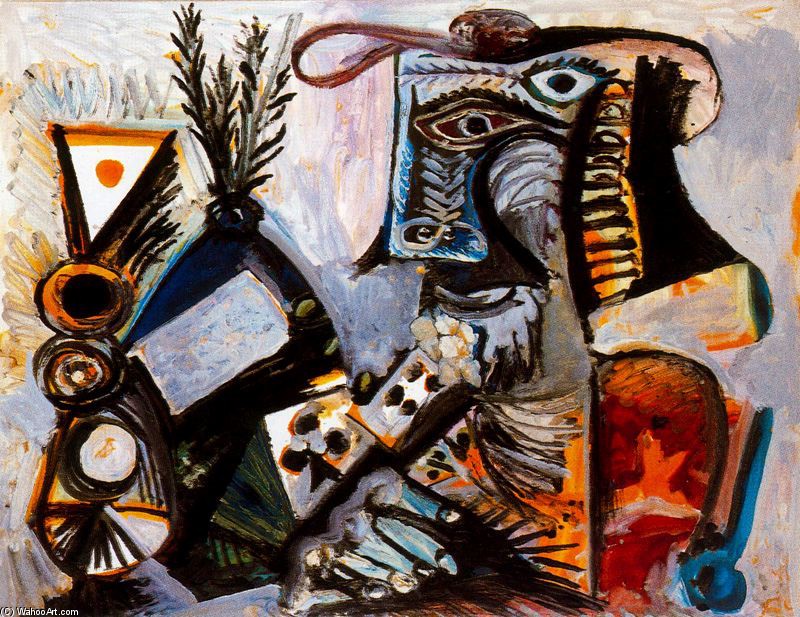
The Card-Player 1
Reproduktsiooni suurus
Pablo Picasso's "The Card Player," painted in 1913-14 during the formative years of his artistic breakthrough, stands as a pivotal work embodying the nascent principles of Cubism. Created amidst the turbulent backdrop of European intellectual ferment—the rise of Dada and Surrealism challenging established conventions—this painting transcends mere representation; it delves into psychological complexity and interrogates the very nature of perception.
The mask itself serves as a potent symbol of concealment and identity—a motif recurrent throughout Picasso’s oeuvre. It speaks to themes of repression, hidden emotions, and the difficulty of achieving genuine self-awareness. The inclusion of objects like the vase, clock, and bowl adds layers of significance. These items represent time passing, stillness, and domesticity – elements juxtaposed against the figure's isolation, highlighting the tension between internal experience and external reality.
Painted during a period marked by political instability—the escalating tensions leading up to World War I—"The Card Player" reflects Picasso’s engagement with intellectual currents of his time. Cubism emerged as a reaction against Impressionism and Post-Impressionism, rejecting their emphasis on capturing fleeting impressions of light and color. Instead, Picasso sought to represent objects from multiple viewpoints simultaneously, challenging viewers to reconsider their understanding of visual space.
"The Card Player" transcends its formal innovations to convey a profound emotional resonance. The figure’s solitary posture evokes feelings of vulnerability, contemplation, and perhaps even despair. Picasso's masterful manipulation of form and color invites viewers into a dialogue about the complexities of human experience—the struggle for self-expression amidst societal pressures and the inescapable awareness of mortality.
Teose „The Card-Player 1“, autor Pablo Picasso registreeritud populaarsusaste on Iconic.
Teose „The Card-Player 1“, autor Pablo Picasso värvitoit on Subtle Color kütkusega ja Balanced intensiivsusega.
Teos „The Card-Player 1“, autor Pablo Picasso ühendab endas mask, poker, chessboard, reflection, geometric, psychology, symbolism, portraiture ning loob Dramatic atmosfääri.


1881 - 1973 , Hispaania

Unveil the radical revolution of Cubism. Explore how masters like Picasso and Braque redefined modern art through fragmented forms and geometric abstraction, offering profound insights for discerning collectors of fine art history and masterpieces.

Embark on a journey through the revolutionary world of Cubism. Discover how masters like Picasso redefined perspective through Analytical and Synthetic techniques in this expert-led guide for art enthusiasts and collectors.
Embark on a profound journey through the world's most iconic mask artworks. Explore the spiritual depth, intricate craftsmanship, and rich cultural heritage of global traditions, from Chhau to Gomira, in this expert-led exploration of ancestral artistry and symbolic beauty.

Explore the profound evolution of Cubism through an expert analysis of Pablo Picasso's revolutionary works. From Analytical to Synthetic Cubism, discover the techniques that redefined modern art and learn how to curate these iconic masterpieces for your private collection.
 Eelvaade
 Saada
Saada Jaga
Jaga
 Teave teose kohta
 Juhend

 Laadi alla
 Sarnased teosed
 Röntgenuuring
 Slaidietendus
 Q&A
Q&A Statistika
 Loe lähemalt









 Klaasivalik on saadaval ainult kuni 110 cm suuruses teostes


