

Sellel lehel kuvatav kunstiteos on kaitstud autoriõigusega, mis tähendab, et meil ei ole seaduslikku õigust luua või müüa identset reproduktsiooni. Seda kaitset rakendatakse rahvusvaheliste kokkulepete alusel, nagu näiteks Berne konventsioon ning riiklike seadustega, sealhulgas nendega, mida on sätestatud USA autoriõiguse seadus – 17. peatükk.
See meetod järgib täielikult autoriõiguse reegleid, kuna see ei põhine kaitstud kunstiteose kopeerimisel või dupliteerimisel. Selle asemel on tegu loova reinterpreetatsiooniga – uue maaldisega, mis on algteosest inspireeritud, kuid ei ole sellest identiline.
Muuseumikvaliteediga giclée- või kangasprint kiire tootmisega ja paindlikud viimistlusvõimalused. ( Osta käsitsi maalatud teos Lülita digitaalse pildi juurde)





























Vali meie eelmääratud suurused, mis vastavad teose algupärastele proportsioonidele.

Sisestage vajalik laius ja kõrgus, et see sobiks teie raamile või seinale. Trükki saab ainult lõigata, seda ei saa kunagi pildist suuremaks teha, seega ka erineva mustega suurus kaotab osa pildist. Enne trükkimist saadame teile kinnitamiseks digitaalse näidisprojektsiooni. Sellel lehel näidatud pilt ei kujuta reaalset lõiget — seda näitab ainult näidisprojektsioon.
Ülemaailmne tarne () 2 nädala jooksul, tavalise 4/5 nädala asemel. (9 november)
Cafe a Royan
Reproduktsiooni suurus
In the evocative masterpiece Café à Royan, Pablo Picasso invites us into a world where the boundaries between reality and abstraction dissolve into a rhythmic dance of geometry. This captivating work transports the viewer to the sun-drenched coastal town of Royan, France, yet it eschews the traditional, literal depiction of a seaside retreat. Instead, Picasso presents a fragmented and dynamic interpretation of a harborside scene, where buildings, boats, and lush vegetation coalesce into a complex interplay of planes and forms. The composition does not seek to provide a photographic record; rather, it serves as a profound evocation of the energy, light, and atmosphere of this bustling port, capturing the very essence of a moment in time through the lens of Cubist innovation.
The brilliance of the piece lies in its revolutionary approach to perspective. As a cornerstone of his Cubist exploration, Picasso breaks down the physical world into its essential geometric components—rectangles, triangles, and interlocking planes—and reassembles them to challenge the viewer's perception. By presenting multiple viewpoints simultaneously, he offers a more complete, albeit abstracted, understanding of the subject matter. This technique creates a sense of movement within the frame, as if the eye is constantly navigating through the shifting layers of the landscape. For the discerning collector or interior designer, this complexity provides a sophisticated focal point that rewards prolonged contemplation and adds a layer of intellectual depth to any curated space.
Executed with masterful precision in oil on canvas, the technique behind Café à Royan is as vital to its impact as the subject itself. Picasso’s brushwork is visibly textured, contributing to a surface that feels both solid and ethereal. The visible strokes create a captivating visual depth, allowing certain forms to appear heavy and grounded while others seem almost transparent, caught in the shimmering coastal light. His use of color is equally striking; bold hues and contrasting tones enliven the scene, injecting a vibrant vitality that prevents the geometric fragmentation from feeling cold or clinical. This interplay of light and pigment breathes life into the inanimate structures of the harbor.
Beyond its aesthetic splendor, the painting carries a poignant historical weight. Created around 1940, during the tumultuous early years of World War II, the work reflects the underlying tension of an era marked by occupation and uncertainty. While the subject matter—a coastal café—appears tranquil, there is an inherent sense of distortion and unease that permeates the composition. This subtle psychological layer suggests that even in moments of apparent peace, the world is being fundamentally reshaped by external forces. For those seeking a piece that offers more than mere decoration, Café à Royan provides a window into the resilience of the human spirit and the transformative power of art during times of profound global change.
Whether displayed in a modern gallery setting or as a centerpiece in a luxurious residential interior, a high-quality reproduction of this work brings with it an incomparable aura of prestige. It is a piece that speaks to the soul through its vibrant energy and challenges the mind through its structural complexity, making it an enduring choice for those who appreciate the intersection of historical significance and avant-garde beauty.
Teose „Cafe a Royan“, autor Pablo Picasso Neutrals värvigamma sobib suurepäraselt kokku selle Reflective emotsionaalse tooniga. Värv on üks viiseid, kuidas teos tunde edastab.
Teose "Cafe a Royan" on loonud Pablo Picasso Cubism stiilis. Kunstnik ja suunamine määratlevad teose traditsiooni.
Teoses „Cafe a Royan“, autor Pablo Picasso kohtuvad Cubism suunad ja Modernism ajastu.


1881 - 1973 , Hispaania
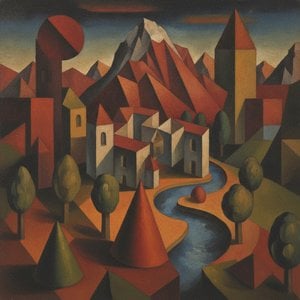
Explore the profound evolution of Cubist landscapes. Discover how masters like Braque and Picasso redefined perspective through geometric mastery, transforming nature into an intellectual mosaic of form and light for the discerning modern art collector.

Explore the profound depth of Cubist Expression. From the deconstructed forms of Picasso to Braque’s geometric mastery, discover how shattering reality through abstraction redefined modern art and continues to inspire sophisticated collectors worldwide.
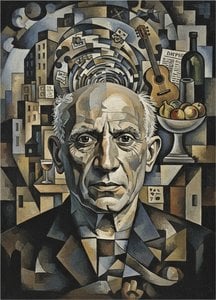
Explore the profound evolution of Cubism through an expert analysis of Pablo Picasso's revolutionary works. From Analytical to Synthetic Cubism, discover the techniques that redefined modern art and learn how to curate these iconic masterpieces for your private collection.

Explore the profound evolution of Cubist still life, from Cézanne's structural foundations to the fragmented brilliance of Braque and Léger. Discover how geometric abstraction redefined reality through a sophisticated lens of form, color, and modern artistic mastery.
 Eelvaade
 Saada
Saada Jaga
Jaga
 Teave teose kohta
 Juhend

 Laadi alla
 Sarnased teosed
 Röntgenuuring
 Slaidietendus
 KÜSIMUSED JA VASTUSID
 Statistika

 Loe lähemalt









 Klaasivalik on saadaval ainult kuni 110 cm suuruses teostes


