TASUTA KUNSTIKONSULTATSIOON

x
Telli trükis Telli trükisTellimaks maali Tellimaks maali SaadaSaada
DetailidDetailid Lisa lemmikutesse Lisa lemmikutesse Laadi allaLaadi alla Sarnased teosedSarnased teosed RöntgenuuringRöntgenuuring SlaidietendusSlaidietendus

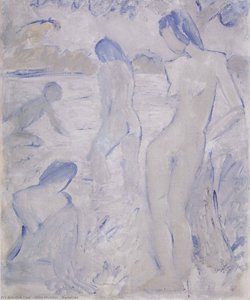
Lovers

Explore 'Lovers' by Otto Mueller, a dramatic Expressionist painting featuring intimate figures & loose brushwork. Discover the artist’s evocative style and connection to ‘Die Brücke.’

Otto Mueller (1874-1930) oli saksa ekspressionistlik maalari ja grafikaartist, kes tuntuses oma emotsionaalsete alastide, romide ja harmoniliste maastikude poolest. 'Die Brücke' liige, kelle töid peetis natsism 'degeneratsioonina'.

Ostke kõrglahutusel ja täiustatud digitaalne pilt, mis on oluliselt parem kui veebilehel näidatud eelvaade.

Iga fail on meie spetsialistide poolt hoolikalt ette valmistatud, kasutades kaasaegseid tööriistu ja professionaalset käsitsi retušeerimist. Tagame, et igal pildil on erakordne selgus, täpne värvitäpsus ja peen detail.

Lõplik fail saadetakse e-posti teel 72 tunni jooksul, olles optimeeritud koheseks kasutamiseks professionaalsetes, toimetuslikes ja trüki keskkondades. See on sama kvaliteet, mida usaldavad tipptasemel disainistuudiod, kirjastused ja galeriid.

Digitaalne kunstiteos

Laadi alla kõrge resolutsiooniga fail isiklikuks vaatamiseks, trükkimiseks ja loomingulisteks projektideks.

Lõppsumma

$9.99

Sisse kuulub iga digitaalse pildi tellimusega

Eksperdi digitaalne kohaletoimetamine, garanteeritud

Valides WahooArt.com, ei saa sa lihtsalt pilti – saad professionaalselt parandatud digitaalse teose, mida on valmistatud täpsusega ja mis on toetatud rahuldamatusgarantiiga. Siin on kõik, mis sinu tellimusega automaatselt kaasneb:

shipping_icon
Kiire digitaalne saatmine

Teie kõrge resolutsiooniga digitaalne pildifail saadetakse teile e-posti 72 tunni jooksul pärast tellimist – kohe kasutamiseks valmis.

canvas_icon
Tehisintellektiga täiustatud digitaalne fail

Teie teos on professionaalselt optimeeritud arenenud tehisintellekti tööriistade ja käsitsi redigeerimise abil, tagades maksimaalse detailitaseme, selguse ja värvitäpsuse.

insurance_icon
Tasuta eluaegne uuesti saatmine

Kas kustutasid faili kogukalu unustamisel või kustutamisel? Puudub mure – saad selle uuesti igal ajal ilma lisatasuta.

tax_icon
Puuduvad importimaksed – alati

Nautige oma teoseid koheselt ilma tolli-, maksude või tarnimaskuludeta – digiletchargused on alati maksuvabadud.

color_icon
Värvitäpsuse garantii

Me tagame, et teie digitaalne pilt kajastaks originaali värve professionaalsete tööriistade ja värvihalduse abil võimalikult täpselt.

return_icon
60-päevane rahulolu garantii

Kui te ei ole oma digipildiga rahul, parandame seda või tagastame 100% summast 60 päeva jooksul – küsimusi ei esita.

guarantee_icon
100% raha tagastamise garantii

Ei ole rahul? Saate täielise tagastaja 60 päeva jooksul pärast digitaalse faili kättesaamist – küsimata.

discount_icon
Suurema tellimuse soodustused

Osta 3 pilti, säästa 10% - Osta 5, säästa 15% - Osta 10+, säästa 20%. Sobib suurepäraselt loomingulisteks projektideks, galeriideks ja agentuurideks.

Sarnased teosed


Kunstniku biograafia

A Wanderer’s Soul: The Life and Art of Otto Mueller

Otto Mueller, a name often whispered alongside the pioneers of German Expressionism, was an artist deeply attuned to the rhythms of nature and the lives lived on its fringes. Born in 1874 in Liebau, Silesia – now Lubawka, Poland – his journey began amidst a landscape that would forever imprint itself upon his artistic vision. Early training in lithography at Görlitz and Breslau provided him with a foundational skill set, a mastery of line and texture that would characterize much of his later work. He continued his studies at the prestigious academies of Dresden and Munich, though a dismissive assessment from Franz von Stuck at the latter led to a period of self-directed exploration. These formative years saw Mueller absorbing influences from Impressionism, Jugendstil, and Symbolism, yet he remained restless, searching for a voice uniquely his own.

Finding Harmony in Distortion: The Expressionist Path

The turning point arrived with Mueller’s relocation to Berlin in 1908. Here, amidst the burgeoning artistic ferment of the city, his style began its dramatic transformation. Interactions with figures like Wilhelm Lehmbruck and Rainer Maria Rilke fueled a growing interest in exploring the emotional depths of human experience. In 1910, he formally joined ‘Die Brücke’ (The Bridge), a group of artists dedicated to rejecting academic conventions and forging a new visual language rooted in raw emotion and subjective perception. While his colleagues often embraced jarring color palettes and aggressive brushwork, Mueller charted a slightly different course. He sought harmony within distortion, simplifying forms and contours to reveal an underlying sense of unity between humanity and the natural world. His landscapes, imbued with a quiet intensity, echo the spirit of Vincent van Gogh, while his figures – particularly those of Romani women – possess a haunting grace. This period cemented his nickname, “Gypsy Müller,” though it was a moniker born more from fascination with his subject matter than any confirmed lineage.

A Unique Technique and Recurring Motifs

Mueller’s artistic process was as distinctive as his vision. He favored distemper – a water-based paint – applied to coarse canvas, creating a matte surface that lent his works an earthy, almost primal quality. This technique contributed significantly to the overall mood of his paintings, evoking a sense of intimacy and vulnerability. His subject matter consistently revolved around several key themes: serene landscapes often reminiscent of starry nights, expressive nudes embodying both sensuality and melancholy, and, most notably, depictions of Romani people. These figures were not merely portraits; they represented a longing for freedom, a connection to nature, and an alternative way of life outside the constraints of bourgeois society. He was a prolific printmaker as well, with lithography being his preferred medium, alongside some woodcuts and etchings. The simplicity of line in these prints further emphasized the emotional core of his subjects.

Shadows of War and Legacy

Like many of his generation, Mueller’s life was profoundly impacted by World War I. He served as a soldier on both the French and Russian fronts, an experience that undoubtedly left its mark, though it did not dramatically alter his artistic style. After the war, he accepted a professorship at the Academy of Fine Arts in Breslau, dedicating himself to teaching until his death in 1930. Tragically, his work fell victim to the ideological purges of the Nazi regime in 1937, with over three hundred pieces confiscated from German museums and labeled as “degenerate art.” Despite this suppression, Mueller’s artistic legacy endured. Today, he is recognized as a pivotal figure in Expressionism, an artist whose sensitive depictions of humanity and nature continue to resonate with audiences worldwide. His work serves as a poignant reminder of the power of art to transcend political boundaries and speak to the universal human condition.
Otto Mueller

Otto Mueller

1874 - 1930 , Poola

Lühikesed faktid

  • Artistic Movement Or Style: Ekspressionism
  • Artists Or Movements Influenced By This Artist: ['Die Brücke']
  • Artists Who Influenced This Artist:
    • Impressionism
    • Jugendstil
    • Sümbolism
  • Date Of Birth: 16. oktoober 1874
  • Date Of Death: 24. september 1930
  • Full Name: Otto Mueller
  • Nationality: Saksa
  • Notable Artworks:
    • Tähevale maastikud
    • Ekspressiivsed alastid
    • Romani naiste portreid
  • Place Of Birth: Liebau, Poola