Muuseumikvaliteediga giclée- või kangasprint kiire tootmisega ja paindlikud viimistlusvõimalused. ( Osta käsitsi maalatud teos Lülita digitaalse pildi juurde)





























Vali meie eelmääratud suurused, mis vastavad teose algupärastele proportsioonidele.

Sisestage vajalik laius ja kõrgus, et see sobiks teie raamile või seinale. Trükki saab ainult lõigata, seda ei saa kunagi pildist suuremaks teha, seega ka erineva mustega suurus kaotab osa pildist. Enne trükkimist saadame teile kinnitamiseks digitaalse näidisprojektsiooni. Sellel lehel näidatud pilt ei kujuta reaalset lõiget — seda näitab ainult näidisprojektsioon.
Ülemaailmne tarne () 2 nädala jooksul, tavalise 4/5 nädala asemel. (8 november)
Venice
Reproduktsiooni suurus
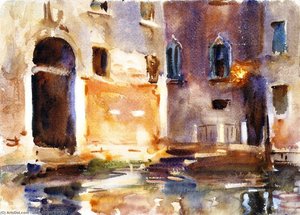
John Singer Sargent's "Venice," painted in 1880, is more than just a depiction of a canal-side street; it’s a masterful distillation of atmosphere and human experience. This watercolor captures the very soul of Venice – its labyrinthine alleys, the play of light on water, and the quiet rhythm of daily life. The painting immediately draws the viewer into a scene brimming with understated elegance and a palpable sense of place. Sargent's ability to convey not just what he saw but *how* it felt is evident in every brushstroke.
Sargent's approach to "Venice" is deeply rooted in the burgeoning Impressionist movement, though he retains his distinctly personal style. He employs a loose, fluid technique characteristic of watercolor, prioritizing the effects of light and shadow over precise detail. Notice how he builds up layers of color – subtle washes of blues, greens, and browns – to create a shimmering effect on the water and a sense of depth within the alleyway. The use of broken brushstrokes adds to this dynamism, capturing the fleeting quality of sunlight filtering through the buildings. This technique was heavily influenced by his time spent studying Claude Monet and other Impressionist masters during his travels across Europe.
"Venice" offers a poignant glimpse into a city undergoing significant transformation in the late 19th century. While still retaining its romantic allure, Venice was grappling with economic challenges and the pressures of modernization. Sargent’s choice to depict a seemingly ordinary street scene speaks to his interest in capturing authentic moments of everyday life – a theme prevalent in much of his work. The presence of pedestrians and a bicycle reinforces this connection to the city's residents and their activities. This painting reflects a time when Venice was still largely untouched by mass tourism, offering a rare opportunity for artists like Sargent to portray its unique character with remarkable fidelity.
Beyond its technical brilliance, "Venice" resonates with a profound sense of tranquility and nostalgia. The muted color palette and the soft focus contribute to an atmosphere of quiet contemplation. The figures walking along the path – seemingly oblivious to the viewer’s presence – invite us to step into the scene and share in their experience. There's a subtle suggestion of timelessness, as if this street has existed for centuries, unchanged by the passage of time. The painting evokes a feeling of serenity and invites the viewer to contemplate the beauty and fragility of Venice, a city that continues to captivate imaginations worldwide.
Teos „Venice“, autor John Singer Sargent on klassifitseeritud tasemele Recognized ning kuulub Impressionist Realism suunasse.
Teose „Venice“, autor John Singer Sargent kontrastivaimustus on Bold.
Teost "Venice" on soovitatav kasutada Reflective jaoks ning selleks soovitellav ruum on Living Room.


1856 - 1925 , Itaalia

Discover the ethereal beauty of premium watercolor reproductions and bespoke commissions at WahooArt. From museum-quality landscapes to custom AI-enhanced portraits, our master artists deliver unparalleled craftsmanship and white-glove service for discerning collectors worldwide.

Discover the breathtaking elegance of John Singer Sargent's masterpieces. From iconic Gilded Age portraits to impressionistic landscapes, explore the technical brilliance and timeless allure of this American master through our premium, hand-painted fine art reproductions.

Explore the captivating journey of street art from urban walls to prestigious galleries. Discover how contemporary graffiti has evolved into a high-end collectible movement, redefining modern interior design and global art culture.

Discover the ethereal beauty of watercolor through an art-historical lens. Master the delicate balance of light, fluidity, and pigment to capture the luminous essence of nature, inspired by the legendary techniques of the Old Masters and Impressionist greats.

Discover the luminous mastery of John Singer Sargent. Explore an expert analysis of his legendary light, Gilded Age elegance, and technical brilliance, perfect for fine art enthusiasts seeking to bring timeless classical beauty into their modern collections.
 Eelvaade
 Saada
Saada Jaga
Jaga
 Teave teose kohta
 Juhend

 Laadi alla
 Sarnased teosed
 Röntgenuuring
 Slaidietendus
 KÜSIMUSED JA VASTUSID
 Statistika

 Loe lähemalt









 Klaasivalik on saadaval ainult kuni 110 cm suuruses teostes