TASUTA KUNSTIKONSULTATSIOON

x
Telli trükis Telli trükisOsta digipilt Osta digipilt SaadaSaada
DetailsDetails Lisa lemmikutesse Lisa lemmikutesse Laadi allaLaadi alla Sarnased teosedSarnased teosed X-RayX-Ray SlaidietendusSlaidietendus

White Slave Trade

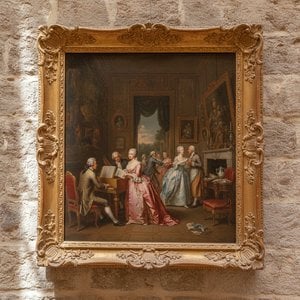
This canvas depicts four young prostitutes asleep on a railway carriage under the watchful eye of their Celestina, employing forced perspective to create an immersive spatial experience and capturing the lively atmosphere of a social gathering.

Joaquín Sorolla oli Hispaania impressionist ning luminismi suurmeister! Tema värviküllased maalid ja päikesevalgusest täis õhtuvaated on maailma kunstiloo ikoonid. Avastus Sorollat juba täna!

Käsitsi valmistatud õlimaalireproduktsioon

Meie kunstnike poolt tellimusel valmistatud käsitsi maalitud õli-kainaste teos teie soovitud suuruses ja raamis.

P118B $10
P118H $10
P118W $10
P438Z $10
P508JH $12
P508YH $12
P805H $10
P805Z $10
P919BZ $10
P919G $10
P919XJ $10
P959ZH $10
P968JZ $12
W106C $8
W218G $10
W218JH $8
W218Y $10
W307PJ $10
W316G $10
W316PJ $8
W316Y $10
W398PJ $8
W4111J $10
W500HY $15
W500JH $15
W692G $12
W849H $8
W940BG $15
W953PJ $8

Standard
custom
CM
INCH

Vali meie eelmääratud suurused, mis vastavad teose algupärastele proportsioonidele.

laius
kõrgus

Sa võite sisestada oma mõõtmed konkreetse raami või ruumi sobivuse tagamiseks. Kui teie valitud suurus ei vasta originaalpildi proportsioonidele, siis kärvime kunstiteost või laiendame maali täiendavate käsitsi maalitud elementidega. Enne tootmise algust saadetakse teile heakskiitmiseks digitaalne eelvaade.
Palun pidage meeles, et ekraanil kuvatav eelvaade ei kajasta tegelikku kärpimist või laiendamist. Ainult eelvaade näitab täpselt lõplikku kompositsiooni.
Kuigi on saadaval kohandatud suurused, soovitame originaalproportsioonide säilimiseks valida mõõdud eelmääratletud nimekirjast.

Näited muudetavatest elementidest: asenda nägu kliendi fotoga; lisa lemmikloom (nt asenda kass koeraga); lisa taustale peidetud sõnum; muuda tausta maastikku või elemente.
Pärast tellimust saadab WahooArt.com meeskond kliendile e-posti juhised ning esitab eelvaate kavandi.

Maailmline tarne 3–4 nädala jooksul tavalise 5 nädala asemel. (1 juuli). Kvaliteedis kompromisse ei tehta.

why_choose_icon
Tasuta ekspresssaatmine üle maailma
why_choose_icon
Kõrgekvaliteediline linakangas
why_choose_icon
Täielik transpordikindlustus
why_choose_icon
Tollimaksude tagastamise garantii
why_choose_icon
Värvitoime täpsuse garantii
why_choose_icon
60-päevane tagastusõig: ainult tootmisdefektide korral
why_choose_icon
100% raha tagasi garantii
why_choose_icon
Hulgusoodustus

Kogu summa

-

reproduction

White Slave Trade

Reproduktsiooni tehnika

Reproduktsiooni suurus

-

Kogusumma

-

Teave teose kohta

  • Location: Museum of Social Realism, Madrid
  • Influences: Classical Art
  • Year: 1895
  • Artistic style: Impressionist
  • Movement: Social Realism
  • Notable elements or techniques: Forced perspective; Dramatic lighting
  • Medium: Oil on canvas

Kunstiviktoriin

Iga küsimuse kohta on ainult üks õige vastus.

Küsimus 1:
What genre does Sorolla explore in “White Slave Trade”?
Küsimus 2:
The painting’s focal point is the depiction of:
Küsimus 3:
Sorolla utilizes what artistic technique to create an illusion of depth and draw the viewer into the scene?
Küsimus 4:
Why is Sorolla considered a significant artist of his time?
Küsimus 5:
Where was Sorolla primarily trained as an artist?

Teose kirjeldus

A Window Into Valencia’s Soul: Joaquín Sorolla's “White Slave Trade”

Joaquín Sorolla y Bastida (1863 – 1923), born in Valencia, Spain, stands as a beacon of Impressionism within the Spanish artistic landscape. His life was tragically shaped by early loss—orphaned at two due to cholera—yet he channeled this sorrow into an unwavering devotion to capturing light and emotion on canvas, establishing himself as one of his era’s most celebrated painters. Sorolla's formative years instilled a profound awareness of life’s fragility, a sensibility that would become the cornerstone of his artistic vision. Studying under masters like Capuz and Benlliure in Valencia before embarking on a Roman scholarship grant, he honed his skills amidst the classical influences of Italy, preparing him for a prolific career dedicated to portraying the vibrant beauty of everyday life.

The Subject Matter: A Moment Frozen in Time

Sorolla’s “White Slave Trade,” completed in 1895, confronts viewers with an unsettling yet undeniably captivating tableau. The painting depicts four young prostitutes languidly asleep within a third-class railway carriage, illuminated by the diffused glow of a window—a deliberate compositional choice that underscores Sorolla's masterful manipulation of perspective. Unlike many artists of his time who sought to elevate their subjects through grand narratives or idealized representations, Sorolla focused intently on formal concerns, prioritizing spatial illusion and tonal harmony above all else. The figures themselves are rendered with remarkable realism, capturing the subtle nuances of repose and vulnerability.

Technique: Impressionistic Brilliance Through Controlled Observation

Sorolla’s technique exemplifies the tenets of Impressionism while simultaneously demonstrating a meticulous attention to detail. He employed rapid brushstrokes—a hallmark of the movement—to capture fleeting moments of light and color, layering translucent glazes upon toned canvases to achieve an ethereal luminosity. However, Sorolla wasn't merely indulging in spontaneous expression; he conducted exhaustive preparatory studies, meticulously analyzing the effects of sunlight on surfaces before committing them to pigment. This careful observation informs every aspect of his artistic process, resulting in paintings that possess both immediacy and intellectual depth. The artist’s masterful use of color—particularly yellows and blues—creates a harmonious visual experience that draws viewers into the scene's tranquil atmosphere.

Historical Context: Social Realism Amidst Artistic Trends

“White Slave Trade” emerged during a period marked by significant artistic experimentation, yet Sorolla bravely championed social realism – a genre gaining traction across Europe at the time. Unlike academic painting’s preoccupation with mythological or historical subjects, Sorolla turned his gaze inward, documenting the realities of marginalized communities—specifically, the plight of impoverished women in Valencia. This decision reflects Sorolla's humanist convictions and aligns him with a broader artistic movement that sought to engage viewers emotionally and intellectually through depictions of ordinary life. The painting’s inclusion within the Salon of 1895 underscores its importance as a contribution to the evolving discourse surrounding social justice and artistic representation.

Symbolism: Light, Repose, and Vulnerability

Beyond its formal brilliance, “White Slave Trade” resonates with symbolic significance. The window serves as a focal point, symbolizing both illumination—representing Sorolla’s unwavering pursuit of light—and separation—highlighting the vulnerability of the subjects within their confined space. The languid posture of the prostitutes embodies peace and stillness amidst hardship, conveying a poignant meditation on beauty found in quiet contemplation. Sorolla's deliberate choice to depict these women asleep speaks volumes about his empathy for those marginalized by society, elevating them from mere objects of observation into figures deserving of compassion and understanding.

Emotional Impact: A Momentary Pause Before Passing

Ultimately, “White Slave Trade” compels viewers to confront uncomfortable truths while simultaneously offering a glimpse of transcendent beauty. Sorolla’s masterful orchestration of light and color evokes feelings of serenity and melancholy—a poignant reminder of life's ephemeral nature. The painting lingers in the mind long after viewing, prompting reflection on themes of vulnerability, resilience, and the enduring power of art to illuminate the human condition. It stands as a testament to Sorolla’s artistic genius and his unwavering commitment to capturing the essence of Valencia – and indeed, of humanity itself – with breathtaking precision and profound emotional resonance.

Sarnased teosed

John Singer Sargent - Venetsia veekandjad
John Singer Sargent
Venetsia veekandjad
Gustave Courbet - The Painter's Studio
Gustave Courbet
The Painter's Studio
Joaquín Sorolla - Juan Ramón Jiménez
Joaquín Sorolla
Juan Ramón Jiménez
Edward Hopper - Adam's House
Edward Hopper
Adam's House
George Washington Thomas Lambert - A sergeant of the Light Horse
George Washington Thomas Lambert
A sergeant of the Light Horse
Jacques Joseph Tissot - Gentleman In A Railway Carriage
Jacques Joseph Tissot
Gentleman In A Railway Carriage
Aleksander Gierymski - Jewish Woman with Oranges
Aleksander Gierymski
Jewish Woman with Oranges

Kunstniku elulugu

Joaquín Sorolla y Bastida – A Life Bathed in Light

Joaquín Sorolla y Bastida, a name synonymous with the radiant light and vibrant energy of Spain, was more than just a painter; he was a chronicler of his nation’s soul. Born in Valencia in 1863, Sorolla's early life was marked by tragedy. Orphaned at the tender age of two following a cholera epidemic that claimed both parents, young Joaquín and his sister were raised by their maternal aunt and uncle. This early experience with loss perhaps instilled within him a profound appreciation for the fleeting beauty of life – a sentiment that would permeate his art. Though hardship shadowed his beginnings, it did not dim the spark of artistic talent that quickly became apparent. He received initial instruction in Valencia, demonstrating an aptitude that led to studies under established artists like Cayetano Capuz and José Benlliure, eventually culminating in a four-year grant to study in Rome. It was there, amidst the classical grandeur of Italy, that Sorolla began to forge his unique artistic path, absorbing influences while simultaneously developing a style distinctly his own.

Early Life and Artistic Beginnings

Joaquín Sorolla’s formative years were shaped by profound loss and circumstance. Born on February 27, 1863, in Valencia, Spain, he descended from a modest family of tradesmen. Tragically, just two years later, his parents succumbed to cholera—a devastating epidemic that gripped the city—leaving him orphaned alongside his sister, Concha. Their maternal aunt and uncle stepped forward to provide care, fostering an early awareness of vulnerability and resilience – themes that would subtly inform Sorolla’s artistic vision throughout his career. Recognizing his exceptional talent at a young age, he commenced formal art education in Valencia, honing his skills under the tutelage of prominent Valencian artists like Cayetano Capuz and José Benlliure. This foundational training instilled in him a disciplined approach to observation and representation—skills that would prove invaluable as he embarked on his artistic journey. At eighteen, Sorolla ventured to Madrid, immersing himself in the vibrant cultural landscape of the capital and dedicating himself to intensive study at the Museo del Prado, where he encountered the masterpieces of Velázquez and other titans of Spanish art.

Rome: The Crucible of Impressionism

A pivotal moment arrived when Sorolla secured a prestigious grant enabling him to pursue his artistic ambitions in Rome—the Italian capital—between 1884 and 1888. This immersion in the artistic milieu of Italy proved transformative, exposing him to the burgeoning currents of Impressionism and fostering an enduring fascination with capturing fleeting moments of light and color. Influenced by artists such as Jules Bastien-Lepage and Adolf von Menzel—whose works he meticulously studied—Sorolla began to experiment with looser brushstrokes and brighter palettes, distancing himself from the more rigid conventions of academic painting. He established connections with José Benlliure and Emilio Sala, furthering his artistic education and solidifying his stylistic evolution. During this period, Sorolla’s gaze turned towards Paris, where he encountered the epicenter of modern art—a city pulsating with innovation and intellectual ferment. Exhibitions featuring Bastien-Lepage and Menzel profoundly impacted his artistic sensibilities, shaping his approach to composition and color harmony.

The Valencian Coast: A Celebration of Light

Sorolla’s artistic focus shifted decisively upon returning to Valencia in 1890—a homecoming marked by a renewed appreciation for the luminous landscapes of his birthplace. He married Clotilde García del Castillo, forging a lifelong partnership that would inspire him creatively and provide unwavering support throughout his prolific career. Together they established a family in Madrid, where Sorolla continued to produce monumental canvases depicting scenes from Valencian life—particularly those centered around the Mediterranean coast. His fascination with capturing the effects of sunlight on water and skin reached its zenith during this period, resulting in iconic paintings like *The Return from Fishing* and *Children on the Seashore*. He adopted a technique characterized by rapid brushwork and vibrant color combinations—a deliberate departure from academic realism—reflecting his unwavering commitment to Impressionistic principles. Sorolla’s canvases are imbued with an extraordinary sense of immediacy and vitality, conveying not merely what he saw but also how he felt—a testament to his artistic empathy and profound connection to the natural world.

Major Achievements & Legacy

Sorolla achieved international acclaim during his lifetime through numerous exhibitions across Europe and America. His paintings were recognized for their technical brilliance and emotional depth, establishing him as one of Spain’s foremost artists of his era. He garnered considerable honors—including the Grand Prix at the Paris Salon in 1900—and was commissioned to undertake ambitious projects such as *Vision of Spain*, a monumental mural cycle for the Hispanic Society of America—completed posthumously—that cemented his reputation as a visionary artist and a champion of Spanish culture. Sorolla’s influence extended far beyond his own lifetime, inspiring generations of painters who embraced Luminism—the art movement that sought to capture the essence of light and atmosphere—and whose works continue to resonate with audiences today. His legacy resides not only in his stunning canvases but also in his unwavering dedication to artistic innovation and his profound appreciation for the beauty of everyday life—a painter whose enduring vision continues to illuminate our understanding of Spanish art history.
Joaquín Sorolla

Joaquín Sorolla

1863 - 1923 , Hispaania

Lühikesed faktid

  • Artistic Movement Or Style: Лумнизм, Импрессионизм
  • Artists Or Movements Influenced By This Artist: ['Импрессионизм']
  • Artists Who Influenced This Artist:
    • Ф. Прадилла
    • Жюль Бастиен-Лепаж
  • Date Of Birth: 27 февраля 1863 г.
  • Date Of Death: 10 августа 1923 г.
  • Full Name: Joaquín Sorolla y Bastida
  • Nationality: Испанский
  • Notable Artworks:
    • Маргарита
    • Отплытие из рыбалки
    • Бедная наследница
  • Place Of Birth: Валенсия, Испания
Avastage teoseid, mis on koondatud teemade, stiilide ja omaduste kaupa.