x
Muuseumikvaliteediga giclée- või kangasprint kiire tootmisega ja paindlikud viimistlusvõimalused.
Vali meie eelmääratud suurused, mis vastavad teose algupärastele proportsioonidele.
Saate sisestada oma mõõdud, et need sobiks konkreetse raami või ruumi sisse. Kui valitud suurus ei vasta originaalteose proportsioonidele, lõigame teose ära või laiendame pilti peegeldatud või ühtlase servaga. Enne tootmisprotsessi algust saadetakse Teie kinnitamiseks digitaalne näidis.
Palun märka, et ekraanil kuvatav eelvaade ei kajasta tegelikku lõigamist või laiendamist. Ainult näidis kujutab täpselt lõplikku kompositsiooni.
Kuigi erimõõdu on saadaval, soovitame originaaproportsioonide säilitamiseks valida mõõt ette määratud nimekirjast.
Ülemaailmne tarne () 2 nädala jooksul, tavalise 4/5 nädala asemel. (2 juuli)
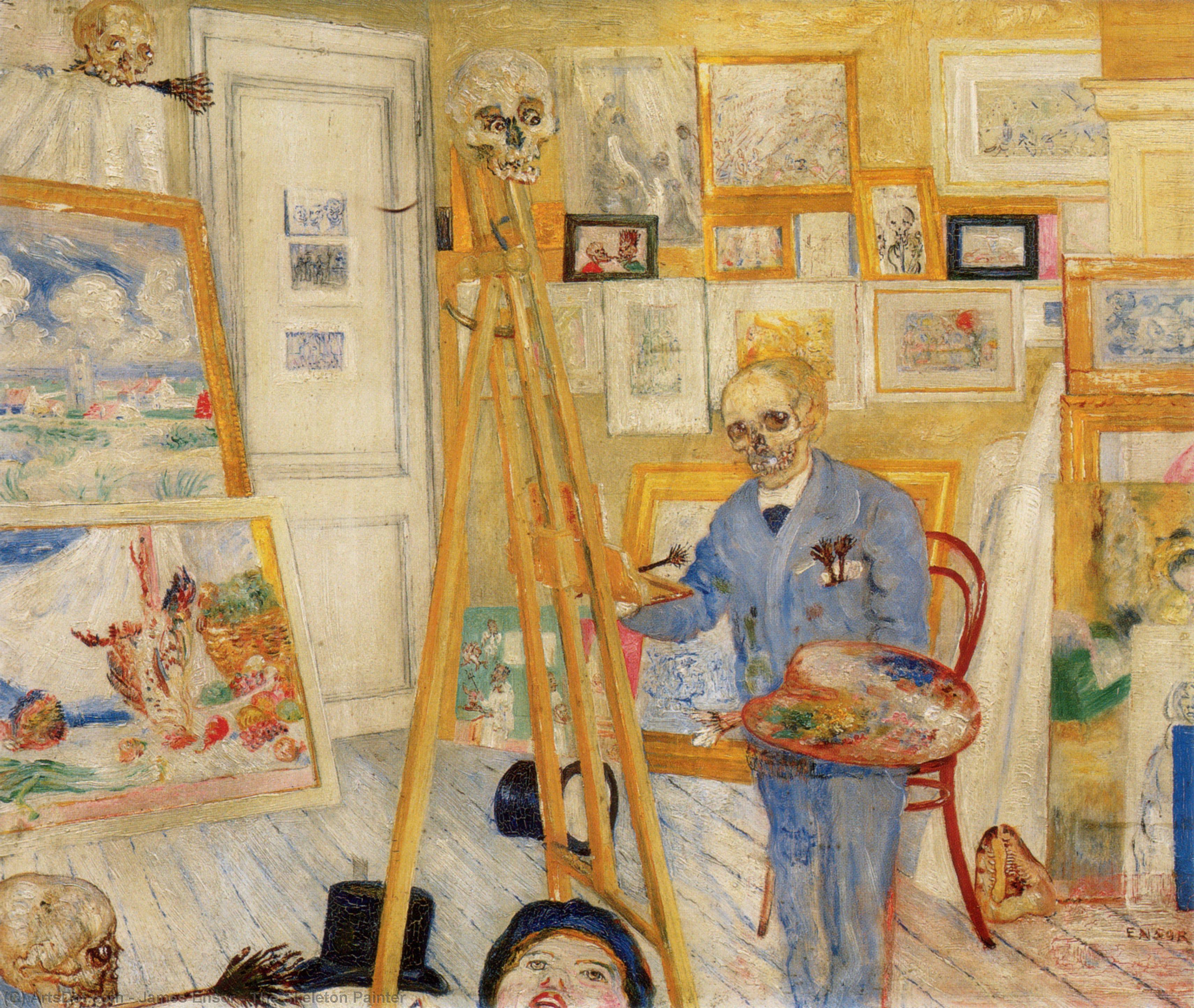
The Skeleton Painter
Reproduktsiooni suurus
James Ensor's "The Skeleton Painter," completed in 1895, is not merely a painting; it’s an unsettling plunge into the subconscious, a meticulously crafted tableau of morbidity and artistic obsession. The image, rendered with a distinctive and increasingly personal style, immediately confronts the viewer with a scene both bizarre and profoundly familiar – a room overflowing with art, dominated by a central figure: a skeleton diligently wielding a paintbrush. This isn’t a morbid spectacle intended to shock for shock's sake; rather, it’s a complex meditation on life, death, creativity, and the inescapable nature of artistic endeavor. Ensor, born in Ostend, Belgium, in 1860, cultivated an intensely individual vision, one deeply rooted in his upbringing amidst the vibrant chaos of a seaside resort town and fueled by a fascination with masks, disguise, and the theatricality of human experience.
The setting itself is crucial to understanding the painting's power. The room is crammed with canvases, each bearing witness to Ensor’s restless hand. A dining table, laden with objects—a clock, a partially consumed meal—suggests an interrupted life, a space where sustenance and creation intertwine. The presence of other skeletons, scattered amongst the chairs and leaning against walls, reinforces the pervasive theme of mortality. These aren't simply decorative elements; they are active participants in the scene, almost as if they’re observing or even contributing to the artist’s work. The inclusion of a cat, curled up near the left edge, adds an element of domesticity and perhaps a subtle critique – a creature of instinct and survival nestled within this world of intellectual pursuit.
Ensor’s technique is immediately recognizable. He employed a thick, impasto application of paint, building up layers of color to create a tactile surface that seems almost sculptural. The palette is deliberately muted – browns, greys, ochres, and deep blues dominate—contributing to the painting's somber mood. The skeletal figure itself is rendered with remarkable detail, highlighting the fragility of bone while simultaneously conveying a sense of focused determination. Notice how Ensor uses strong diagonals – particularly in the arrangement of the chairs and paintings – to create a feeling of unease and instability. The use of color is not about beauty; it’s about evoking emotion, creating a visual atmosphere of melancholy and contemplation. His style evolved significantly throughout his career, moving away from academic influences towards a highly expressive, often unsettling, approach that anticipated the Symbolist movement.
"The Skeleton Painter" can be interpreted as an exploration of Ensor’s own artistic identity and his relationship to mortality. The skeleton artist represents not just death but also the inevitable end of creative endeavor, the fading of inspiration with time. It speaks to the paradox of the artist – someone who often seems detached from the everyday realities of life, yet is ultimately defined by their engagement with them. Ensor’s own struggles with artistic recognition and his rejection of traditional academic training likely fueled this preoccupation with themes of isolation and the ephemeral nature of existence. The painting isn't a celebration of art; it’s a questioning of its purpose and its ultimate significance in the face of oblivion. It invites us to consider what drives an artist to create, knowing that their work, like their own physical form, will eventually succumb to time.
WahooArt offers exquisite, hand-painted reproductions of James Ensor’s “The Skeleton Painter,” allowing you to bring this haunting masterpiece into your home or office. Each reproduction is created with the same meticulous attention to detail and expressive technique as the original, capturing the painting's unique atmosphere and emotional depth. Explore our collection today and experience the unsettling beauty of Ensor’s vision.
James Sidney Edouard, Baron Ensor (Ostend, 13 April 1860 – 19 November 1949) was a Flemish-Belgian painter and printmaker, an important influence on expressionism and surrealism who lived in Ostend for almost his entire life. He was associated with the artistic group Les XX.
James Ensor’s father, James Frederic Ensor, born in Brussels to English parents, was a cultivated man who studied engineering in England and Germany. Ensor's mother, Maria Catharina Haegheman, was Belgian. Ensor himself lacked interest in academic study and left school at the age of fifteen to begin his artistic training with two local painters. From 1876, he attended drawing lessons at the College of the Blessed Virgin in Ostend.
Ensor’s early paintings reflected a more traditional approach, depicting scenes of everyday life rendered in somber tones. Works like *Russian Music* (1881) and *The Drunkards* (1883) reveal a nascent talent grappling with realism, but even within these early pieces, hints of the unsettling imagery to come are present. A pivotal shift occurred as Ensor’s palette brightened and his subject matter grew increasingly bizarre. He began to populate his canvases with carnivals, skeletons, puppets, and allegorical figures—a world steeped in fantasy and often bordering on the grotesque. This wasn't merely a stylistic change; it was a deliberate exploration of the darker aspects of human existence, a rejection of societal norms, and an embrace of the irrational.
In 1883 Ensor, along with a few older students of the Brussels‘ academy, would take leave of the artists‘ association *L'Essor*. They established the artists‘ association* Les Vingt*. This will play an important role in the dissemination of various international *avant-garde* movements. Ensor’s father’s shop in Ostend was a main purveyor of carnival paraphernalia, and this fascination would permeate his artwork.
Throughout his career, Ensor produced a series of works that continue to shock and fascinate audiences today. *The Scandalized Masks* (1883) stands as an early testament to his fascination with the power of disguise and its ability to reveal hidden emotions. Perhaps his most controversial work, *Christ’s Entry into Brussels* (1888-1889), remains a powerful satire of religious hypocrisy and societal indifference—a painting initially met with harsh criticism but now celebrated as a masterpiece. The unsettling image of Christ entering a city teeming with grotesque masked figures is a potent commentary on the disconnect between spiritual ideals and human behavior.
James Ensor was recognized as a pivotal figure in the transition from 19th-century Symbolism to early 20th-century Expressionism and Surrealism—a true pioneer of modern art. His fearless exploration of the subconscious, his embrace of grotesque imagery, and his rejection of academic conventions paved the way for future generations of artists who dared to challenge artistic norms. He is remembered as a visionary artist whose uncompromising vision continues to inspire contemplation and debate.
1860 - 1949 , Belgium
Kirjeldage meile oma projekti ja meie kunstieksperdid pakuvad teile 3 isikupärast kunstiettepanekut.
Laske meil koostada just teile mõeldud 3 valikut – tasuta!