Eelvaade AR-eelvaade Osta käsitsi maalatud teos Lülita digitaalse pildi juurde Saada
Teave teose kohta Juhend Lisa lemmikutesse Laadi alla Sarnased teosed Röntgenuuring Slaidietendus Q&A Statistika

Nature morte aux legumes

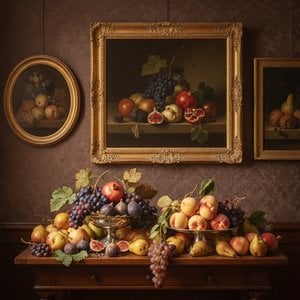
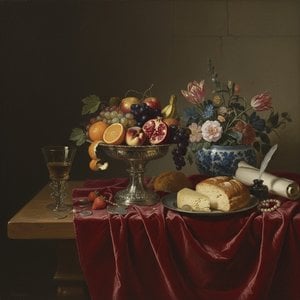
Explore James Ensor's evocative 'Nature morte aux legumes,' a Belgian still life featuring vibrant vegetables like carrots and broccoli alongside apples and bottles—a timeless piece reflecting Ensor’s signature style.

James Ensor oli Belgia maalikunstnik ja graafik, kes tunnetaan erityisesti häikäisevästä groteskista kuvastuksestaan sekä karnevaalimaskeista että luurangosta. Hän oli ekspressionismi ja surrealismi liikkeen varhainen pioneeri ning jätkus kunstilinnakena maailmale suurteoseksi.

Giclée / Kunstiprint

Muuseumikvaliteediga giclée- või kangasprint kiire tootmisega ja paindlikud viimistlusvõimalused. ( Osta käsitsi maalatud teos Lülita digitaalse pildi juurde)

Corner sample of the P118B picture frame: vormitud polüstüreen, 5 cm wide and 3 cm thick
P118B €10
Corner sample of the P118H picture frame: vormitud polüstüreen, 5 cm wide and 3 cm thick
P118H €10
Corner sample of the P118W picture frame: vormitud polüstüreen, 5 cm wide and 3 cm thick
P118W €10
Corner sample of the P438Z picture frame: vormitud polüstüreen, 5.5 cm wide and 3.5 cm thick
P438Z €10
Corner sample of the P508JH picture frame: vormitud polüstüreen, 7 cm wide and 3.5 cm thick
P508JH €12
Corner sample of the P508YH picture frame: vormitud polüstüreen, 7 cm wide and 3.5 cm thick
P508YH €12
Corner sample of the P805H picture frame: vormitud polüstüreen, 5 cm wide and 3.5 cm thick
P805H €10
Corner sample of the P805Z picture frame: vormitud polüstüreen, 5 cm wide and 3.5 cm thick
P805Z €10
Corner sample of the P919BZ picture frame: vormitud polüstüreen, 7 cm wide and 3.5 cm thick
P919BZ €10
Corner sample of the P919G picture frame: vormitud polüstüreen, 7 cm wide and 3.5 cm thick
P919G €10
Corner sample of the P919XJ picture frame: vormitud polüstüreen, 7 cm wide and 3.5 cm thick
P919XJ €10
Corner sample of the P959ZH picture frame: vormitud polüstüreen, 5 cm wide and 3 cm thick
P959ZH €10
Corner sample of the P968JZ picture frame: vormitud polüstüreen, 6 cm wide and 4 cm thick
P968JZ €12
Corner sample of the W106C picture frame: massivpuit, 5 cm wide and 3 cm thick
W106C €8
Corner sample of the W218G picture frame: massivpuit, 5 cm wide and 3 cm thick
W218G €10
Corner sample of the W218JH picture frame: massivpuit, 5 cm wide and 3 cm thick
W218JH €8
Corner sample of the W218Y picture frame: massivpuit, 5 cm wide and 3 cm thick
W218Y €10
Corner sample of the W307PJ picture frame: massivpuit, 6 cm wide and 3 cm thick
W307PJ €10
Corner sample of the W316G picture frame: massivpuit, 6 cm wide and 3 cm thick
W316G €10
Corner sample of the W316PJ picture frame: massivpuit, 6 cm wide and 3 cm thick
W316PJ €8
Corner sample of the W316Y picture frame: massivpuit, 6 cm wide and 3 cm thick
W316Y €10
Corner sample of the W398PJ picture frame: massivpuit, 5 cm wide and 3 cm thick
W398PJ €8
Corner sample of the W4111J picture frame: massivpuit, 6.5 cm wide and 3.5 cm thick
W4111J €10
Corner sample of the W500HY picture frame: massivpuit, 7 cm wide and 5 cm thick
W500HY €15
Corner sample of the W500JH picture frame: massivpuit, 7 cm wide and 5 cm thick
W500JH €15
Corner sample of the W692G picture frame: massivpuit, 8 cm wide and 4 cm thick
W692G €12
Corner sample of the W849H picture frame: massivpuit, 5 cm wide and 3 cm thick
W849H €8
Corner sample of the W940BG picture frame: massivpuit, 7.5 cm wide and 4.5 cm thick
W940BG €15
Corner sample of the W953PJ picture frame: massivpuit, 6 cm wide and 3.5 cm thick
W953PJ €8

Standardne suurus
kohandatud
CM
INCH

Vali meie eelmääratud suurused, mis vastavad teose algupärastele proportsioonidele.

laius
kõrgus

Sisestage vajalik laius ja kõrgus, et see sobiks teie raamile või seinale. Trükki saab ainult lõigata, seda ei saa kunagi pildist suuremaks teha, seega ka erineva mustega suurus kaotab osa pildist. Enne trükkimist saadame teile kinnitamiseks digitaalse näidisprojektsiooni. Sellel lehel näidatud pilt ei kujuta reaalset lõiget — seda näitab ainult näidisprojektsioon.

Ülemaailmne tarne () 2 nädala jooksul, tavalise 4/5 nädala asemel. (29 oktoober)

Tasuta ekspresssaatmine üle maailma
Kõrgekvaliteediline lina-kangas
Täielik transpordikindlustus
Tollimaksude tagastamise garantii
Värvitoime täpsuse garantii
100 päeva tagastusõigus (ainult valmistusdefektide korral)
100% raha tagasi garantii
Hulgusoodustus

Kogu summa

€ 60

Nature morte aux legumes

Giclée / Kunstiprint

Reproduktsiooni suurus

-

Koguhind

€ 60

Teave teose kohta

  • Artist: James Ensor
  • Artistic style: Expressionist
  • Influences: Romanticism
  • Movement: Symbolism
  • Location: Private Collection

Kunstiteaduse kvartett

Iga küsimuse kohta on ainult üks õige vastus.

Küsimus 1:
James Ensor is known for his distinctive style characterized by unsettling imagery and psychological exploration. What artistic movement primarily influenced Ensor’s work?
Küsimus 2:
The painting depicts a still life featuring vegetables like carrots and broccoli alongside apples. What is the predominant color palette employed in this artwork?
Küsimus 3:
Considering Ensor’s upbringing surrounded by carnival masks and souvenirs, how might this experience have shaped his artistic vision?
Küsimus 4:
What technique is most likely utilized by Ensor to achieve the vintage appearance described in the image description?
Küsimus 5:
The painting's composition emphasizes a simple arrangement of objects on a table. What is the primary purpose of this deliberate simplicity?

James Ensor’s Still Life Reverie: A Window into Belgian Symbolism

James Ensor (1860-1949), born in Ostend, Belgium, stands as a singular figure within the landscape of late nineteenth and early twentieth-century art. His artistic journey wasn't marked by adherence to established conventions but rather by a courageous exploration of unsettling imagery and psychological depth—a path that cemented his reputation as one of Belgium’s most distinctive voices. Influenced profoundly by the vibrant atmosphere of Ostend’s seaside resort, where his parents operated a souvenir shop filled with exotic curiosities and carnival masks, Ensor cultivated an imaginative spirit that would permeate his entire oeuvre. Despite initial reservations about formal academic training, he eventually enrolled at the Académie Royale des Beaux-Arts in Brussels, recognizing the necessity of independent artistic expression.
  • Subject Matter: Ensor’s “Nature morte aux legumes” presents a deceptively simple tableau—a meticulously arranged collection of vegetables and fruits upon a tabletop. The centerpiece is undoubtedly a bowl brimming with carrots and broccoli, juxtaposed against scattered apples, creating an interplay of textures and colors that speaks to the beauty inherent in everyday objects.
  • Style: Characteristic of Ensor’s distinctive style, this piece embodies Expressionism rather than Impressionism. Unlike his contemporaries who sought to capture fleeting moments of light and color, Ensor deliberately employed a muted palette—primarily earthy tones—to convey emotion and psychological tension.
  • Technique: Executed in oil paint on canvas, Ensor’s technique is marked by deliberate brushstrokes that contribute to the painting's textural quality. The artist eschewed blending colors extensively, opting instead for visible marks that heighten the sense of immediacy and reinforce the artwork’s emotional resonance.

Historical Context: Belgian Symbolism Amidst Artistic Transformations

Ensor’s artistic vision emerged during a period of significant upheaval in European art history—the waning influence of Impressionism and the burgeoning exploration of psychological realism. The Symbolist movement, which championed subjective experience and esoteric symbolism, provided fertile ground for Ensor's ideas. He deliberately distanced himself from prevailing trends, prioritizing personal expression over stylistic imitation. This decision reflects a broader intellectual preoccupation with confronting anxieties about mortality and exploring the darker recesses of human consciousness—themes that would become recurring motifs in his artwork.

Symbolism and Emotional Resonance: Masks and Hidden Meanings

The pervasive use of masks throughout Ensor’s oeuvre is not merely decorative but deeply symbolic. In “Nature morte aux legumes,” the subtle inclusion of masks – perhaps subtly hinted at within the arrangement of objects – speaks to the artist's fascination with concealing identity and confronting hidden anxieties. The muted color palette amplifies this sense of unease, inviting viewers to contemplate the unspoken emotions beneath the surface of apparent tranquility. It’s a piece that lingers in the mind long after viewing, prompting reflection on themes of vulnerability and repression.

A Legacy of Unease: Why Ensor Remains Relevant Today

James Ensor's “Nature morte aux legumes” transcends its visual simplicity to offer a profound meditation on human psychology and artistic innovation. His uncompromising commitment to expressing inner turmoil—coupled with his masterful technique—continues to inspire artists and collectors alike. Reproductions of this evocative artwork provide an opportunity to appreciate the enduring power of Symbolist art and to engage with Ensor’s unsettling yet undeniably captivating vision of the world.

Korduvad küsimused

Millist kintust ja intensiivsust „Nature morte aux legumes“, autor James Ensor näitab?

Teose "Nature morte aux legumes" värvitoon on kroomi方面 Muted ja intensiivsuse方面 Monochromatic.

Kas teose "Nature morte aux legumes" kõrgekvaliteediline allalaadimine on saadaval?

Teose „Nature morte aux legumes“, autor James Ensor digitaalset pilti saab osta selle Digitaalne kunstiteos lehelt: kõrge resolutsiooniga digitaalse pildi allalaadimine.

Kas teose „Nature morte aux legumes“, autor James Ensor pilt on vabalt reproduseeritav?

Autoriõiguse teave teose „Nature morte aux legumes“, autor James Ensor kohta: teos kuulub luba ala avalikus õiguses – selle autoriõigud onหมดunud. See määrab, kas kujundist on lubatud vabadelt reproduktsioone teha.


Kunstniku elulugu

James Ensor: A Pioneer of Modernism

James Sidney Edouard, Baron Ensor (Ostend, 13 April 1860 – 19 November 1949) was a Flemish-Belgian painter and printmaker, an important influence on expressionism and surrealism who lived in Ostend for almost his entire life. He was associated with the artistic group Les XX.

Early Life and Artistic Training

James Ensor’s father, James Frederic Ensor, born in Brussels to English parents, was a cultivated man who studied engineering in England and Germany. Ensor's mother, Maria Catharina Haegheman, was Belgian. Ensor himself lacked interest in academic study and left school at the age of fifteen to begin his artistic training with two local painters. From 1876, he attended drawing lessons at the College of the Blessed Virgin in Ostend.

The Impressionist Influence and Initial Works

Ensor’s early paintings reflected a more traditional approach, depicting scenes of everyday life rendered in somber tones. Works like *Russian Music* (1881) and *The Drunkards* (1883) reveal a nascent talent grappling with realism, but even within these early pieces, hints of the unsettling imagery to come are present. A pivotal shift occurred as Ensor’s palette brightened and his subject matter grew increasingly bizarre. He began to populate his canvases with carnivals, skeletons, puppets, and allegorical figures—a world steeped in fantasy and often bordering on the grotesque. This wasn't merely a stylistic change; it was a deliberate exploration of the darker aspects of human existence, a rejection of societal norms, and an embrace of the irrational.

Les XX and Artistic Innovation

In 1883 Ensor, along with a few older students of the Brussels‘ academy, would take leave of the artists‘ association *L'Essor*. They established the artists‘ association* Les Vingt*. This will play an important role in the dissemination of various international *avant-garde* movements. Ensor’s father’s shop in Ostend was a main purveyor of carnival paraphernalia, and this fascination would permeate his artwork.

Major Paintings and Recurring Themes

Throughout his career, Ensor produced a series of works that continue to shock and fascinate audiences today. *The Scandalized Masks* (1883) stands as an early testament to his fascination with the power of disguise and its ability to reveal hidden emotions. Perhaps his most controversial work, *Christ’s Entry into Brussels* (1888-1889), remains a powerful satire of religious hypocrisy and societal indifference—a painting initially met with harsh criticism but now celebrated as a masterpiece. The unsettling image of Christ entering a city teeming with grotesque masked figures is a potent commentary on the disconnect between spiritual ideals and human behavior.

Legacy and Influence

James Ensor was recognized as a pivotal figure in the transition from 19th-century Symbolism to early 20th-century Expressionism and Surrealism—a true pioneer of modern art. His fearless exploration of the subconscious, his embrace of grotesque imagery, and his rejection of academic conventions paved the way for future generations of artists who dared to challenge artistic norms. He is remembered as a visionary artist whose uncompromising vision continues to inspire contemplation and debate.

James Ensor

James Ensor

1860 - 1949 , Belgium

Lühikest infot

  • Artistic Movement Or Style: Expressionism, Surrealism
  • Artists Who Influenced This Artist:
    • Bruegel the Elder
    • Francisco Goya
    • Whistler
  • Date Of Birth: April 13, 1860
  • Date Of Death: November 19, 1949
  • Full Name: James Sidney Edouard Ensor
  • Nationality: Belgian
  • Notable Artworks:
    • The Scandalized Masks
    • Skeletons Fighting...
    • Christ's Entry into Brussels
  • Place Of Birth: Ostend, Belgium
Avastage teoseid, mis on koondatud teemade, stiilide ja omaduste kaupa.