James Ensor’s Unsettling Tableau: “Masques regardant un negre batteleur”
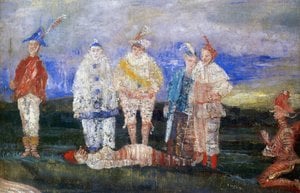
James Ensor's "Masques regardant un negre batteleur" (Masks Watching a Black Fighter), painted around 1879, is not merely a depiction of a scene; it’s an immersion into a world steeped in theatricality, anxiety, and the unsettling gaze of observation. This powerful black-and-white artwork, currently housed within private collections but readily available through WahooArt's exquisite hand-painted reproductions, immediately confronts the viewer with a chaotic gathering – a tableau vivant brimming with figures engaged in an unseen struggle. The central focus is a man, starkly nude and positioned before a figure wielding a stick and holding a bird, suggesting a ritualistic or violent encounter. The scene unfolds within a densely populated space, filled with individuals performing various actions: some seated, others standing, all contributing to the overall sense of heightened drama and unspoken tension.
Ensor’s artistic journey was profoundly shaped by his upbringing in Ostend, a vibrant seaside resort town known for its annual carnival. His parents operated a souvenir shop overflowing with masks, costumes, and exotic objects – a veritable treasure trove that ignited his imagination and became a recurring motif throughout his oeuvre. This fascination with disguise and the theatrical is palpable here; the masks themselves are not merely decorative elements but symbols of hidden identities and concealed emotions. The very title, “Masques,” immediately establishes this core theme, hinting at a world where appearances are deliberately misleading and reality is obscured.
A Study in Contrast: Technique and Composition
The painting’s stark monochrome palette – predominantly black and white – amplifies the dramatic effect, lending it an almost photographic quality while simultaneously evoking the atmosphere of a theatrical stage. Ensor masterfully employs hatching and cross-hatching to create texture and volume, particularly evident in the figures' clothing and the bird held aloft. The composition is deliberately crowded and claustrophobic, drawing the viewer into the scene and preventing any sense of easy escape. The placement of the turtle near the bottom left corner adds an unexpected element of quiet observation, a grounding presence amidst the surrounding chaos.
Ensor’s technique reveals a deliberate rejection of academic realism in favor of expressive distortion. Figures are elongated, faces are exaggerated, and gestures are imbued with intense emotion. This stylistic choice aligns perfectly with the burgeoning Expressionist movement that would later emerge from his work, prioritizing emotional impact over strict representation. The use of negative space is also crucial; it allows the eye to wander across the scene, absorbing the details and contributing to the overall sense of unease.
Symbolism and Interpretation
“Masques regardant un negre batteleur” is rich in symbolic potential, inviting multiple interpretations. The “negre batteleur,” or black fighter, immediately raises questions about race, power dynamics, and perhaps even colonial representation – a sensitive topic that was increasingly relevant during Ensor’s time. The masks themselves can be seen as representing societal roles, hidden identities, and the performative nature of human interaction. The bird held by the fighter could symbolize freedom, captivity, or even a sacrificial offering.
Furthermore, the scene suggests a ritualistic combat, possibly a staged performance or a symbolic representation of internal struggles. The onlookers, engaged in various activities, may represent different facets of society – judgment, amusement, indifference—all contributing to the overall sense of ambiguity and unsettling observation. The painting’s power lies not in providing clear answers but in prompting viewers to confront their own interpretations and anxieties.
Emotional Resonance and Artistic Legacy
James Ensor's "Masques regardant un negre batteleur" is a profoundly disturbing yet captivating work of art. It transcends mere representation, offering instead a glimpse into the artist’s complex psychological landscape and his exploration of themes such as identity, power, and social anxiety. Reproductions by WahooArt capture the painting's intensity and detail with remarkable fidelity, allowing viewers to experience Ensor’s unsettling vision in stunning clarity. This artwork remains a cornerstone of Belgian art history and continues to resonate with audiences today, prompting reflection on the masks we wear and the hidden battles we wage within ourselves.



 Eelvaade
 Osta käsitsi maalitud maal
 Saada
Saada Jaga
Jaga
 Teave teose kohta

 Laadi alla
 Sarnased teosed
 Röntgenuuring
 Slaidietendus
 Statistika

 Loe lähemalt






































 Klaasivalik on saadaval ainult suuruses kuni 110 cm