Hankige trükiivaldatav fail, mis on kvaliteedilt palju parem kui veebilehel näidatud eelvaade. Kõik meie müüdavad digitaalsed pildid pärinevad meie arhiivist kõrge resolutsiooniga originaalfailidest — tavaliselt 5000 kuni 15 000 pikslit laiust — nii et saate julgelt trükida suurematsat, lüüdist teha või detailset sisu reproduktsiooni teha.
Meie stuudiost ei lahtu ükski fail puutumatuna. Digiekpert võrdleb värve algsest maalistimusega ja vajadusel korrigeerib neid, seejärel parandab selgust ja detaile professionaalsete retušimisvahendite abil — püüdes alati jääda truudeks kunstniku pintoonile ja stiilile. Tulemuseks on pilt, mis näeb välja nagu maali, mitte nagu filtreeritud skann.
Teet kinnituse enne lõplikku valmimist: meie ekspert saadab pildi 72 tunni jooksul e-posti ülevaatamiseks. Ei ole rahul? Paluge parandusi või korrektsioone ning kui kvaliteet ei vasta ootustele, võite paluda tagastamist.
See on kvaliteet, millele tuguvad väljaandjad, disainistuudiod, galeriid ja trükikojad.
Laadi alla kõrge resolutsiooniga fail isiklikuks vaatamiseks, trükkimiseks ja loomingulisteks projektideks. ( Lülita trükkitoodetele Osta käsitsi maalatud teos)
Valides WahooArt.com, ei saa sa lihtsalt pilti – saad professionaalselt parandatud digitaalse teose, mida on valmistatud täpsusega ja mis on toetatud rahuldamatusgarantiiga. Siin on kõik, mis sinu tellimusega automaatselt kaasneb:
Teie kõrge resolutsiooniga digitaalne pildifail saadetakse teile e-posti 72 tunni jooksul pärast tellimist – kohe kasutamiseks valmis.
Teie teos on professionaalselt optimeeritud arenenud tehisintellekti tööriistade ja käsitsi redigeerimise abil, tagades maksimaalse detailitaseme, selguse ja värvitäpsuse.
Kas kustutasid faili kogukalu unustamisel või kustutamisel? Puudub mure – saad selle uuesti igal ajal ilma lisatasuta.
Nautige oma teoseid koheselt ilma tolli-, maksude või tarnimaskuludeta – digiletchargused on alati maksuvabadud.
Me tagame, et teie digitaalne pilt kajastaks originaali värve professionaalsete tööriistade ja värvihalduse abil võimalikult täpselt.
Kui te ei ole oma digitaalse pildi eest rahul, siis me parandame seda või tagastame 100% summast 100 päeva jooksul – küsimusteta.
Ei ole rahul? Saate täielise tagastaja 100 päeva jooksul pärast digitaalse faili kättesaamist – ilma küsimusteta.
Osta 3 pilti, säästa 10% - Osta 5, säästa 15% - Osta 10+, säästa 20%. Sobib suurepäraselt loomingulisteks projektideks, galeriideks ja agentuurideks.
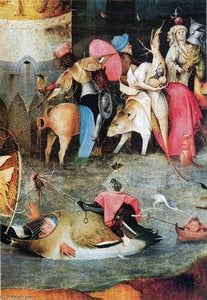
Hieronymus Bosch’s “Ecce Homo,” painted in 1475, is not merely a depiction of the crucifixion; it’s a visceral plunge into the anxieties and moral complexities of late medieval Europe. This arresting image, rendered in tempera on wood panel, immediately confronts the viewer with an unsettling tableau – a scene of profound sorrow and bewildered horror surrounding the figure of Christ. Bosch, a master of psychological realism and symbolic density, doesn't offer a straightforward narrative of sacrifice; instead, he presents a fragmented, almost hallucinatory experience, reflecting the turbulent spiritual climate of his time.
The painting’s setting is deceptively simple: a brick wall, likely representing the Roman edge of Jerusalem, serves as a stark backdrop to the drama unfolding before it. A small crowd gathers – soldiers in gleaming armor, their faces etched with confusion and perhaps even fear; priests and monks, their expressions a mixture of grief and contemplation; and ordinary citizens, frozen in moments of stunned disbelief. The central figure of Christ, hanging on the cross, is not idealized or serene. His face, rendered with an almost brutal honesty, bears the marks of suffering – wounds, contusions, and a palpable sense of agony. It’s this unflinching portrayal of human vulnerability that anchors the scene and elevates it beyond a simple religious illustration.
Bosch was renowned for his intricate use of symbolism, and “Ecce Homo” is a prime example. The swords scattered across the foreground are not simply indicators of violence; they represent the betrayal and bloodshed inherent in Christ’s sacrifice. The presence of animals – a dog licking the feet of Christ (a common symbol of repentance), and a monkey grasping a sword – adds layers of meaning, hinting at the corruption and moral decay within society. The figures themselves are often ambiguous, their gestures and expressions open to multiple interpretations. Some scholars believe the woman pointing at Christ is Mary Magdalene, while others see her as representing the collective grief of humanity. Even the brick wall itself can be interpreted as a barrier between the earthly realm and the divine, emphasizing the separation between God and man.
Furthermore, Bosch’s distinctive style – characterized by meticulous detail, vibrant colors (though faded over time), and an unsettling blend of realism and fantasy – contributes significantly to the painting's emotional impact. The figures are rendered with a remarkable degree of naturalism, yet their expressions and postures convey a sense of unease and disorientation. The background is filled with bizarre, dreamlike imagery—a small, grotesque figure seemingly observing the scene from above—further enhancing the painting’s surreal quality.
Bosch's technique in “Ecce Homo” reveals a skilled artist deeply rooted in the traditions of Netherlandish painting. He employed tempera on wood panel, a medium known for its luminosity and durability. The meticulous detail evident in the rendering of the figures’ clothing, armor, and facial features demonstrates his mastery of observation and representation. However, Bosch pushed beyond mere imitation; he used these techniques to create a world imbued with symbolic meaning and psychological depth.
Painted around 1475, “Ecce Homo” reflects the anxieties prevalent in Europe during this period – a time of religious upheaval, political instability, and growing social unrest. The Black Death had ravaged the continent just decades earlier, leaving a deep scar on the collective psyche. Bosch’s art often explored themes of sin, damnation, and the perils of earthly life, reflecting a widespread sense of moral uncertainty. “Ecce Homo” stands as a powerful testament to this era, offering a haunting glimpse into the spiritual and emotional landscape of 15th-century Europe.
WahooArt offers exquisite, hand-painted reproductions of Hieronymus Bosch’s “Ecce Homo,” meticulously crafted to capture the painting's original beauty and symbolic richness. Bring this extraordinary work of art into your home or office – a captivating conversation piece that invites contemplation and reflection.
Teose "Ecce Homo" autoriks on mõeldud Joen Van Aken.
Teos "Ecce Homo" on valmistatud tehnikas Acrylic On Canvas ja mõõdud on algses vormis 71 x 61 cm.
Teose „Ecce Homo“, autor Joen Van Aken trüket saate tellida otse selle Kvaliteetne kunstutrüki print lehelt: kunstiprint puuvillalõikel kangas või arhiveeritaval kangaspaberil.


1450 - 1516 , Madalmaad
 Eelvaade
 Saada
Saada Jaga
Jaga
 Teave teose kohta
 Juhend

 Laadi alla
 Sarnased teosed
 Röntgenuuring
 Slaidietendus
 KÜSIMUSED JA VASTUSID
 Statistika


 Loe lähemalt