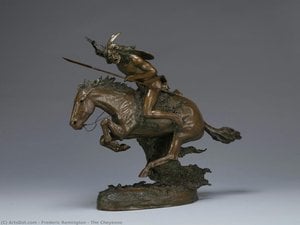
Sellel lehel kuvatav kunstiteos on kaitstud autoriõigusega, mis tähendab, et meil ei ole seaduslikku õigust luua või müüa identset reproduktsiooni. Seda kaitset rakendatakse rahvusvaheliste kokkulepete alusel, nagu näiteks Berne konventsioon ning riiklike seadustega, sealhulgas nendega, mida on sätestatud USA autoriõiguse seadus – 17. peatükk.
See meetod järgib täielikult autoriõiguse reegleid, kuna see ei põhine kaitstud kunstiteose kopeerimisel või dupliteerimisel. Selle asemel on tegu loova reinterpreetatsiooniga – uue maaldisega, mis on algteosest inspireeritud, kuid ei ole sellest identiline.
Muuseumikvaliteediga giclée- või kangasprint kiire tootmisega ja paindlikud viimistlusvõimalused. ( Osta käsitsi maalatud teos Lülita digitaalse pildi juurde)
Vali meie eelmääratud suurused, mis vastavad teose algupärastele proportsioonidele.

Sisestage vajalik laius ja kõrgus, et see sobiks teie raamile või seinale. Trükki saab ainult lõigata, seda ei saa kunagi pildist suuremaks teha, seega ka erineva mustega suurus kaotab osa pildist. Enne trükkimist saadame teile kinnitamiseks digitaalse näidisprojektsiooni. Sellel lehel näidatud pilt ei kujuta reaalset lõiget — seda näitab ainult näidisprojektsioon.
Ülemaailmne tarne () 2 nädala jooksul, tavalise 4/5 nädala asemel. (8 november)
Leaping Unicorn
Reproduktsiooni suurus

The world of jazz is often defined by its ability to find order within chaos, a delicate balance between structured melody and the wild freedom of improvisation. Few artists embodied this duality as profoundly as Hans Reisinger (1955 – 2022). Born in Munich, Germany, but deeply rooted in the cultural heart of Austria, Reisinger was more than just a percussionist; he was a rhythmic architect whose career spanned decades of musical evolution and civic engagement. His journey began with the disciplined, ethereal sounds of the Vienna Boys' Choir, an experience that instilled in him a foundational understanding of choral harmony and a meticulous attention to sonic detail. This early immersion in vocal precision would later serve as the silent heartbeat behind his complex, percussive explorations.
As Reisinger transitioned from the disciplined ranks of the choir to the rigorous halls of formal musical academia, his artistic palette began to expand. Studying piano at the Musik und Kunst Universitäten Wien and honing his percussion technique under the legendary Richard Hochrainer at the Universität für Musik und darstellende Künste Wien, he developed a rare dual skillset. This unique combination of harmonic sensitivity from the piano and the visceral, driving energy of the drums allowed him to synthesize melody with rhythm in a way that few of his contemporaries could match. His early collaborations in the mid-1970s, particularly with composers like Thomas Pernes, pushed him toward the experimental fringes of jazz, where he began to explore the boundaries of free improvisation and contemporary musical textures.
Reisinger’s professional trajectory was marked by a restless search for new sonic landscapes. He became a vital figure in the Viennese jazz scene, contributing to ensembles that bridged the gap between classical precision and avant-garde experimentation. His work with groups such as Erster Wiener Musikzirkus demonstrated his ability to create music specifically tailored for the movement of dance, proving that rhythm could be both a physical force and a narrative tool. Throughout the late 1970s and into the 1980s, his presence in the European jazz circuit grew, as he navigated the complexities of various ensembles, always seeking a way to make the percussion speak not just as an instrument, but as a voice.
Beyond the concert hall, Reisinger’s life was characterized by a profound commitment to the social fabric of Austria. He did not view art as an isolated pursuit but as a medium for engagement with the world around him. His involvement with the Floridsdorfer Athletics Sports Club and his work alongside the Neos – The New Austria political party reflected a belief that the pulse of music could resonate with the pulse of democracy. In these roles, he utilized the communicative power of percussion to convey messages of liberal values and social responsibility, effectively turning the rhythmic drive of jazz into a metaphor for civic vitality and progress.
The significance of Hans Reisinger lies in his refusal to be confined by genre or boundary. Whether he was performing in the intimate settings of experimental jazz clubs or contributing to larger, politically charged musical endeavors, his work remained anchored by a signature sense of precision and soul. His legacy is found in the way he bridged the gap between the disciplined traditions of his youth and the liberated improvisations of his maturity.
To reflect on his contributions is to recognize several key pillars of his artistry:
Though he passed away in 2022, the echoes of Reisinger’s percussion continue to resonate through the history of Austrian jazz, reminding us that true rhythm is a force that knows no borders.

1955 - 2022 , Germany
 Eelvaade
 Saada
Saada Jaga
Jaga
 Teave teose kohta
 Juhend

 Laadi alla
 Sarnased teosed
 Röntgenuuring
 Slaidietendus
 KÜSIMUSED JA VASTUSID
 Statistika

 Loe lähemalt






































 Klaasivalik on saadaval ainult kuni 110 cm suuruses teostes