Eelvaade AR-eelvaade Osta käsitsi maalatud teos Lülita digitaalse pildi juurde Saada
Teave teose kohta Juhend Lisa lemmikutesse Laadi alla Sarnased teosed Röntgenuuring Slaidietendus Statistika

Amnon and Tamar

Experience the dramatic tension of Guercino's Baroque masterpiece Amnon and Tamar, a poignant study of desire and innocence through masterful chiaroscuro that invites you to bring this emotional classic into your collection.

Avastage baroki meistri Guercino (Giovanni Francesco Barbieri) dramaatilised teosed! Kuulsalt valguse ja varju mänguga ning võimsa emotsionaalse intensiivsusega maalid nagu 'Hukkunud poja naasmine' on kunstiajaloo pärlid.

Giclée / Kunstiprint

Muuseumikvaliteediga giclée- või kangasprint kiire tootmisega ja paindlikud viimistlusvõimalused. ( Osta käsitsi maalatud teos Lülita digitaalse pildi juurde)

Corner sample of the P118B picture frame: vormitud polüstüreen, 5 cm wide and 3 cm thick
P118B €10
Corner sample of the P118H picture frame: vormitud polüstüreen, 5 cm wide and 3 cm thick
P118H €10
Corner sample of the P118W picture frame: vormitud polüstüreen, 5 cm wide and 3 cm thick
P118W €10
Corner sample of the P438Z picture frame: vormitud polüstüreen, 5.5 cm wide and 3.5 cm thick
P438Z €10
Corner sample of the P508JH picture frame: vormitud polüstüreen, 7 cm wide and 3.5 cm thick
P508JH €12
Corner sample of the P508YH picture frame: vormitud polüstüreen, 7 cm wide and 3.5 cm thick
P508YH €12
Corner sample of the P805H picture frame: vormitud polüstüreen, 5 cm wide and 3.5 cm thick
P805H €10
Corner sample of the P805Z picture frame: vormitud polüstüreen, 5 cm wide and 3.5 cm thick
P805Z €10
Corner sample of the P919BZ picture frame: vormitud polüstüreen, 7 cm wide and 3.5 cm thick
P919BZ €10
Corner sample of the P919G picture frame: vormitud polüstüreen, 7 cm wide and 3.5 cm thick
P919G €10
Corner sample of the P919XJ picture frame: vormitud polüstüreen, 7 cm wide and 3.5 cm thick
P919XJ €10
Corner sample of the P959ZH picture frame: vormitud polüstüreen, 5 cm wide and 3 cm thick
P959ZH €10
Corner sample of the P968JZ picture frame: vormitud polüstüreen, 6 cm wide and 4 cm thick
P968JZ €12
Corner sample of the W106C picture frame: massivpuit, 5 cm wide and 3 cm thick
W106C €8
Corner sample of the W218G picture frame: massivpuit, 5 cm wide and 3 cm thick
W218G €10
Corner sample of the W218JH picture frame: massivpuit, 5 cm wide and 3 cm thick
W218JH €8
Corner sample of the W218Y picture frame: massivpuit, 5 cm wide and 3 cm thick
W218Y €10
Corner sample of the W307PJ picture frame: massivpuit, 6 cm wide and 3 cm thick
W307PJ €10
Corner sample of the W316G picture frame: massivpuit, 6 cm wide and 3 cm thick
W316G €10
Corner sample of the W316PJ picture frame: massivpuit, 6 cm wide and 3 cm thick
W316PJ €8
Corner sample of the W316Y picture frame: massivpuit, 6 cm wide and 3 cm thick
W316Y €10
Corner sample of the W398PJ picture frame: massivpuit, 5 cm wide and 3 cm thick
W398PJ €8
Corner sample of the W4111J picture frame: massivpuit, 6.5 cm wide and 3.5 cm thick
W4111J €10
Corner sample of the W500HY picture frame: massivpuit, 7 cm wide and 5 cm thick
W500HY €15
Corner sample of the W500JH picture frame: massivpuit, 7 cm wide and 5 cm thick
W500JH €15
Corner sample of the W692G picture frame: massivpuit, 8 cm wide and 4 cm thick
W692G €12
Corner sample of the W849H picture frame: massivpuit, 5 cm wide and 3 cm thick
W849H €8
Corner sample of the W940BG picture frame: massivpuit, 7.5 cm wide and 4.5 cm thick
W940BG €15
Corner sample of the W953PJ picture frame: massivpuit, 6 cm wide and 3.5 cm thick
W953PJ €8

Standardne suurus
kohandatud
CM
INCH

Vali meie eelmääratud suurused, mis vastavad teose algupärastele proportsioonidele.

laius
kõrgus

Sisestage vajalik laius ja kõrgus, et see sobiks teie raamile või seinale. Trükki saab ainult lõigata, seda ei saa kunagi pildist suuremaks teha, seega ka erineva mustega suurus kaotab osa pildist. Enne trükkimist saadame teile kinnitamiseks digitaalse näidisprojektsiooni. Sellel lehel näidatud pilt ei kujuta reaalset lõiget — seda näitab ainult näidisprojektsioon.

Ülemaailmne tarne () 2 nädala jooksul, tavalise 4/5 nädala asemel. (28 oktoober)

Tasuta ekspresssaatmine üle maailma
Kõrgekvaliteediline lina-kangas
Täielik transpordikindlustus
Tollimaksude tagastamise garantii
Värvitoime täpsuse garantii
100 päeva tagastusõigus (ainult valmistusdefektide korral)
100% raha tagasi garantii
Hulgusoodustus

Kogu summa

€ 60

Amnon and Tamar

Giclée / Kunstiprint

Reproduktsiooni suurus

-

Koguhind

€ 60

A Drama of Desire and Destiny

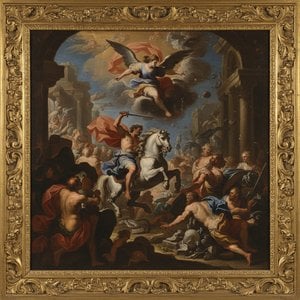
In the grand, sweeping theater of the Italian Baroque, few moments possess the psychological tension found in Guercino’s 'Amnon and Tamar'. Created between 1649 and 1650, this evocative oil painting serves as a profound window into the turbulent soul of the 17th century. The scene captures a pivotal, heart-wrenching moment from the biblical narrative of 2 Samuel, where the boundaries between longing and tragedy are perilously thin. Guercino, born Giovanni Francesco Barbieri, invites us to witness the silent, heavy atmosphere surrounding Amnon, King David's eldest son, as he gazes with an unsettling, unrequited hunger upon his half-sister, Tamar. There is a palpable sense of a world on the precipice, where innocence and predatory intent are locked in a breathless, tragic dance.

The composition is a masterclass in Baroque storytelling, utilizing a striking arrangement of figures to guide the viewer's emotional journey. On the left, Amnon stands with his hands tucked behind his back, a posture that suggests a deceptive stillness masking an internal storm of passion. Opposite him, Tamar embodies a poignant vulnerability; her gesture of holding her breast serves as a symbol of modesty and purity, yet it also underscores her profound unawareness of the danger lurking in her brother's eyes. The presence of smaller figures in the background and the prominent placement of a bed add layers of narrative depth, subtly foreshadowing the catastrophic events that will soon shatter the peace of this royal household.


The Mastery of Light and Shadow

Guercino’s technical prowess is most evident in his command of chiaroscuro—the dramatic interplay between light and dark. This technique does more than merely illuminate the figures; it sculpts them out of the shadows, imbuing the flesh with a lifelike, tactile quality that draws the observer into the room. The light falls across the central figures with a theatrical intensity, highlighting the tension in their limbs and the complex expressions on their faces, while the surrounding darkness swallows the periphery, creating an intimate, almost claustrophobic sense of drama. This use of shadow is not merely decorative but serves as a metaphor for the hidden motives and the encroaching doom that define the story.

For the discerning collector or interior designer, this painting offers more than just aesthetic beauty; it provides a profound emotional anchor for any space. The work’s ability to evoke complex feelings—ranging from empathy for Tamar's innocence to the chilling realization of Amnon's obsession—makes it a conversation piece of unparalleled depth. Whether displayed in a curated gallery or as a focal point in a sophisticated study, 'Amnon and Tamar' brings with it a sense of historical weight and artistic prestige. It is a piece that demands contemplation, inviting anyone who stands before it to reflect on the eternal human struggles between impulse and morality.

Korduvad küsimused

Milline on teose „Amnon and Tamar“, autor Guercino värvitoit?

Teose "Amnon and Tamar" värvipalett on koonuse方面 Subtle Color.

Kas saan kasutada täiendatud reaalset, et näha teost „Amnon and Tamar“, autor Guercino oma toonas?

Teosele "Amnon and Tamar" on saadaval täiendatud reaalne eelvaade: teose AR-eelvaade teose kohta leht näitab seda teie enda ruumis ühilduval seadmel.

Millist tehnikat ja stiili iseloomustavad teos „Amnon and Tamar“, autor Guercino?

Teoses "Amnon and Tamar" kohtuvad Oil tehnika ja Baroque suundumus.


Kunstniku elulugu

Giovanni Francesco Barbieri: Varju ja Valguse Meister

Giovanni Francesco Barbieri, tuntud maailmas Il Guercino nime all – “silmakirjatseja” – oli nimi, mis sündis füüsilise tunnuse tõttu, kuid määrati esindama kunstinägemust, mis muutis radikaalselt barokkmaali. Sündinud 1591. aastal Centos, väikelinnas Ferrara ja Bologna vahel, algas Guercino teekond mitte formaalsete akadeemiate pidulikes saalides, vaid eneseleidmise kaudu ning varajase õpipojaõpetuse läbi Ludovico Carracciga. See kujundav periood pani aluse stiilile, mis sai sünonüümiks intensiivse emotsionaalsusega, dramaatilise chiaroscuroga ja sügava pühendumisega nii realismile kui idealismile. Erinevalt paljudest oma kaasaegsetest, kes otsisid klassikalist täiuslikkust, pulseeris Guercino kunst toore inimenergiaga, peegeldades 17. sajandi Itaalia turbulentset vaimukliimat. Tema varajast elu iseloomustas loomulik talent, mis kiiresti ületas konventsionaalse koolituse; ta ei kopeerinud stiile, vaid loomas oma teed, valgustatud sisemise arusaamaga valguse ja varju olemusest.

Karavaggismist Klassikalisse Graatsiasse: Muutuv Palett

Guercino kunstiline areng ei olnud lineaarne progressioon, vaid pigem põnev dialoog erinevate mõjude ja stilistiliste uurimuste vahel. Tema varased teosed olid sügavalt võlgu Caravaggio revolutsioonilise naturalismiga, omaks võttes teravad kontrastid ja karmrealismi, mis šokeeris ja köitis publikut. Maalid nagu *Amnon ja Tamar* on selle perioodi näide – poeetiline kujutus piibellugudest, millel on kompromissitu ausus ja psühholoogiline sügavus. Guercino ei olnud aga rahul jäämisega ainult karavaggismi orbiidile. Pöördepunkt tema stiilis toimus 1930ndatel aastatel, mida soodustasid nii kunstiline uudishimu kui ka nõudlikute patroonide nõudmised. Ta hakkas pehmendama oma paletti, liikudes karmi tenebrismist valgustatumate ja tasakaalukamate lähenemiste poole. See üleminek ei olnud lihtsalt stilistiline kapriis; see kajastas sügavamat seotust klassikaliste ideaalidega ja soovi luua teoseid, mis olid mitte ainult emotsionaalselt võimsad, vaid ka esteetiliselt rafineeritud. Sel perioodil nägi ta suuremat ruumilist sügavust ja harmoonilisemat kompositsiooni, nagu on näha meistriteostes *Prodigal Soni tagasitulek*.

Piibellugud ja Emotsionaalne Resonants

Kogu oma karjääri jooksul pöördus Guercino inspiratsiooni saamiseks järjekindlalt piibellugude poole. Ta ei lihtsalt illustreerinud aga neid lugusid; ta täitis need sügava inimliku drama ja emotsionaalse resonantsiga. Tema figuurid ei ole idealiseeritud pühakud, vaid puudulikkusega võitlevad inimesed, kes tegelevad usuga, kahtlusega, meeleparandusega ja lunastusega. *Püha Aloysiuse Gonzaga kutsumine* on peamine näide – võimas religioosse ärkamise kujutus, millel on hingekeerutav oskus ja tundlikkus. Guercino võime tabada oma tegelaste sisema elu eraldas teda paljudest kaasaegsetest kunstnikest. Ta mõistis, et tõeline jumalhirm ei seisne väljastpoolt nähtavas pühendumises, vaid sisemistes võitlustes ja ohverdustes, mis määrasid usu elule pühendatud elu. See psühholoogiline sügavus, kombineerituna tema meisterlikkusega valguse ja varju kasutamisel, lõi maale, mis olid nii visuaalselt vapustavad kui ka emotsionaalselt veenvad. Ta ei kartnud kujutada raskeid või häirivaid hetki, uskudes, et need on olulised inimliku seisundi keerukuse mõistmiseks.

Püsiv Pärand: Mõju ja Uuestiavadamine

Guercino mõju ulatus kaugele tema eluaegse piiri taha. Tema dramaatiline valguse ja varju kasutamine, koos võimega äratada võimsaid emotsioone, inspireeris põlvkondi kunstnikke üle Euroopa. Kuigi tema maine 18. ja 19. sajandil veidi kahanes, tekkis 20. sajandi uuendatud hindamine tema tööle, suuresti tänu kunstiajaloolase Sir Denisi Mahoni väsimatule pingutusele. Mahoni hoolikas uurimistöö ja kirglik propageerimine aitas ta taastada Guercino õiguspärase koha barokkperioodi meistrite hulgas. Tänapäeval tähistatakse tema maale prestiižsetes muuseumides üle maailma – alates Pinacoteca Nazionale’ist Ferraras kuni National Gallery of Art’ini Washingtonis D.C.-s – tunnistades tema kestvat kunstilist geeniust.
  • Muuseumid ja Kogud: Guercino tööd kaunistavad institutsioone nagu Pinacoteca Nazionale (Ferrara), Palazzo Brignole-Sale (Genoa) ja Galleria Spada (Rooma).
  • Chiaroscuro Meister: Tema dramaatiline valguse ja varju kasutamine jääb tema stiili määrava omaduseks.
  • Piibellugude jutustaja: Ta tõi piibellugud ellu võrreldamatu emotsionaalse sügavuse ja psühholoogilise ülevaatega.
Guercino pärand ei seisne mitte ainult tehnilises oskuses või stilistilistes uuendustes; see on kunsti jõus ühendada meid jagatud inimlikkusega, uurida usu ja kahtluse keerukust ning valgustada südame kestvaid müsteeriume.

Guercino

Guercino

1591 - 1666 , Itaalia

Lühikest infot

  • Artistic Movement Or Style: Barokk
  • Artists Or Movements Influenced By This Artist: ['Baroki maalikunst']
  • Artists Who Influenced This Artist: ['Ludovico Carracci']
  • Date Of Birth: 8. veebruar 1591
  • Date Of Death: 22. detsember 1666
  • Full Name: Giovanni Francesco Barbieri
  • Nationality: Itaallane
  • Notable Artworks:
    • Amnon ja Tamar
    • Prodigali poja tagasitulek
  • Place Of Birth: Cento, Itaalia