x
EelvaadeEelvaade AR-eelvaadeAR-eelvaade Osta print Osta printOsta pilt Osta pilt SaadaSaada
Teave teose kohtaTeave teose kohta Lisa lemmikutesse Lisa lemmikutesse Laadi allaLaadi alla Sarnased teosedSarnased teosed RöntgenuuringRöntgenuuring SlaidietendusSlaidietendus

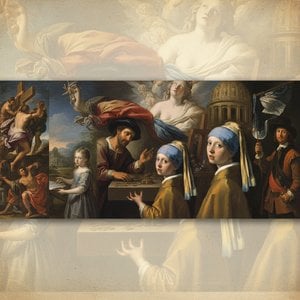
LA FILLE DE JEPHTE

Explore Giuseppe Bazzani's dramatic Baroque masterpiece depicting Jephthah’s daughter – a poignant biblical scene characterized by dynamic movement and rich color palettes.

Giuseppe Bazzani (1690-1769) was an Italian Rococo painter known for his expressive brushwork, emotional intensity & unique synthesis of Baroque, Lombardy & international styles. Explore his religious scenes, portraits & influence on Neoclassical art

Käsitsi valmistatud õlimaalireproduktsioon

Meie kunstnike poolt tellimusel valmistatud käsitsi maalitud õli-kainaste teos teie soovitud suuruses ja raamis. (Osta print Osta printOsta pilt Osta pilt)

P118B $10
P118H $10
P118W $10
P438Z $10
P508JH $12
P508YH $12
P805H $10
P805Z $10
P919BZ $10
P919G $10
P919XJ $10
P959ZH $10
P968JZ $12
W106C $8
W218G $10
W218JH $8
W218Y $10
W307PJ $10
W316G $10
W316PJ $8
W316Y $10
W398PJ $8
W4111J $10
W500HY $15
W500JH $15
W692G $12
W849H $8
W940BG $15
W953PJ $8

Standardne
kohandatud
CM
INCH

Vali meie eelmääratud suurused, mis vastavad teose algupärastele proportsioonidele.

laius
kõrgus

Sa võite sisestada oma mõõtmed konkreetse raami või ruumi sobivuse tagamiseks. Kui teie valitud suurus ei vasta originaalpildi proportsioonidele, siis kärvime kunstiteost või laiendame maali täiendavate käsitsi maalitud elementidega. Enne tootmise algust saadetakse teile heakskiitmiseks digitaalne eelvaade.
Palun pidage meeles, et ekraanil kuvatav eelvaade ei kajasta tegelikku kärpimist või laiendamist. Ainult eelvaade näitab täpselt lõplikku kompositsiooni.
Kuigi on saadaval kohandatud suurused, soovitame originaalproportsioonide säilimiseks valida mõõdud eelmääratletud nimekirjast.

Näited muudetavatest elementidest: asenda nägu kliendi fotoga; lisa lemmikloom (nt asenda kass koeraga); lisa taustale peidetud sõnum; muuda tausta maastikku või elemente.
Pärast tellimust saadab WahooArt.com meeskond kliendile e-posti juhised ning esitab eelvaate kavandi.

Maailmline tarne 3–4 nädala jooksul tavalise 5 nädala asemel. (28 august). Kvaliteedis kompromisse ei tehta.

why_choose_icon
Tasuta ekspresssaatmine üle maailma
why_choose_icon
Kõrgekvaliteediline linakangas
why_choose_icon
Täielik transpordikindlustus
why_choose_icon
Tollimaksude tagastamise garantii
why_choose_icon
Värvitoime täpsuse garantii
why_choose_icon
60-päevane tagastusõig: ainult tootmisdefektide korral
why_choose_icon
100% raha tagasi garantii
why_choose_icon
Hulgusoodustus

Kogu summa

$ 372

reproduction

LA FILLE DE JEPHTE

Reproduktsiooni tehnika

Reproduktsiooni suurus

-

Kogusumma

$ 372

Teave teose kohta

  • Title: La Fille de Jephté
  • Notable elements or techniques: Chiaroscuro
  • Year: 1700
  • Location: Musée du Louvre
  • Subject or theme: Biblical scene
  • Movement: Baroque
  • Artist: Giuseppe Bazzani

Kunstiviktoriin

Iga küsimuse kohta on ainult üks õige vastus.

Küsimus 1:
Which artistic style is most prominently associated with Giuseppe Bazzani's interpretation of this artwork?
Küsimus 2:
The painting utilizes a technique known as ‘chiaroscuro.’ What does this term refer to?
Küsimus 3:
According to the description, what is the dominant color palette employed in ‘La Fille de Jephté’?
Küsimus 4:
‘La Fille de Jephté’ is considered a masterpiece of Baroque art. Which artist is cited as an influential inspiration for Bazzani's style?

La Fille de Jephté – Giuseppe Bazzani: A Baroque Vision of Sacrifice

Giuseppe Bazzani’s “La Fille de Jephté” stands as a testament to the grandeur and emotional intensity characteristic of Baroque art, specifically within the artistic milieu of Mantua during the latter half of the seventeenth century. Executed around 1700-1715, this monumental canvas—measuring approximately 180 cm × 235 cm—captures a dramatic biblical scene with remarkable precision and expressive power, reflecting Bazzani’s mastery of technique and his profound understanding of artistic symbolism. The painting resides in the Musée du Louvre, acquired from the Vindizio Nodari Pesenti collection in 1922, showcasing its enduring appeal to art historians and collectors alike.
  • Historical Context: Mantua under Federico III Gonzaga was a crucible for artistic innovation during the Baroque period. The Gonzaga court actively fostered patronage of artists like Bazzani, encouraging experimentation with color palettes and compositional strategies—a deliberate departure from the more restrained aesthetic conventions of preceding eras.
  • Style & Technique: Bazzani’s approach aligns seamlessly with the Baroque style's emphasis on dynamism and theatricality. Loose brushwork dominates the canvas, creating a textured surface that conveys movement and immediacy. The artist skillfully employs chiaroscuro—a dramatic contrast between light and dark—to sculpt figures and heighten emotional impact, drawing inspiration from artists such as Rubens and Carracci.

Composition & Perspective: A Diagonal Dance of Emotion

The painting’s composition is deliberately complex, prioritizing visual drama over strict adherence to classical perspective. A prominent diagonal line traverses the canvas from lower left to upper right, guiding the viewer's gaze and reinforcing the scene’s sense of urgency. Figures are clustered together in a dynamic arrangement that reflects the psychological turmoil inherent in the biblical narrative—a young woman being led away as sacrifice embodies profound sorrow and resignation. The architectural backdrop contributes to the overall atmosphere, albeit subtly rendered with softened edges.

Color Palette & Symbolism: Warm Tones Reflecting Sacrifice’s Burden

Bazzani employs a rich color palette dominated by warm hues—primarily reds, oranges, yellows, and browns—contrasted sharply with cooler blues in the drapery. These colors serve not merely as decorative elements but also as conduits of symbolic meaning, mirroring the emotional weight of the depicted sacrifice. The use of flesh tones—ranging from pale pink to tan—further enhances realism while subtly conveying vulnerability. The presence of a lamb—representing innocence and sacrificial offering—underscores the painting’s central theme.

Emotional Impact & Artistic Legacy

“La Fille de Jephté” transcends mere visual representation, communicating profound emotions of sorrow, despair, and impending doom. The artist's expressive gestures— outstretched hands and downcast eyes—amplifies these feelings, inviting contemplation on themes of faith, sacrifice, and human suffering. Bazzani’s masterpiece exemplifies the Baroque ideal of conveying psychological depth through artistic form—a legacy that continues to inspire artists and captivate audiences centuries later. Its inclusion in the Musée du Louvre ensures its preservation as a cornerstone of European art history.

Additional Research:

This painting was acquired from Alain Tarica in 1991, showcasing its enduring appeal to collectors. Stéphane Loire’s “XVIIe siècle” in Foucart-Walter’s catalogue examines Bazzani's stylistic influences and contributions to Mantuan Baroque art. The Musée du Louvre’s acquisition records detail the painting’s provenance and artistic significance. Furthermore, Jesús M. de la Fuente’s research into self-regulation theory provides a valuable framework for understanding the psychological dimensions of Baroque art—specifically its ability to evoke powerful emotions and convey complex ideas. Sandra Vásquez de la Horra's surreal drawings offer a contrasting perspective on visual storytelling, highlighting the importance of imagination and symbolism in artistic expression. Finally, exploring Santo Domingo de la Calzada’s cathedral – a unique Spanish cathedral steeped in legend & Camino de Santiago history! Witness the Rooster Miracle, Romanesque-Gothic architecture & religious artifacts - expands our appreciation for architectural grandeur and spiritual contemplation.

Kunstniku elulugu

The Soul of Mantua: The Life and Legacy of Giuseppe Bazzani

In the heart of eighteenth-century Italy, amidst the gilded splendor of Mantua, the brush of Giuseppe Bazzani moved with a singular, restless energy that defied the polite constraints of his era. Born in 1690 into a family of skilled goldsmiths, Bazzani’s early immersion in the meticulous world of precious metals and fine craftsmanship provided him with an innate understanding of texture and light. This foundational intimacy with material beauty would later manifest in his paintings as a profound ability to manipulate pigment, creating surfaces that seem to vibrate with an almost tactile intensity. His formal training under Giovanni Canti served as the gateway to the classical traditions of Parma, yet even in these formative years, one can detect the seeds of a much more turbulent and expressive spirit waiting to bloom.

Bazzani’s artistic journey was never a simple adherence to the prevailing winds of fashion; rather, it was a complex dialogue between the fading grandeur of the Baroque and the emerging lightness of the Rococo. While his contemporaries often sought the airy elegance and decorative charm typical of the period, Bazzani drew deep inspiration from the dramatic shadows of Rubens and the frenetic, atmospheric brushwork of Magnasco. This synthesis allowed him to create works that possessed a unique psychological weight. His compositions frequently feature figures caught in moments of profound spiritual or emotional crisis, where the boundaries between the physical world and the divine seem to dissolve into a haze of light and shadow.

A Master of Emotional Intensity and Technique

The true brilliance of Bazzani lies in his ability to use technique as a vehicle for emotion. His brushwork is famously loose and spontaneous, often described by historical critics with a polarizing intensity that bordered on the barbaric. Yet, within this perceived roughness lies a sophisticated mastery of movement and atmosphere. In masterpieces such as The Ecstasy of St Therese, he utilizes light not merely to illuminate, but to sanctify, creating a sense of spiritual transcendence that pulls the viewer into the very heart of the miracle. Similarly, in The Agony of Christ in the Garden, his ability to capture sorrowful contemplation through swirling, nebulous forms demonstrates a precursor to the expressive freedom found in much later movements.

His repertoire was as diverse as his influences, ranging from the dramatic biblical narratives of La Fille de Jephthé—where dynamic movement and rich color palettes command the eye—to more intimate religious scenes. This versatility was supported by his prestigious role within the Mantuan court, where he served as a faculty member and eventually the director of the Accademia di Belle Arti. In this capacity, Bazzani was not merely a painter but a guardian of artistic excellence, shaping the next generation of artists while navigating the complex political and cultural landscape of the ducal court.

Historical Significance and Artistic Foreshadowing

Though often categorized within the Rococo movement, Bazzani’s work possesses an idiosyncratic darkness and a psychological depth that sets him apart from the purely decorative artists of his time. His fascination with the interplay of light and shadow, and his willingness to embrace a more rugged, emotive style, suggest a visionary who was looking far beyond the eighteenth century. There is a palpable tension in his canvases—a struggle between order and chaos, tradition and innovation—that resonates with the turbulent spirit of modern art.

The historical importance of Giuseppe Bazzani extends beyond his immediate contributions to the Mantuan school. He stands as a vital link in the evolution of European painting, embodying a bridge between the heavy drama of the Baroque and the more fluid, expressive tendencies that would eventually find their voice in Expressionism. By refusing to settle for the easy grace of his age, Bazzani created a body of work that remains hauntingly relevant, inviting every generation to witness the profound power of the human spirit captured in paint.

Giuseppe Bazzani

Giuseppe Bazzani

1690 - 1769 , Italy

Lühikesed faktid

  • Artistic Movement Or Style: Rococo
  • Artists Or Movements Influenced By This Artist: ['Expressionism']
  • Artists Who Influenced This Artist:
    • Giovanni Canti
    • Rubens
  • Date Of Birth: 1690
  • Full Name: Giuseppe Bazzani
  • Nationality: Italian
  • Notable Artworks:
    • Saint Anthony & Christ
    • LA Fille de Jephte
  • Place Of Birth: Mantua, Italy