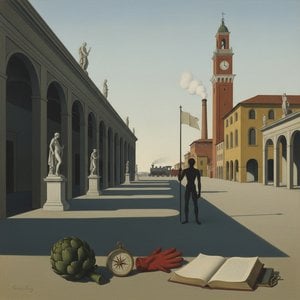
A Dreamscape Frozen in Time
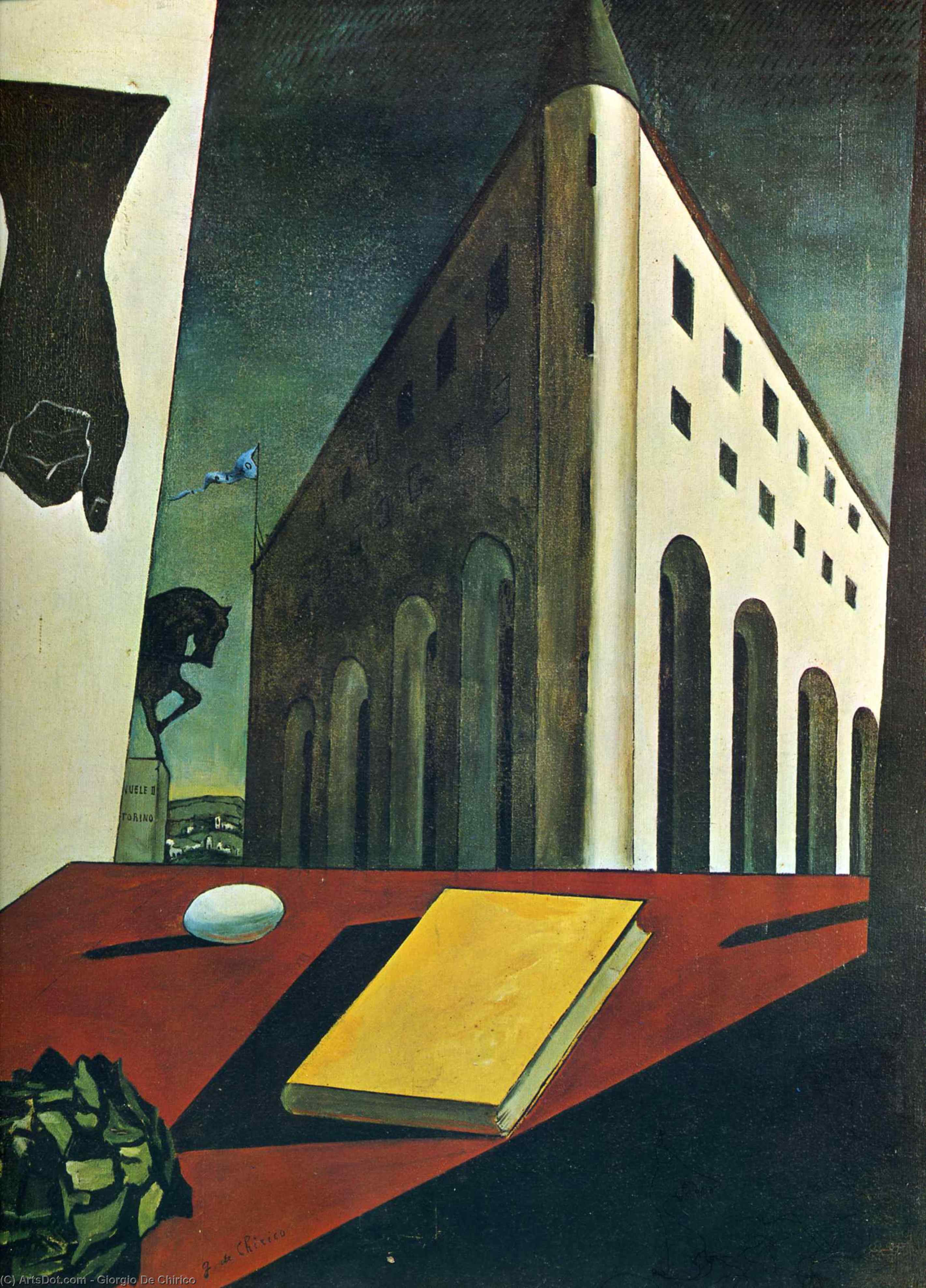
In the quiet, unsettling stillness of Giorgio de Chirico’s 1914 masterpiece, Turin Spring, the boundaries between reality and the subconscious begin to dissolve. This is not merely a depiction of an architectural landscape; it is an invitation into a realm of dreamlike consciousness where the familiar becomes profoundly strange. The painting presents a neoclassical edifice, dominated by a looming clock tower that anchors the composition with a sense of heavy, inescapable permanence. Bathed in a palette of muted pastels—soft ochres, pale yellows, and ethereal lavenders—the scene possesses a haunting luminosity. De Chirico employs a technique that subtly fractures perspective, reminiscent of Cubist experimentation, yet he eschews pure abstraction in favor of an evocative atmosphere that prioritizes psychological resonance over geometric precision.
The Architecture of Memory and Melancholy
Every element within this desolate tableau serves as a potent symbol, woven together to create a narrative of existential reflection. The prominent clock tower acts as a silent sentinel, representing the relentless march of time and the inevitable approach of mortality—themes deeply rooted in the philosophical influences of Nietzsche and Schostakovich that shaped de Chirico’s formative years. Scattered throughout the composition are books, objects laden with intellectual weight, which suggest the burden of memory and the accumulation of human experience. The presence of two solitary figures, positioned with a deliberate sense of detachment, adds a layer of human drama to the stillness. Their ambiguous postures invite the viewer to contemplate their isolation within this vast, silent world, making the painting an exquisite study in loneliness and introspection.
A Timeless Addition to the Modern Interior
For the discerning collector or interior designer, Turin Spring offers much more than visual beauty; it provides a profound emotional anchor for any space. The painting’s unique ability to evoke both mystery and tranquility makes it a versatile centerpiece for sophisticated environments. Whether placed in a minimalist gallery-style living room or a quiet study, its muted tones and complex layers of meaning encourage deep engagement and conversation. As a high-quality reproduction, this work allows the haunting elegance of the Metaphysical movement to inhabit contemporary homes, bringing with it the intellectual depth of early 20th-century modernism. It is an investment in atmosphere, a way to capture a fragment of a dream and hold it forever within the walls of one's own sanctuary.
Korduvad küsimused
Kas teoses "Turin Spring" on nähtav tugev kerge-tume kontrast?
Teoses „Turin Spring“, autor Giorgio De Chirico on nähtav Statement kontrast heellemiste ja tumedate alade vahel.
Millist etap Giorgio De Chirico loomingus teos "Turin Spring" esindab?
Teos "Turin Spring" kuulub Giorgio De Chirico loomingulise karjääri perioodi Mature Surrealism. See klassifikatsioon seostab teose kunstniku loovliku arenguga.
Milleks on teose „Turin Spring“, autor Giorgio De Chirico reproduktsiooni soovitatud kasutada?
Teose „Turin Spring“, autor Giorgio De Chirico soovituslik kasutusviis on Conversation. Seda saab kasutada ka muudel eesmärkidel.


 Eelvaade
 Osta käsitsi maalatud teos
 Saada
Saada Jaga
Jaga
 Teave teose kohta
 Juhend

 Laadi alla
 Sarnased teosed
 Röntgenuuring
 Slaidietendus
 Q&A
Q&A Statistika


 Loe lähemalt






































 Klaasivalik on saadaval ainult kuni 110 cm suuruses teostes