
Sellel lehel kuvatav kunstiteos on kaitstud autoriõigusega, mis tähendab, et meil ei ole seaduslikku õigust luua või müüa identset reproduktsiooni. Seda kaitset rakendatakse rahvusvaheliste kokkulepete alusel, nagu näiteks Berne konventsioon ning riiklike seadustega, sealhulgas nendega, mida on sätestatud USA autoriõiguse seadus – 17. peatükk.
See meetod järgib täielikult autoriõiguse reegleid, kuna see ei põhine kaitstud kunstiteose kopeerimisel või dupliteerimisel. Selle asemel on tegu loova reinterpreetatsiooniga – uue maaldisega, mis on algteosest inspireeritud, kuid ei ole sellest identiline.
Muuseumikvaliteediga giclée- või kangasprint kiire tootmisega ja paindlikud viimistlusvõimalused. ( Osta käsitsi maalatud teos Lülita digitaalse pildi juurde)
Vali meie eelmääratud suurused, mis vastavad teose algupärastele proportsioonidele.

Sisestage vajalik laius ja kõrgus, et see sobiks teie raamile või seinale. Trükki saab ainult lõigata, seda ei saa kunagi pildist suuremaks teha, seega ka erineva mustega suurus kaotab osa pildist. Enne trükkimist saadame teile kinnitamiseks digitaalse näidisprojektsiooni. Sellel lehel näidatud pilt ei kujuta reaalset lõiget — seda näitab ainult näidisprojektsioon.
Ülemaailmne tarne () 2 nädala jooksul, tavalise 4/5 nädala asemel. (1 november)
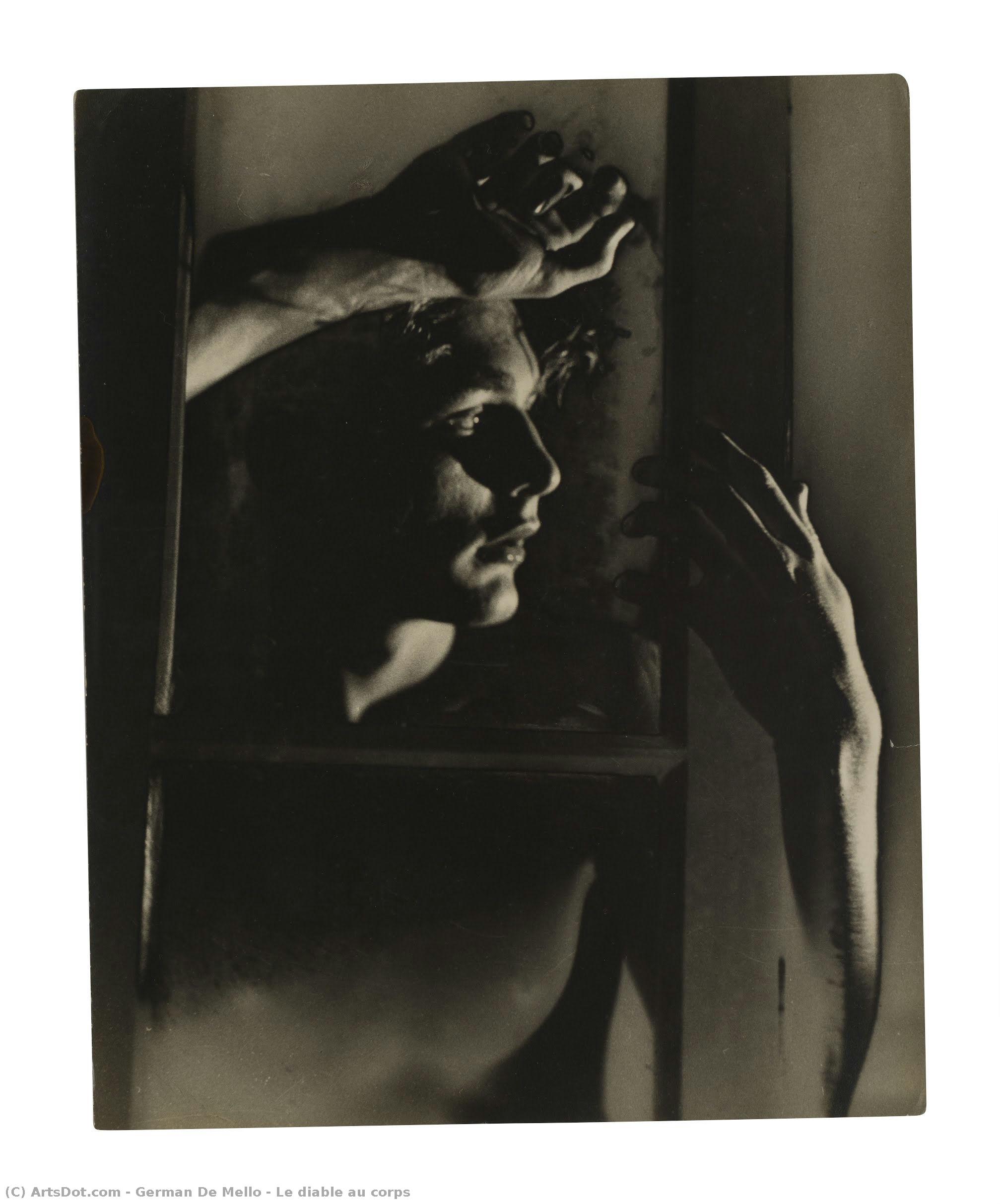
Le diable au corps
Reproduktsiooni suurus
In the evocative monochrome world of German De Mello, certain moments transcend mere documentation to become profound psychological portraits. Le diable au corps, captured in 1949, stands as a haunting testament to this mastery. The photograph presents a man caught in a private moment of intense vulnerability, his hands raised toward his face in a gesture that oscillates between deep distress and a desperate search for solace. Through the stark, high-contrast lens of mid-century black and white photography, De Mello strips away the distractions of color, forcing the viewer to confront the raw, unadorned texture of human emotion. The way the light clings to the contours of his fingers and the tension in his closed eyes creates a sculptural quality, turning a fleeting expression into an enduring monument of existential struggle.
The technical brilliance of this piece lies in its ability to utilize the absence of light as much as the presence of it. De Mello, a pivotal figure in the Brazilian photography movement and a member of the prestigious Foto Cinema Clube Bandeirante, possessed an uncanny ability to manipulate shadows to direct the viewer's emotional journey. In this work, the deep blacks serve not just as a background, but as a heavy, atmospheric weight that presses upon the subject, mirroring the internal pressure of his visible discomfort. The grain of the film adds a tactile, organic layer to the composition, lending an air of authenticity and timelessness that makes the man's silent cry feel both immediate and ancient.
Beyond its technical execution, Le diable au corps functions as a powerful symbol of the universal human experience. The title itself—suggesting a "devil in the flesh"—invites us to contemplate the internal conflicts, passions, and demons that reside within every individual. There is a profound sense of solitude in this image; though we gaze upon him, we are witnesses to a struggle that is deeply solitary. For the collector or the art enthusiast, this piece offers more than just visual beauty; it provides a meditative focal point that encourages introspection. It captures that precise, agonizing second where the weight of the world becomes too much to bear, yet remains frozen in a state of dignified, artistic grace.
For interior designers and curators of fine spaces, this photograph offers a sophisticated way to introduce depth and narrative into a room. Its monochromatic palette allows it to integrate seamlessly into modern, minimalist, or classic gallery-style decors, acting as a soulful anchor in an environment. A high-quality reproduction of this work brings with it a sense of historical gravity and intellectual prestige. It is a piece designed for those who appreciate art that does not merely decorate a wall but speaks to the soul, inviting conversation and providing a window into the complex, beautiful, and often turbulent landscape of human emotion.
Teost „Le diable au corps“, autor German De Mello saab omaenda seinal eelvaatata teose AR-eelvaade teose kohta lehe abil, kasutades ühendataval seadmel täiendatud reaalсust.
Teose „Le diable au corps“, autor German De Mello eregus on balanced ja luminants on Gentle Luminance.
Olles värvipalett Neutrals, on teos „Le diable au corps“, autor German De Mello soovitatav ruumideks Living Room. Just needistlikud toonid on üks põhjuseid selle soovituse taga.


1922 - 2021 , Brazil

Journey through time with 10 iconic black and white photography masterpieces. Explore the stories, techniques, and legends that redefined art history. Find museum-quality reproductions and timeless decor inspiration at WahooArt.com. Discover all masterpieces on WahooArt.com

Journey through history with 10 iconic digital photography masterpieces that redefined modern art. Explore the stories, techniques, and legendary artists behind these timeless visuals. Find museum-quality reproductions for your space at WahooArt.com. Discover all masterpieces online.

Journey through history with 10 iconic documentary photography masterpieces. Explore the powerful stories, legendary artists, and timeless monochrome aesthetics that shaped an era. Find museum-quality art reproductions for your decor. Discover all masterpieces on WahooArt.com.

Journey through history with 10 iconic photography masterpieces that redefined art. Explore the stories, techniques, and legends behind these timeless visuals. Find museum-quality reproductions and curated decor inspiration at WahooArt.com. Discover all masterpieces online.

Explore the profound artistry of black and white photography. From historical mastery to the interplay of light and shadow, discover how monochrome captures timeless emotion and form through a sophisticated lens of art history.
 Saada
Saada Jaga
Jaga
 Teave teose kohta
 Juhend

 Laadi alla
 Sarnased teosed
 Slaidietendus
 Q&A
Q&A Statistika


 Loe lähemalt






































 Klaasivalik on saadaval ainult kuni 110 cm suuruses teostes


