

Sellel lehel kuvatav kunstiteos on kaitstud autoriõigusega, mis tähendab, et meil ei ole seaduslikku õigust luua või müüa identset reproduktsiooni. Seda kaitset rakendatakse rahvusvaheliste kokkulepete alusel, nagu näiteks Berne konventsioon ning riiklike seadustega, sealhulgas nendega, mida on sätestatud USA autoriõiguse seadus – 17. peatükk.
See meetod järgib täielikult autoriõiguse reegleid, kuna see ei põhine kaitstud kunstiteose kopeerimisel või dupliteerimisel. Selle asemel on tegu loova reinterpreetatsiooniga – uue maaldisega, mis on algteosest inspireeritud, kuid ei ole sellest identiline.
Muuseumikvaliteediga giclée- või kangasprint kiire tootmisega ja paindlikud viimistlusvõimalused. ( Osta käsitsi maalatud teos Lülita digitaalse pildi juurde)
Vali meie eelmääratud suurused, mis vastavad teose algupärastele proportsioonidele.

Sisestage vajalik laius ja kõrgus, et see sobiks teie raamile või seinale. Trükki saab ainult lõigata, seda ei saa kunagi pildist suuremaks teha, seega ka erineva mustega suurus kaotab osa pildist. Enne trükkimist saadame teile kinnitamiseks digitaalse näidisprojektsiooni. Sellel lehel näidatud pilt ei kujuta reaalset lõiget — seda näitab ainult näidisprojektsioon.
Ülemaailmne tarne () 2 nädala jooksul, tavalise 4/5 nädala asemel. (19 november)
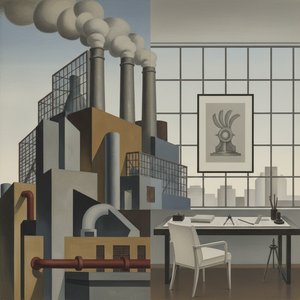
Elevators
Reproduktsiooni suurus
Teose "Elevators" värvitoon on kroomi方面 Muted ja intensiivsuse方面 Monochromatic.
"Elevators" on kallutunud Amber to Saffron toonile.
Teosed, mis sarnanevad teosega „Elevators“, autor Gerd Utescher, on koondatud selle teose lehel Sarnased teosed.

Born in Schwerin, Germany, in 1912, Gerd Utescher’s life was a testament to resilience and artistic evolution shaped by the tumultuous backdrop of the early 20th century. His childhood in Berlin during the Weimar Republic instilled within him a deep appreciation for both the dynamism and the anxieties of a nation grappling with profound social and political change. Initially drawn to law, Utescher’s path shifted dramatically when he discovered his true calling: the visual arts. He enrolled at the prestigious Berlin Academy of Fine Arts, where he honed his skills in drawing, graphics, and sculpture – disciplines that would ultimately define his unique artistic voice.
Utescher's early work was characterized by a fascination with the human figure, particularly its capacity for both strength and vulnerability. He quickly established himself as a sculptor of striking originality, moving beyond traditional representations to explore abstract forms imbued with emotional resonance. His figures weren’t merely static depictions; they were dynamic expressions of inner turmoil, reflecting the psychological landscape of his era. This exploration of the human condition became a central theme throughout his career.
The artistic climate of the Weimar Republic profoundly influenced Utescher's development. The period’s experimental spirit, its embrace of abstraction, and its critical engagement with societal norms provided fertile ground for his creative explorations. He absorbed the ideas of Expressionism and early Abstraction, but ultimately forged a distinct style that combined powerful sculptural forms with evocative figuration. His work during this time often carried a sense of unease and introspection, mirroring the social unrest and uncertainty prevalent in Germany at the time.
Following World War II, Utescher’s career took an international turn. He married Ellen Rhret, whom he had met in Paris before the war, and in 1959, he settled permanently in Philadelphia, Pennsylvania. This move marked a significant shift, not only geographically but also stylistically. While retaining his core themes of human emotion and psychological depth, Utescher’s work began to incorporate elements of American Modernism, reflecting the influences of the vibrant art scene in Philadelphia.
Utescher's sculptural practice was distinguished by a masterful command of materials – primarily bronze. He possessed an exceptional ability to capture movement and emotion within his static forms, utilizing subtle shifts in texture and surface detail to create a sense of dynamism. His figures often appear caught in moments of intense feeling, conveying a powerful narrative without resorting to overt symbolism.
Throughout his career, Utescher received numerous public commissions, demonstrating the recognition of his work’s enduring quality and its ability to resonate with audiences. Perhaps his most notable achievement was the creation of the Freedom Fountain near City Hall in Philadelphia – a monumental sculpture that stands as a testament to his skill and artistic vision. Other significant works include various memorials and public art installations across Pennsylvania, solidifying his place as a prominent figure in American sculpture.
Gerd Utescher’s career spanned seven decades, during which he consistently pushed the boundaries of sculptural expression. His work is characterized by its raw emotional intensity, its exploration of the human psyche, and its masterful technical execution. While rooted in the artistic traditions of his homeland, Utescher ultimately developed a uniquely personal style that continues to captivate viewers today.
His untimely death in 1983, during an accident at a tile factory in Italy while overseeing the casting of a bronze sculpture, marked the loss of a significant voice in contemporary art. However, his legacy endures through his powerful and enduring sculptures, which offer profound insights into the complexities of human experience.
For more information about Gerd Utescher’s life and work, please consult these resources:

1912 - 1983 , Germany

Transform hotel transit spaces into immersive brand journeys. Discover how bold, high-impact art and neuroaesthetics redefine luxury corridors and elevators to drive guest loyalty and unforgettable hospitality experiences.
Explore the groundbreaking work of Charles Sheeler Jr., a pivotal figure in American Precisionism. Discover his iconic industrial landscapes, photographic studies & lasting influence on modernist art. Expert insights for collectors.
 Eelvaade

 Saada
 Jaga
 Teave teose kohta
 Juhend


 Laadi alla
 Sarnased teosed
 Röntgenuuring
 Slaidietendus
 KÜSIMUSED JA VASTUSID

 Statistika

 Loe lähemalt






































 Klaasivalik on saadaval ainult kuni 110 cm suuruses teostes


