EelvaadeEelvaade AR-eelvaadeAR-eelvaade Lülita trükkitoodetele Lülita trükkitoodeteleOsta käsitsi maalitud maal Osta käsitsi maalitud maal SaadaSaada
Teave teose kohtaTeave teose kohta Lisa lemmikutesse Lisa lemmikutesse Laadi allaLaadi alla Sarnased teosedSarnased teosed RöntgenuuringRöntgenuuring SlaidietendusSlaidietendus StatistikaStatistika

Thomas Paine

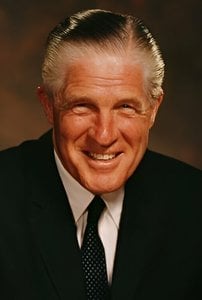
George Romney's striking portrait of Thomas Paine captures the revolutionary thinker’s gravitas and intellect. This neoclassical masterpiece showcases Romney’s masterful use of light, shadow, and detail.

George Romney oli üks suurimatest inglise portreemaalist 18. sajandil! Tema stiilis olid elegants ja sügav psühholoogiline vaatepunkt ning tema maailmakuulusad tööded on Emma Hamilton koos. Vaata rohkem reproduksiooni nüüd!

Ostke kõrglahutusel ja täiustatud digitaalne pilt, mis on oluliselt parem kui veebilehel näidatud eelvaade.

Iga fail on meie spetsialistide poolt hoolikalt ette valmistatud, kasutades kaasaegseid tööriistu ja professionaalset käsitsi retušeerimist. Tagame, et igal pildil on erakordne selgus, täpne värvitäpsus ja peen detail.

Lõplik fail saadetakse e-posti teel 72 tunni jooksul, olles optimeeritud koheseks kasutamiseks professionaalsetes, toimetuslikes ja trüki keskkondades. See on sama kvaliteet, mida usaldavad tipptasemel disainistuudiod, kirjastused ja galeriid.

Digitaalne kunstiteos

Laadi alla kõrge resolutsiooniga fail isiklikuks vaatamiseks, trükkimiseks ja loomingulisteks projektideks. (Lülita trükkitoodetele Lülita trükkitoodeteleOsta käsitsi maalitud maal Osta käsitsi maalitud maal)

Lõppsumma

$ 24,90

Sisse kuulub iga digitaalse pildi tellimusega

Eksperdi digitaalne kohaletoimetamine, garanteeritud

Valides WahooArt.com, ei saa sa lihtsalt pilti – saad professionaalselt parandatud digitaalse teose, mida on valmistatud täpsusega ja mis on toetatud rahuldamatusgarantiiga. Siin on kõik, mis sinu tellimusega automaatselt kaasneb:

shipping_icon
Kiire digitaalne saatmine

Teie kõrge resolutsiooniga digitaalne pildifail saadetakse teile e-posti 72 tunni jooksul pärast tellimist – kohe kasutamiseks valmis.

canvas_icon
Tehisintellektiga täiustatud digitaalne fail

Teie teos on professionaalselt optimeeritud arenenud tehisintellekti tööriistade ja käsitsi redigeerimise abil, tagades maksimaalse detailitaseme, selguse ja värvitäpsuse.

insurance_icon
Tasuta eluaegne uuesti saatmine

Kas kustutasid faili kogukalu unustamisel või kustutamisel? Puudub mure – saad selle uuesti igal ajal ilma lisatasuta.

tax_icon
Puuduvad importimaksed – alati

Nautige oma teoseid koheselt ilma tolli-, maksude või tarnimaskuludeta – digiletchargused on alati maksuvabadud.

color_icon
Värvitäpsuse garantii

Me tagame, et teie digitaalne pilt kajastaks originaali värve professionaalsete tööriistade ja värvihalduse abil võimalikult täpselt.

return_icon
100 päeva rahuldamatuse garantii

Kui te ei ole oma digitaalse pildi eest rahul, siis me parandame seda või tagastame 100% summast 100 päeva jooksul – küsimusteta.

guarantee_icon
100% raha tagastamise garantii

Ei ole rahul? Saate täielise tagastaja 100 päeva jooksul pärast digitaalse faili kättesaamist – ilma küsimusteta.

discount_icon
Suurema tellimuse soodustused

Osta 3 pilti, säästa 10% - Osta 5, säästa 15% - Osta 10+, säästa 20%. Sobib suurepäraselt loomingulisteks projektideks, galeriideks ja agentuurideks.

Teave teose kohta

  • Location: NPG, London
  • Year: 1792
  • Artistic style: Portraiture
  • Influences: Romney
  • Medium: Oil on canvas
  • Notable elements: Dramatic lighting
  • Artist: George Romney

Kunstiviktoriin

Iga küsimuse kohta on ainult üks õige vastus.

Küsimus 1:
What is the primary subject of George Romney’s painting, ‘Thomas Paine’?
Küsimus 2:
The lighting in the painting ‘Thomas Paine’ is characterized by:
Küsimus 3:
In what year was ‘Thomas Paine’ painted?
Küsimus 4:
What artistic movement is most closely associated with George Romney’s style?
Küsimus 5:
What material did George Romney likely use to create the textures and forms in ‘Thomas Paine’?

The Weight of Ideas: George Romney’s Masterpiece

George Romney's "Thomas Paine" isn’t merely a portrait; it’s a distillation of the Enlightenment, a visual embodiment of revolutionary fervor captured with remarkable precision and emotional depth. Completed in 1792, during a period of intense political upheaval across Europe and America, this painting transcends its subject matter to become a symbol of intellectual independence and the burgeoning spirit of dissent. Romney, already establishing himself as the foremost portraitist of Georgian society, here eschews the typical formality of courtly commissions, instead presenting Paine – a radical pamphleteer and outspoken advocate for American liberty – with an arresting directness that speaks volumes.

Thomas Paine by George Romney

(Image of Thomas Paine by George Romney)

A Study in Light and Shadow – Romney’s Technique

Romney's mastery lies not just in his ability to capture likeness, but in the sophisticated use of chiaroscuro—the dramatic interplay of light and shadow. The composition is dominated by a strong, directional light source originating from Paine’s left side, sculpting his features with meticulous detail: the furrowed brow, the intense gaze, the slight downturn of the mouth – all conveying a profound seriousness and unwavering conviction. The background, rendered in deep, almost impenetrable darkness, serves to amplify this effect, forcing the viewer's attention entirely onto the subject. Romney’s technique is layered; he builds up form through subtle gradations of color and carefully applied brushstrokes, creating a sense of texture that is both realistic and subtly idealized. Note the delicate rendering of Paine’s coat lapels and the fine detail in his hair – evidence of a painter deeply attuned to the nuances of fabric and material.

The Man and His Moment: Contextualizing the Portrait

Thomas Paine was a pivotal figure in the American Revolution. “Common Sense,” published in 1776, ignited public support for independence from Great Britain with its powerful arguments for self-governance. His subsequent "American Crisis" pamphlets provided crucial moral and strategic guidance to the Continental Army during the darkest days of the war. Romney’s portrait captures Paine at a critical juncture – a man wrestling with complex ideas and actively shaping the course of history. The painting was created in 1792, just as Paine returned to England to defend the French Revolution against critics like Edmund Burke, further cementing his reputation as a champion of liberty and reason.

Symbolism and Emotional Resonance

Beyond its technical brilliance, “Thomas Paine” is rich in symbolic meaning. The subject’s posture – upright, resolute, and facing directly forward—conveys an air of authority and determination. His expression, a mixture of intensity and melancholy, suggests the weight of responsibility he carried as a revolutionary thinker. The dark background can be interpreted as representing the challenges and obstacles Paine faced in his fight for liberty, while the light illuminating his face symbolizes the hope and promise of a new era. The painting resonates with viewers not just as a likeness of a historical figure, but as an enduring testament to the power of ideas and the courage required to defend them.

Collecting a Legacy: Reproductions and Beyond

WahooArt offers meticulously crafted hand-painted reproductions of George Romney’s “Thomas Paine,” allowing you to bring this iconic portrait into your home or office. Each reproduction is created by skilled artists using the same techniques and attention to detail as the original, ensuring an authentic representation of Romney's masterful work. Whether you are a collector of fine art, an admirer of revolutionary history, or simply seeking a piece that embodies intellectual strength and unwavering conviction, “Thomas Paine” offers a timeless appeal.


Kunstniku biograafia

A Life in Portraiture: The World of George Romney

Born in the picturesque landscape of Dalton-in-Furness, Lancashire, on December 15th, 1734, George Romney ascended to become one of the most sought-after portrait painters of his era. His journey from a cabinet maker’s son to the favored artist of British high society is a compelling narrative of innate talent and unwavering ambition. Early life offered little indication of the artistic path he would forge; initially apprenticed to his father, it was an inherent inclination towards drawing and craftsmanship that led him to Christopher Steele, a local portraitist who had studied in Paris. This apprenticeship proved pivotal, providing Romney with foundational skills and an introduction to European artistic traditions. He quickly surpassed his master, however, demonstrating a precocious talent demanding further cultivation. A brief, unhappy marriage and subsequent separation propelled him towards London in 1762, a city brimming with opportunity but also fierce competition.

Establishing a Reputation: Style and Technique

London proved to be a crucible for Romney’s artistic development. He swiftly established himself as a formidable portraitist, challenging the dominance of artists like Thomas Gainsborough and Sir Joshua Reynolds. While he never sought membership in the Royal Academy – a decision that perhaps limited his access to certain patronage – his success was undeniable. Romney's style evolved over time, initially reflecting the influence of Steele and his Parisian training, but soon blossomed into something distinctly his own. He possessed an exceptional ability to capture not merely the likeness, but also the personality and social standing of his sitters. His portraits are characterized by elegant poses, a refined use of light and shadow, and a subtle psychological insight that set him apart. Romney’s technique was marked by a delicate touch and a preference for flowing lines, often drawing inspiration from classical sculpture. He skillfully employed color to convey texture and depth, creating portraits that were both visually striking and emotionally resonant. His ability to flatter his subjects while maintaining artistic integrity earned him the loyalty of an elite clientele. He understood the power of suggestion, hinting at character rather than explicitly defining it, a quality that appealed to those who valued discretion and refinement. Romney’s meticulous attention to detail—from the subtle folds of fabric to the expressive gaze of his subjects—became a hallmark of his oeuvre.

The Muse and Her Influence: Emma Hamilton

Romney’s life took a dramatic turn with his encounter with Emma Hart, later known as Lady Hamilton, in 1782. She became not only his most celebrated model but also his muse, profoundly influencing his artistic output. Emma's beauty, intelligence, and theatrical flair captivated Romney, inspiring a series of portraits that explored themes of classical mythology, dramatic narrative, and feminine grace. He depicted her in various roles – as a spinner, as the tragic Miranda from Shakespeare’s *The Tempest*, and in numerous allegorical scenes that showcased her expressive range. These works demonstrate Romney's willingness to experiment with composition and symbolism, moving beyond conventional portraiture into more imaginative territory. The Tempest series, in particular, reveals a Romantic sensibility at play, anticipating the emotional intensity of later artists. The relationship was intense and all-consuming for Romney, though ultimately unfulfilled romantically; Emma eventually became the mistress of Lord Nelson, a union that cemented her place in history. Nevertheless, their artistic collaboration left an indelible mark on both their lives and produced some of Romney’s most enduring masterpieces. He painted over 80 portraits of her, each revealing a different facet of her captivating personality. The dynamism of Emma Hamilton's presence—captured with remarkable sensitivity—became central to Romney’s artistic vision.

Major Achievements and Legacy

George Romney achieved considerable renown during his lifetime, securing commissions from prominent figures across British society. His portraits graced the homes of aristocrats, statesmen, and writers alike, establishing him as one of the foremost artists of his generation. Beyond his prolific output, Romney's contribution to artistic discourse was significant. He championed a style that prioritized psychological realism and emotional expression—a departure from the more formal conventions of earlier portraiture. His influence extended beyond his immediate contemporaries, inspiring subsequent generations of painters who sought to emulate his mastery of technique and his ability to convey human character with profound insight. Romney’s legacy resides not only in the beauty of his paintings but also in their enduring relevance as representations of a pivotal moment in British cultural history—the Romantic era. His work continues to be studied and admired for its elegance, subtlety, and emotional depth. He remains a testament to the transformative power of artistic talent and ambition.

Concluding Thoughts

Romney’s artistic journey exemplifies the pursuit of excellence and the unwavering belief in one's own creative potential. From humble beginnings to international acclaim, his life story is an inspiration for artists and art lovers alike. His portraits stand as enduring symbols of beauty, grace, and psychological complexity—a lasting testament to George Romney’s genius and a cornerstone of British artistic heritage.
George Romney

George Romney

1734 - 1802 , Ühenditud kuningriik

Lühikesed faktid

  • Artistic Movement Or Style: Portraiture, Romanticism
  • Artists Who Influenced This Artist:
    • Christopher Steele
    • Carle Vanloo
    • Raphael
    • Titian
    • Correggio
  • Date Of Birth: Dec 15, 1734
  • Date Of Death: Nov 15, 1802
  • Full Name: George Romney
  • Nationality: British
  • Notable Artworks:
    • Peter and James Romney
    • Portrait of G. Cowper
    • The Death of General Wolfe
  • Place Of Birth: Dalton-in-Furness, UK