x
Muuseumikvaliteediga giclée- või kangasprint kiire tootmisega ja paindlikud viimistlusvõimalused.
Vali meie eelmääratud suurused, mis vastavad teose algupärastele proportsioonidele.
Saate sisestada oma mõõdud, et need sobiks konkreetse raami või ruumi sisse. Kui valitud suurus ei vasta originaalteose proportsioonidele, lõigame teose ära või laiendame pilti peegeldatud või ühtlase servaga. Enne tootmisprotsessi algust saadetakse Teie kinnitamiseks digitaalne näidis.
Palun märka, et ekraanil kuvatav eelvaade ei kajasta tegelikku lõigamist või laiendamist. Ainult näidis kujutab täpselt lõplikku kompositsiooni.
Kuigi erimõõdu on saadaval, soovitame originaaproportsioonide säilitamiseks valida mõõt ette määratud nimekirjast.
Ülemaailmne tarne () 2 nädala jooksul, tavalise 4/5 nädala asemel. (2 juuli)
Study reading
Reproduktsiooni suurus
Fernand Léger (1881–1955) stands as a singular voice within the tumultuous landscape of early twentieth-century art, resisting the prevailing trend toward abstraction while simultaneously forging a revolutionary visual language. Born Joseph Fernand Henri Léger in Argentan, Normandy, his formative years amidst rural traditions provided a crucial counterpoint to the burgeoning industrial fervor that would define his artistic trajectory.
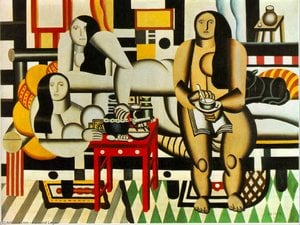
Léger’s Tubist style represents a nuanced reconsideration of Cubism's core tenets. Unlike Picasso and Braque who largely adhered to the original Cubist aesthetic, Léger injected vibrant hues into his compositions—primarily reds, yellows, and blues—creating visually arresting images that defied conventional expectations. This bold chromatic choice wasn’t arbitrary; it served as a deliberate counterpoint to the monochrome palette favored by many of his contemporaries, emphasizing visual impact and conveying an optimistic spirit.
His technique involved meticulous layering of paint—often applied in thick impasto—to build up sculptural surfaces that resembled industrial forms. Léger’s canvases pulsate with energy, reflecting the rhythms of urban life and celebrating the transformative power of technology. The resulting images are simultaneously reductive and expressive, capturing both the fragmentation inherent in Cubist principles and the emotional resonance of a rapidly changing world.
Beyond its formal innovations, Léger’s art is imbued with symbolic significance. Recurring motifs—such as stylized flowers and geometric abstractions—represent concepts of knowledge, growth, and beauty—themes that resonate deeply within the humanist tradition. Léger's intention was not merely to depict objects realistically but to convey ideas about humanity’s relationship with its environment and its technological advancements.
Ultimately, Fernand Léger’s legacy extends far beyond his artistic achievements. He championed a vision of art as a tool for communicating the spirit of modernity—a conviction that continues to inspire artists today. His unwavering dedication to geometric abstraction and his masterful use of color solidified his position as one of the most influential figures in twentieth-century art, ensuring that *Study Reading* and other masterpieces endure as emblems of innovation and contemplative beauty.
1881 - 1955 , Prantsusmaa
Kirjeldage meile oma projekti ja meie kunstieksperdid pakuvad teile 3 isikupärast kunstiettepanekut.
Laske meil koostada just teile mõeldud 3 valikut – tasuta!