x
Acrylic On Canvas
WallArt
Fernand Léger
1918
Modern
28.0 x 26.0 cmMeie kunstnike poolt tellimusel valmistatud käsitsi maalitud õli-kainaste teos teie soovitud suuruses ja raamis.
Vali meie eelmääratud suurused, mis vastavad teose algupärastele proportsioonidele.
Sa võite sisestada oma mõõtmed konkreetse raami või ruumi sobivuse tagamiseks. Kui teie valitud suurus ei vasta originaalpildi proportsioonidele, siis kärvime kunstiteost või laiendame maali täiendavate käsitsi maalitud elementidega. Enne tootmise algust saadetakse teile heakskiitmiseks digitaalne eelvaade.
Palun pidage meeles, et ekraanil kuvatav eelvaade ei kajasta tegelikku kärpimist või laiendamist. Ainult eelvaade näitab täpselt lõplikku kompositsiooni.
Kuigi on saadaval kohandatud suurused, soovitame originaalproportsioonide säilimiseks valida mõõdud eelmääratletud nimekirjast.
Maailmline tarne 3–4 nädala jooksul tavalise 5 nädala asemel. (2 juuli). Kvaliteedis kompromisse ei tehta.
Composition at pitcher
Reproduktsiooni suurus
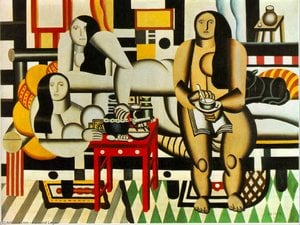
Fernand Léger’s *Composition at pitcher*, painted in 1918, is more than just a still life; it's a quiet declaration of an emerging aesthetic—one that embraced the beauty of the industrial world while retaining a deeply human sensibility. The painting presents a deceptively simple arrangement: a blue vase, gleaming as if metallic, takes center stage before a backdrop suggesting trees. A cup, bottle, and bowl complete the composition, yet within this seemingly ordinary scene lies a profound exploration of form, color, and the changing landscape of early 20th-century life. The work’s modest size—28 x 26 cm—invites an intimate viewing experience, drawing the observer into Léger's carefully constructed world.
Léger’s artistic journey was one of constant evolution. Initially influenced by Impressionism, he quickly moved beyond its fleeting depictions of light to embrace the more structured approach of Paul Cézanne. However, it was his engagement with Cubism that truly defined his style. Yet, Léger wasn't content to simply replicate Picasso or Braque’s fractured perspectives. He developed what became known as “Tubism,” a distinctive variation characterized by simplified cylindrical forms and bold, primary colors. *Composition at pitcher* exemplifies this approach; the objects aren’t broken down into countless facets but are rendered with a robust solidity, their shapes clearly defined and almost monumental. This emphasis on form reflects Léger's fascination with machinery and the industrial world—a world he saw not as cold or alienating, but as possessing its own inherent beauty and dynamism. He sought to create an art that was accessible, reflecting the energy of modern life rather than retreating into academic tradition.
Created during the final year of World War I, *Composition at pitcher* carries a subtle weight of historical context. While not overtly depicting the horrors of war, the painting can be interpreted as a search for order and stability amidst chaos. The solid forms and carefully balanced composition suggest a desire to rebuild and find beauty in a world shattered by conflict. The objects themselves—the vase, cup, bottle—represent everyday life, a yearning for normalcy after years of upheaval. Some scholars also point to the potential symbolism within the arrangement; the pitcher, as a vessel containing sustenance, could represent hope or renewal. The trees in the background, though stylized, offer a connection to nature and enduring growth. Léger’s choice to depict these commonplace objects with such deliberate attention elevates them beyond mere still life subjects, transforming them into symbols of resilience and the enduring human spirit.
Fernand Léger’s impact on 20th-century art is undeniable. His bold aesthetic paved the way for Pop Art, influencing artists like Andy Warhol and Roy Lichtenstein with his embrace of popular culture and machine aesthetics. *Composition at pitcher*, though a relatively small work, encapsulates the core principles that defined Léger's artistic vision: a celebration of modernity, a rejection of traditional representation, and a profound belief in the power of art to reflect and shape the world around us. A reproduction of this painting offers not only a beautiful addition to any collection but also a tangible connection to a pivotal moment in art history—a moment when artists began to redefine what it meant to create and experience beauty in an increasingly mechanized age.
1881 - 1955 , Prantsusmaa
Kirjeldage meile oma projekti ja meie kunstieksperdid pakuvad teile 3 isikupärast kunstiettepanekut.
Laske meil koostada just teile mõeldud 3 valikut – tasuta!