x
EelvaadeEelvaade AR-eelvaadeAR-eelvaade Osta käsitsi maalitud maal Osta käsitsi maalitud maalOsta pilt Osta pilt SaadaSaada
Teave teose kohtaTeave teose kohta Lisa lemmikutesse Lisa lemmikutesse Laadi allaLaadi alla Sarnased teosedSarnased teosed RöntgenuuringRöntgenuuring SlaidietendusSlaidietendus

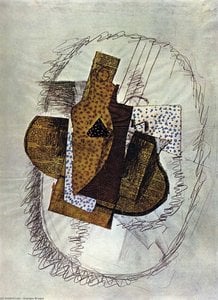
Proun 99

Explore Proun 99 by El Lissitzky, a striking geometric abstraction from 1924 embodying the Bauhaus aesthetic and Russian Constructivism. This mesmerizing canvas showcases layered triangles and circles—a testament to Lissitzky’s revolutionary vision; discover its beauty.

El Lissitzky oli vene avantgarde kunstnik, kes kujundas Suprematistlikku ja Konstruktivistlikku stiili ning pakkus silmapilgutusi arhitektuurile ja tänavamaailmale. Tema suurimad tööd olid Proun sarja kompositsioonid ning ÜNOVIS grupi liikmena toimine.

Giclée / Kunstiprint

Muuseumikvaliteediga giclée- või kangasprint kiire tootmisega ja paindlikud viimistlusvõimalused. (Osta käsitsi maalitud maal Osta käsitsi maalitud maalOsta pilt Osta pilt)

P118B $10
P118H $10
P118W $10
P438Z $10
P508JH $12
P508YH $12
P805H $10
P805Z $10
P919BZ $10
P919G $10
P919XJ $10
P959ZH $10
P968JZ $12
W106C $8
W218G $10
W218JH $8
W218Y $10
W307PJ $10
W316G $10
W316PJ $8
W316Y $10
W398PJ $8
W4111J $10
W500HY $15
W500JH $15
W692G $12
W849H $8
W940BG $15
W953PJ $8

Standardne
kohandatud
CM
INCH

Vali meie eelmääratud suurused, mis vastavad teose algupärastele proportsioonidele.

laius
kõrgus

Saate sisestada oma mõõdud, et need sobiks konkreetse raami või ruumi sisse. Kui valitud suurus ei vasta originaalteose proportsioonidele, lõigame teose ära või laiendame pilti peegeldatud või ühtlase servaga. Enne tootmisprotsessi algust saadetakse Teie kinnitamiseks digitaalne näidis.
Palun märka, et ekraanil kuvatav eelvaade ei kajasta tegelikku lõigamist või laiendamist. Ainult näidis kujutab täpselt lõplikku kompositsiooni.
Kuigi erimõõdu on saadaval, soovitame originaaproportsioonide säilitamiseks valida mõõt ette määratud nimekirjast.

Ülemaailmne tarne () 2 nädala jooksul, tavalise 4/5 nädala asemel. (29 august)

why_choose_icon
Tasuta ekspresssaatmine üle maailma
why_choose_icon
Kõrgekvaliteediline linakangas
why_choose_icon
Täielik transpordikindlustus
why_choose_icon
Tollimaksude tagastamise garantii
why_choose_icon
Värvitoime täpsuse garantii
why_choose_icon
60-päevane tagastusõig: ainult tootmisdefektide korral
why_choose_icon
100% raha tagasi garantii
why_choose_icon
Hulgusoodustus

Kogu summa

$ 68

reproduction

Proun 99

Giclée / Kunstiprint

Reproduktsiooni suurus

-

Kogusumma

$ 68

Teave teose kohta

  • Location: Private Collection
  • Title: Proun 99
  • Artist: El Lissitzky
  • Medium: Painting
  • Subject or theme: Abstract design
  • Year: 1924
  • Notable elements or techniques: Geometric abstraction

A Geometric Symphony: Exploring Proun 99 by El Lissitzky

El Lissitzky’s Proun 99 stands as a testament to the revolutionary spirit of the Bauhaus era and a cornerstone of Constructivism, offering more than just visual beauty; it embodies an ambitious conceptual framework aimed at reshaping perception itself. Painted in 1924, this artwork isn't merely a depiction of shapes—it’s an assertion of geometric principles as instruments for constructing reality. Lissitzky, deeply influenced by Piet Mondrian and Kubist explorations, sought to transcend representational art, believing that pure abstraction could unlock deeper truths about the universe and humanity’s place within it.
  • Subject Matter: The composition centers around a dominant triangle, flanked by two smaller triangles positioned strategically at the upper left corner. Complementing this geometric core are three circles meticulously placed throughout the canvas—one anchoring the lower right quadrant, another subtly above and to the left of the central triangle, and finally occupying the uppermost portion of the left side.
  • Style & Technique: Lissitzky’s approach aligns perfectly with Constructivism's ethos – a movement dedicated to utilizing industrial materials and geometric forms to express social ideals. The painting employs a bold palette—primarily shades of gray—creating an austere yet impactful visual experience. Lissitzky achieved this effect through meticulous layering of paint, resulting in a textured surface that enhances the solidity and permanence of the shapes depicted.

Historical Context: Bauhaus and Beyond

Proun 99 emerged during a period of profound artistic and intellectual upheaval. The Bauhaus school in Weimar championed experimentation with new materials and techniques, rejecting traditional academic conventions in favor of functional design and universal aesthetic principles. Lissitzky’s work directly responded to this zeitgeist, reflecting the broader desire for artists to engage actively in shaping society—a conviction rooted in his involvement with Marxist ideology. He envisioned Proun as a tool for visualizing “Space-Time,” arguing that geometric abstraction could liberate viewers from illusionistic representations and foster a more rational understanding of existence.

Symbolism & Conceptual Depth

Beyond its formal qualities, Proun 99 carries significant symbolic weight. The triangle represents stability and unity—a foundational element in Lissitzky’s cosmological vision. It symbolizes the cosmos itself, mirroring the tetrahedron – a geometric shape considered sacred by ancient civilizations – representing the building blocks of reality. The circles contribute to this overarching symbolism, symbolizing movement and dynamism, countering the rigidity implied by the triangles. Lissitzky deliberately avoided explicit narrative content, prioritizing instead the viewer’s engagement with the artwork's underlying conceptual framework.

Emotional Impact & Artistic Legacy

Despite its apparent simplicity, Proun 99 possesses a remarkable emotional resonance. The restrained palette and precise execution convey a sense of calm contemplation—inviting viewers to consider the fundamental structures governing our perception. Lissitzky’s pioneering work continues to inspire artists and designers today, demonstrating the enduring power of abstraction to communicate complex ideas and evoke profound feelings. Reproductions of Proun 99 offer an opportunity to experience this seminal artwork's intellectual rigor and aesthetic elegance within a contemporary setting.

Kunstniku elulugu

A Revolutionary Vision: The Life and Art of El Lissitzky

El Lissitzky, born Lazar Markovich Lissitzky in 1890 in the small Russian town of Pochinok, emerged as a pivotal figure in the tumultuous landscape of early 20th-century art. His journey was one of constant reinvention, driven by a fervent belief in the power of art to shape society and reflect the dynamism of the modern world. From his initial training as an architect and engineer – pursuits hampered by restrictions placed upon Jewish students – Lissitzky’s path diverged towards artistic expression, initially through illustrations steeped in Jewish folklore. These early works, like his cover for ‘Chad Gadya’, reveal a nascent talent already grappling with narrative and visual storytelling, hinting at the profound cultural roots that would continue to inform his aesthetic. A move to Berlin and Darmstadt broadened his horizons, but it was upon returning to Russia that Lissitzky truly found his artistic voice, becoming inextricably linked with the revolutionary fervor sweeping through the nation.

The Embrace of Abstraction: Suprematism and Proun

A defining moment arrived with his encounter with Kazimir Malevich and the embrace of Suprematism. This radical movement, dedicated to pure geometric abstraction, resonated deeply with Lissitzky’s desire to transcend representational art and tap into a universal visual language. He became a key member of UNovis, the Suprematist group established in Vitebsk, actively disseminating its principles through teaching and artistic production. However, Lissitzky didn't simply replicate Malevich’s style; he forged his own distinct path with the development of *Proun*. This unique series, born from a fusion of Suprematism and Constructivism, explored spatial relationships and geometric forms in dynamic compositions that often resembled architectural blueprints or exploded diagrams. Proun wasn't merely painting; it was an investigation into the very structure of space itself, a premonition of future architectural possibilities. These works, with their floating planes and intersecting lines, embodied Lissitzky’s belief in art as a force capable of constructing new realities. The influence of his engineering background is palpable here, lending a structural logic to the abstract forms. He meticulously crafted Proun panels using plywood and lacquer, experimenting with color palettes and spatial arrangements that challenged conventional artistic conventions.

Art as Propaganda and Social Commentary

Lissitzky's artistic vision extended far beyond the canvas. He passionately believed that art should serve a social purpose, actively engaging with political ideologies and seeking ways to integrate design into everyday life. This conviction led him to become deeply involved in Soviet propaganda efforts, creating powerful posters and graphic designs intended to mobilize public support for the Bolshevik regime. His 1941 poster calling for tank construction stands as a testament to this commitment – a stark, impactful image reflecting the urgency of wartime. Beyond propaganda, Lissitzky revolutionized typography, exhibition design, and photomontage. He understood that effective communication required innovative visual strategies, and he fearlessly experimented with new techniques to convey his message. His photomontages, such as ‘The Constructor’ (1924), are particularly striking – self-portraits that blend photography with geometric abstraction, offering a complex commentary on identity and the role of the artist in society. He skillfully combined disparate images and texts into visually arresting compositions, demonstrating an unparalleled mastery of visual language.

A Cultural Ambassador: Spreading Constructivist Ideals

Lissitzky’s influence transcended national borders. He served as a crucial cultural ambassador for Soviet art, disseminating Constructivist ideas throughout Western Europe, particularly in Germany. His innovative exhibition designs challenged traditional gallery spaces, creating immersive environments that actively engaged viewers. These exhibitions weren’t simply displays of artwork; they were carefully constructed experiences designed to provoke thought and inspire action. His work had a profound impact on the Bauhaus and De Stijl movements, influencing generations of artists and designers with its emphasis on geometric abstraction, functionalism, and social responsibility. He collaborated with figures like Kurt Schwitters and Theo van Doesburg, fostering a cross-cultural exchange that enriched the artistic landscape of the era. Lissitzky’s meticulous attention to detail—from the precise alignment of Proun panels to the carefully chosen typeface in his typographic experiments—reflected his unwavering commitment to elevating design standards and promoting humanist values.

Legacy and Enduring Influence

El Lissitzky’s life was tragically cut short in 1941 in Moscow, but his legacy continues to resonate today. He bridged the gap between art and architecture, abstraction and social purpose, leaving behind a body of work that is both intellectually stimulating and visually captivating. The establishment of the Lissitzky Foundation in 2014 underscores the ongoing commitment to preserving his artistic heritage and preparing a comprehensive catalogue raisonné of his creations. His innovations in typography, exhibition design, and photomontage continue to inspire contemporary artists and designers, while his unwavering belief in the power of art as a force for social change remains profoundly relevant. He is remembered not only for his groundbreaking contributions to Suprematism and Constructivism but also for his role as a champion of cultural dialogue and artistic experimentation—a testament to his enduring influence on the trajectory of modern art.

El Lissitzky

El Lissitzky

1890 - 1941 , Venemaa

Lühikesed faktid

  • Artistic Movement Or Style:
    • Suprematism
    • Constructivism
  • Artists Or Movements Influenced By This Artist: ['Bauhaus']
  • Artists Who Influenced This Artist: ['Kazimir Malevich']
  • Date Of Birth: Nov 23, 1890
  • Date Of Death: Dec 30, 1941
  • Full Name: El Lissitzky
  • Nationality: Russian
  • Notable Artworks:
    • The Constructor
    • Chad Gadya cover
    • Proun series
  • Place Of Birth: Pochinki, Russia
Avastage teoseid, mis on koondatud teemade, stiilide ja omaduste kaupa.