TASUTA KUNSTIKONSULTATSIOON

x
Tellimaks maali Tellimaks maaliOsta digipilt Osta digipilt SaadaSaada
DetailidDetailid Lisa lemmikutesse Lisa lemmikutesse Laadi allaLaadi alla Sarnased teosedSarnased teosed RöntgenuuringRöntgenuuring SlaidietendusSlaidietendus

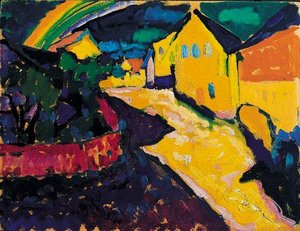
Deuring Castle, Bregenz

Experience Egon Schiele's 'Deuring Castle, Bregenz'! This Expressionist masterpiece captures the castle’s intricate design & atmosphere with bold lines and vibrant colors. Own a stunning hand-painted reproduction today!

Egon Schiele oli austria ekspressionistlik kunstnik, kes tuntakse oma dünaamikaline stiil ja tema teoste sügav psühholoogiline tähendus ning suur osa maailma muuseumikollektiivides olevate tööde tõttu. Tema esimeste tööde keskendusid seksuaalsusele ja surnule ning Schiele oli üks vähese kunstniku, kes ei tundnud piire.

Giclée / Kunstiprint

Muuseumikvaliteediga giclée- või kangasprint kiire tootmisega ja paindlikud viimistlusvõimalused.

P118B $10
P118H $10
P118W $10
P438Z $10
P508JH $12
P508YH $12
P805H $10
P805Z $10
P919BZ $10
P919G $10
P919XJ $10
P959ZH $10
P968JZ $12
W106C $8
W218G $10
W218JH $8
W218Y $10
W307PJ $10
W316G $10
W316PJ $8
W316Y $10
W398PJ $8
W4111J $10
W500HY $15
W500JH $15
W692G $12
W849H $8
W940BG $15
W953PJ $8

Standard
custom
CM
INCH

Vali meie eelmääratud suurused, mis vastavad teose algupärastele proportsioonidele.

laius
kõrgus

Saate sisestada oma mõõdud, et need sobiks konkreetse raami või ruumi sisse. Kui valitud suurus ei vasta originaalteose proportsioonidele, lõigame teose ära või laiendame pilti peegeldatud või ühtlase servaga. Enne tootmisprotsessi algust saadetakse Teie kinnitamiseks digitaalne näidis.
Palun märka, et ekraanil kuvatav eelvaade ei kajasta tegelikku lõigamist või laiendamist. Ainult näidis kujutab täpselt lõplikku kompositsiooni.
Kuigi erimõõdu on saadaval, soovitame originaaproportsioonide säilitamiseks valida mõõt ette määratud nimekirjast.

Ülemaailmne tarne () 2 nädala jooksul, tavalise 4/5 nädala asemel. (3 juuli)

why_choose_icon
Tasuta ekspresssaatmine üle maailma
why_choose_icon
Kõrgekvaliteediline linakangas
why_choose_icon
Täielik transpordikindlustus
why_choose_icon
Tollimaksude tagastamise garantii
why_choose_icon
Värvitoime täpsuse garantii
why_choose_icon
60-päevane tagastusõig: ainult tootmisdefektide korral
why_choose_icon
100% raha tagasi garantii
why_choose_icon
Hulgusoodustus

Kogu summa

-

reproduction

Deuring Castle, Bregenz

Giclée / Kunstiprint

Reproduktsiooni suurus

-

Kogusumma

-

Teave teose kohta

  • Influences:
    • Klimt
    • Modernity
  • Dimensions: 80 x 121 cm
  • Year: 1912
  • Subject or theme: Castle & Surroundings
  • Movement: Expressionism
  • Location: Albertina Museum, Vienna
  • Notable elements: Bold lines, distorted forms

Kunstiviktoriin

Iga küsimuse kohta on ainult üks õige vastus.

Küsimus 1:
What artistic movement is ‘Deuring Castle, Bregenz’ primarily associated with?
Küsimus 2:
In what year was Egon Schiele's painting ‘Deuring Castle, Bregenz’ created?
Küsimus 3:
Which of the following best describes Schiele’s use of color in ‘Deuring Castle, Bregenz’?
Küsimus 4:
The painting ‘Deuring Castle, Bregenz’ features a castle surrounded by:
Küsimus 5:
What is a key characteristic of Schiele’s artistic style, evident in ‘Deuring Castle, Bregenz’?

Kogumuse kirjeldus

A Tempestuous Vision: Egon Schiele’s ‘Deuring Castle, Bregenz’

Egon Schiele's “Deuring Castle, Bregenz,” painted in 1912, isn’t merely a depiction of a Bavarian landmark; it’s a raw, intensely personal expression of the artist’s inner world. This large-scale oil painting, measuring 80 x 121 cm, embodies the core tenets of Expressionism – a movement that sought to convey not objective reality but rather the subjective experience of emotion and psychological state. Schiele, already grappling with profound loss and a burgeoning sense of existential unease following his father’s death from syphilis, transforms the familiar castle into a symbol of both grandeur and vulnerability, reflecting the anxieties simmering beneath the surface of early 20th-century Europe.

Deuring Castle, Bregenz

The Language of Line and Color

Schiele’s technique is immediately arresting. Bold, sinuous lines dominate the composition, creating a sense of dynamic movement and instability. These aren't precise renderings; instead, they are expressive gestures that convey feeling rather than form. The castle itself is fragmented and distorted, its architectural details reduced to essential shapes – a deliberate choice that undermines any notion of serene stability. The color palette is equally potent: deep blues and greens evoke a sense of melancholy and the encroaching darkness, while flashes of ochre and crimson inject moments of unsettling intensity. Notice how Schiele employs impasto—thickly applied paint—to build texture and emphasize the physicality of the brushstroke, further amplifying the painting’s emotional charge.

  • Dynamic Lines: Schiele's signature use of swirling lines creates a sense of unease and movement.
  • Fragmented Form: The castle is deliberately distorted, symbolizing vulnerability and instability.
  • Expressive Color: Deep blues and greens convey melancholy, while crimson accents introduce unsettling intensity.

A Portrait of an Artist’s Soul

Schiele's self-portraits, like the poignant “Self-Portrait with Eyelid Pulled Down,” offer a window into his tormented psyche. “Deuring Castle” can be read as an extension of this introspective approach. The castle, a symbol of permanence and tradition, is rendered in a way that suggests its own fragility – mirroring Schiele’s struggle to reconcile himself with mortality and the uncertainties of his time. The surrounding trees, depicted with frantic energy, further contribute to the painting's sense of unease, hinting at the relentless passage of time and the artist’s awareness of his own limited existence. The work resonates with the broader anxieties of the era – a period marked by social upheaval, political instability, and a growing sense of disillusionment.

Bringing Schiele Home: A Hand-Painted Reproduction

At WahooArt.com, we meticulously recreate “Deuring Castle, Bregenz” in stunning detail using the highest quality materials and employing skilled artists who understand Schiele’s unique style. Whether you desire a large-scale statement piece for your living room or a smaller reproduction to grace your study, our hand-painted oil paintings capture the essence of this iconic work while offering a timeless addition to your collection. Imagine owning an authentic representation of this emotionally charged masterpiece – a tangible link to one of the most significant figures in Expressionist art. Explore other works by Schiele and fellow Expressionists like Anton Kolig on WahooArt.com, and discover how you can bring the power of these artists into your own space.


Kunstniku elulugu

Egon Schiele: Austrian Expressionist Painter

Egon Schiele’s artistic journey began in Tulln an der Donau, Austria, where he was born on June 12, 1890 – a town steeped in Habsburg history and renowned for its baroque architecture. His early life was marked by profound sorrow; his father, Adolf Eugen Schiele, succumbed to syphilis when Egon was just fourteen, leaving him orphaned and grappling with the devastating impact of familial illness. Raised initially by his mother, Marie Schiele Soukup, and subsequently under the guardianship of his uncle Leopold Czihaczek—a man who exerted considerable influence over Schiele’s upbringing—his childhood lacked the stability typical of Viennese bourgeois families. Yet amidst these hardships, Schiele cultivated an unwavering spirit of independence and a fervent fascination with trains – a motif that would subtly permeate his later paintings, symbolizing movement, escape, and perhaps even the relentless march toward mortality. From a young age, Schiele demonstrated exceptional artistic talent, sketching diligently from the railway station of Tulln and capturing the essence of passing locomotives with remarkable precision. Recognizing this innate ability, Ludwig Karl Strauch—Schiele’s teacher at secondary school—encouraged him to pursue his passion for drawing, recognizing it as a vital counterbalance to the pressures of academic conformity. This formative experience instilled within Schiele a sensitivity and emotional depth that would become defining characteristics of his artistic expression – a constant confrontation with themes of life, death, and the human condition. Schiele’s formal artistic training commenced at the Kunstgewerbeschule in Vienna, where he initially encountered resistance from instructors who adhered to traditional stylistic conventions. Dissatisfied with this rigid academic approach, he swiftly transferred to the Akademie der bildenden Künste (Academy of Fine Arts), only to find himself disillusioned by its uncompromising dogma. Driven by a desire for artistic freedom and fueled by his conviction that true creativity demanded rejection of established norms, Schiele abandoned formal training altogether—a bold decision that underscored his unwavering commitment to pursuing his own vision. A pivotal influence on Schiele’s formative years was Gustav Klimt – whose opulent decorative style captivated young Schiele's imagination. Admiring Klimt’s masterful use of symbolism and exploration of aesthetic beauty, Schiele benefited from Klimt’s mentorship, absorbing stylistic cues that would shape his artistic development. However, Schiele soon diverged from Klimt’s path, forging a distinctive Expressionist style characterized by its stark honesty and psychological intensity—a style marked by elongated figures, contorted poses, and expressive lines that conveyed profound emotional turmoil. This divergence solidified Schiele's reputation as one of the most daring artists of his time – challenging societal expectations and confronting taboo subjects with unflinching courage. Schiele’s artistic breakthrough occurred during his enrollment at the Akademie der bildenden Künste in Vienna—where he clashed vehemently with Professor Christian Griepenkerl over stylistic disagreements. Recognizing Schiele's refusal to conform to academic conventions, Griepenkerl dismissed him as an unsuitable student—a decision that fueled Schiele’s determination to pursue artistic autonomy and reject restrictive pedagogical practices. Together with fellow students disillusioned by the academy’s rigid traditions, Schiele established the Neues Wiener Kunstgruppe (New Viennese Art Group)—a collective dedicated to exploring avant-garde aesthetics and rejecting prevailing artistic conventions. This group—composed of artists like Anton Faistauer, Rudolf Kalvach, Franz Wiegele, Hans Ehrlich, and Löwenstein—embraced a rebellious spirit that mirrored Schiele’s own conviction in the transformative power of art. Schiele's oeuvre is distinguished by its exploration of profound psychological themes – confronting mortality, sexuality, isolation, and anxiety with uncompromising honesty. His distinctive style—characterized by elongated figures, contorted poses, expressive lines, and raw emotion—challenged conventional artistic norms and captivated audiences with its unsettling realism and visceral intensity. Schiele’s masterful use of line—often conveying emotional tension and psychological complexity—became a hallmark of his artistic expression. Recurring motifs such as the *Physalis plant* – symbolizing death and transience with its delicate, papery husk – underscored Schiele's preoccupation with existential concerns. His self-portraits—rendered in striking detail and imbued with palpable vulnerability—offered intimate glimpses into his inner world—a world marked by loneliness, doubt, and a relentless quest for artistic truth. Schiele’s legacy extends far beyond the confines of Viennese Expressionism—influencing subsequent generations of artists who embraced psychological exploration and challenged societal conventions. His bold approach to form and subject matter continues to resonate with audiences today—making him one of the most important and influential figures in early 20th-century art. Schiele’s paintings—held in prominent museum collections worldwide—stand as enduring testaments to his artistic genius—affirming his unwavering conviction that art possesses the capacity to confront existential dilemmas with courage, honesty, and visionary insight. He died tragically young during the Spanish flu pandemic in 1918 – leaving behind a body of work that transcends time—inspiring artists and captivating viewers alike with its profound emotional depth and uncompromising aesthetic vision.
Egon Schiele

Egon Schiele

1890 - 1918 , Austria

Lühikesed faktid

  • Artistic Movement Or Style: Expressionism
  • Artists Who Influenced This Artist: ['Gustav Klimt']
  • Date Of Birth: 1890
  • Date Of Death: 1918
  • Full Name: Egon Schiele
  • Nationality: Austrian
  • Notable Artworks:
    • Self-Portrait with Physalis
    • Couple Embracing
  • Place Of Birth: Tulln, Austria
Avastage teoseid, mis on koondatud teemade, stiilide ja omaduste kaupa.