x
EelvaadeEelvaade AR-eelvaadeAR-eelvaade Osta print Osta printOsta pilt Osta pilt SaadaSaada
Teave teose kohtaTeave teose kohta Lisa lemmikutesse Lisa lemmikutesse Laadi allaLaadi alla Sarnased teosedSarnased teosed RöntgenuuringRöntgenuuring SlaidietendusSlaidietendus

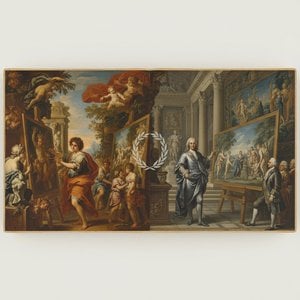
The Two Coaches

Explore Claude Gillot’s ‘The Two Coaches’ (1707), a dramatic Baroque oil painting depicting public execution. Discover its intense emotion & masterful technique in the Louvre.

Explore Claude Gillot (1673-1722), master of Watteau & Lancret! French painter, printmaker, & theater designer known for fêtes champêtres & commedia dell’arte scenes.

Käsitsi valmistatud õlimaalireproduktsioon

Meie kunstnike poolt tellimusel valmistatud käsitsi maalitud õli-kainaste teos teie soovitud suuruses ja raamis. (Osta print Osta printOsta pilt Osta pilt)

P118B $10
P118H $10
P118W $10
P438Z $10
P508JH $12
P508YH $12
P805H $10
P805Z $10
P919BZ $10
P919G $10
P919XJ $10
P959ZH $10
P968JZ $12
W106C $8
W218G $10
W218JH $8
W218Y $10
W307PJ $10
W316G $10
W316PJ $8
W316Y $10
W398PJ $8
W4111J $10
W500HY $15
W500JH $15
W692G $12
W849H $8
W940BG $15
W953PJ $8

Standardne
kohandatud
CM
INCH

Vali meie eelmääratud suurused, mis vastavad teose algupärastele proportsioonidele.

laius
kõrgus

Sa võite sisestada oma mõõtmed konkreetse raami või ruumi sobivuse tagamiseks. Kui teie valitud suurus ei vasta originaalpildi proportsioonidele, siis kärvime kunstiteost või laiendame maali täiendavate käsitsi maalitud elementidega. Enne tootmise algust saadetakse teile heakskiitmiseks digitaalne eelvaade.
Palun pidage meeles, et ekraanil kuvatav eelvaade ei kajasta tegelikku kärpimist või laiendamist. Ainult eelvaade näitab täpselt lõplikku kompositsiooni.
Kuigi on saadaval kohandatud suurused, soovitame originaalproportsioonide säilimiseks valida mõõdud eelmääratletud nimekirjast.

Näited muudetavatest elementidest: asenda nägu kliendi fotoga; lisa lemmikloom (nt asenda kass koeraga); lisa taustale peidetud sõnum; muuda tausta maastikku või elemente.
Pärast tellimust saadab WahooArt.com meeskond kliendile e-posti juhised ning esitab eelvaate kavandi.

Maailmline tarne 3–4 nädala jooksul tavalise 5 nädala asemel. (27 august). Kvaliteedis kompromisse ei tehta.

why_choose_icon
Tasuta ekspresssaatmine üle maailma
why_choose_icon
Kõrgekvaliteediline linakangas
why_choose_icon
Täielik transpordikindlustus
why_choose_icon
Tollimaksude tagastamise garantii
why_choose_icon
Värvitoime täpsuse garantii
why_choose_icon
60-päevane tagastusõig: ainult tootmisdefektide korral
why_choose_icon
100% raha tagasi garantii
why_choose_icon
Hulgusoodustus

Kogu summa

$ 322

reproduction

The Two Coaches

Reproduktsiooni tehnika

Reproduktsiooni suurus

-

Kogusumma

$ 322

Teave teose kohta

  • Artist: Claude Gillot
  • Year: 1707
  • Artistic style: Fête champêtre
  • Notable elements: Public execution scene
  • Location: Musée du Louvre, Paris
  • Title: The Two Coaches
  • Influences:
    • Watteau
    • Lancret

Kunstiviktoriin

Iga küsimuse kohta on ainult üks õige vastus.

Küsimus 1:
What is the primary subject depicted in Claude Gillot’s ‘The Two Coaches’?
Küsimus 2:
In what century was Claude Gillot's ‘The Two Coaches’ painted?
Küsimus 3:
Which artistic style is most closely associated with Claude Gillot’s ‘The Two Coaches’?
Küsimus 4:
What is a key characteristic of Gillot's use of color in ‘The Two Coaches’?
Küsimus 5:
Where is ‘The Two Coaches’ currently housed?

The Two Coaches: A Baroque Tableau of Urban Life

Claude Gillot’s “The Two Coaches,” painted in 1707, is more than just a depiction of a Parisian street scene; it's a vibrant snapshot of an era, brimming with the energy and social dynamics of 18th-century France. This oil on canvas, currently residing within the hallowed halls of the Louvre Museum, immediately draws the viewer into a bustling tableau – a chaotic yet meticulously rendered representation of public life unfolding amidst the city’s cobblestone streets. Gillot masterfully captures not just what was seen, but also the feeling—the movement, the noise, and the underlying tension inherent in a crowded urban space. The painting isn't merely illustrating an event; it’s conveying a mood, a sense of immediacy that transcends its historical context.

The composition itself is a key element of the work’s impact. Gillot employs a dynamic diagonal thrust created by the central cart and the figures pulling it, propelling the eye across the canvas with remarkable force. This movement is counterbalanced by the triangular arrangement of the principal figures – the executed man at the center and the executioners surrounding him – creating a compelling visual rhythm. The artist’s use of perspective subtly flattens the scene, emphasizing the action and drawing attention to the drama unfolding before us. It's a deliberate choice that prioritizes the narrative over strict realism, aligning with the theatrical sensibilities prevalent in Gillot’s work.

A Masterclass in Baroque Technique

Gillot’s skill as an artist is immediately apparent in his masterful handling of oil paint. The texture is rich and impastoed – thick layers of pigment applied directly to the canvas, creating a palpable sense of physicality. Notice particularly the rough surface of the executed man's skin, rendered with expressive brushstrokes that convey both vulnerability and brutality. The clothing of the executioners is equally detailed, showcasing the artist’s ability to capture the folds and textures of fabric with remarkable precision. The color palette leans heavily into warm tones – deep reds, browns, and golds—contrasted by the cooler shadows, creating a dramatic interplay of light and dark that intensifies the scene's emotional impact.

The use of line is equally significant. Gillot employs both thick, expressive lines to define the figures’ musculature and clothing, and thinner, more delicate lines to delineate architectural details in the background. This combination creates a sense of depth and dimensionality, while simultaneously emphasizing the key elements of the composition. The overall effect is one of controlled chaos—a carefully orchestrated scene that nevertheless feels utterly authentic.

Historical Context and Symbolic Weight

“The Two Coaches” depicts a public execution – a grim but not uncommon occurrence in 18th-century France. These executions served as stark reminders of the power of the monarchy and the consequences of defying its authority. Gillot’s painting isn't simply documenting an event; it’s engaging with the complex social and political realities of the time. The scene speaks to themes of justice, mortality, and the precariousness of life under a strict regime.

Furthermore, the inclusion of figures engaged in a quarrel – the “Two Coaches” themselves – suggests a broader commentary on social conflict and the tensions that simmered beneath the surface of Parisian society. The painting’s theatricality—its dramatic lighting, dynamic composition, and heightened emotional intensity—reflects the influence of the burgeoning opera and theatre scene of the period. Gillot was not only a painter but also a designer for the stage, bringing his artistic sensibilities to both visual and performing arts.

A Timeless Image: Reproduction and Beyond

Reproducing “The Two Coaches” today offers a unique opportunity to experience the power and artistry of this remarkable Baroque masterpiece. Whether as a large-scale canvas or a smaller print, the painting’s dramatic composition and evocative imagery continue to captivate viewers centuries after its creation. The rich textures and vibrant colors are faithfully recreated in high-quality reproductions, allowing art lovers to appreciate Gillot's skill and vision from the comfort of their own homes. Consider framing this piece within your interior design—its dynamic energy will add a touch of historical drama and artistic sophistication to any space.


Kunstniku elulugu

The Architect of Baroque Splendor

Claude Gillot (1673–1722) remains a luminous figure in the tapestry of late Baroque France, an artist whose versatile hand touched nearly every facet of the visual culture of his era. Born in the historic town of Langres, north of Dijon, Gillot’s early creative impulses were nurtured by his father before he ventured to Paris to refine his craft. His artistic journey was far from linear; he was a true polymath of the arts, moving with ease between the delicate precision of printmaking, the structural demands of metalworking, and the grand-scale imagination required for theatrical design. This multidisciplinary foundation allowed him to approach the canvas not merely as a surface for pigment, and but as a stage where light, movement, and drama could converge.

The trajectory of Gillot’s career was profoundly shaped by his apprenticeship under the legendary Jean Watteau around 1703. From Watteau, he absorbed the ethereal qualities of the emerging fête champêtre style—a genre characterized by pastoral elegance and aristocratic leisure. Yet, while he inherited this delicate sensibility, Gillot infused it with a unique vigor derived from his work in the Parisian theater. His extensive collaborations with playwrights and composers to design elaborate sets and costumes for operas and comedies instilled in him a mastery of visual storytelling. He understood how to direct the viewer's eye through composition, using the theatricality of costume and scenery to breathe life into mythological and contemporary narratives alike.

A Mastery of Myth and Motion

Gillot’s ascent within the prestigious Académie Royale de peinture et de sculpture in 1715 marked a definitive moment in his professional life, signaling his recognition as a master of monumental composition. His breakthrough was anchored by works that celebrated the grandeur of classical antiquity through a contemporary lens. In masterpieces such as “Feast of Pan” and “Feast of Bacchus,” Gillot demonstrated an extraordinary ability to blend the divine with the terrestrial. These canvases were not merely depictions of myth; they were sensory experiences, where the lushness of the landscape met the exuberant energy of mythological revelry.

His technique was characterized by a sophisticated use of color and form that could shift from the soft, dreamlike textures reminiscent of his mentor to a more robust, dramatic Baroque intensity. This versatility allowed him to capture the very essence of the commedia dell’arte, bringing the wit and character of masked performers to life with a sense of spontaneous motion. Through his engravings and paintings, he documented the social graces and theatrical whimsies of the French court, creating a visual record that was as much about the spirit of the age as it was about the subjects themselves.

Legacy of the Rococo Prelude

As the art world began to transition from the heavy grandeur of the Baroque toward the lighter, more intimate aesthetics of the Rococo, Gillot’s influence remained foundational. He served as a vital bridge between generations, influencing later masters such as Lancret by refining the vocabulary of pastoral scenes and theatrical character studies. His ability to marry the structural discipline of classical painting with the whimsical charm of the stage helped define the aesthetic sensibilities of the early 18th century.

Today, the significance of Claude Gillot lies in his role as a creator of atmosphere. Whether through the intricate lines of a print or the sweeping vistas of a mythological feast, his work continues to evoke the vibrant, theatrical pulse of pre-revolutionary France. He remains an artist whose legacy is found not just in individual masterpieces, but in the very way we perceive the intersection of art, theater, and the beautiful artifice of life.

Claude Gillot

Claude Gillot

1673 - 1722 , France

Lühikesed faktid

  • Artistic Movement Or Style: Baroque
  • Artists Who Influenced This Artist:
    • Jean Watteau
    • Nicolas Lancret
  • Date Of Birth: 1673
  • Date Of Death: 1722
  • Full Name: Claude Gillot
  • Nationality: French
  • Notable Artworks:
    • The Two Coaches
    • Garment time of night
    • Italian Comedians
  • Place Of Birth: Langres, France
Avastage teoseid, mis on koondatud teemade, stiilide ja omaduste kaupa.