Meie kunstnike poolt tellimusel valmistatud käsitsi maalitud õli-kainaste teos teie soovitud suuruses ja raamis. ( Osta print Osta pilt)





























Vali meie eelmääratud suurused, mis vastavad teose algupärastele proportsioonidele.

Sa võite sisestada oma mõõtmed konkreetse raami või ruumi sobivuse tagamiseks. Kui teie valitud suurus ei vasta originaalpildi proportsioonidele, siis kärvime kunstiteost või laiendame maali täiendavate käsitsi maalitud elementidega. Enne tootmise algust saadetakse teile heakskiitmiseks digitaalne eelvaade.
Palun pidage meeles, et ekraanil kuvatav eelvaade ei kajasta tegelikku kärpimist või laiendamist. Ainult eelvaade näitab täpselt lõplikku kompositsiooni.
Kuigi on saadaval kohandatud suurused, soovitame originaalproportsioonide säilimiseks valida mõõdud eelmääratletud nimekirjast.
Maailmline tarne 3–4 nädala jooksul tavalise 5 nädala asemel. (7 september). Kvaliteedis kompromisse ei tehta.


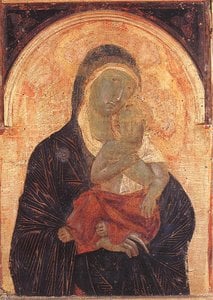
Virgin and Child
Reproduktsiooni suurus
Cimabue’s “Virgin and Child,” dating from approximately 1280, is more than just a depiction of the Madonna and Child; it’s a profound statement of artistic transition. This painting, executed in the rich, jewel-toned palette characteristic of Byzantine art, embodies the last vestiges of that tradition while simultaneously hinting at the revolutionary changes to come within Italian painting. The scene itself – Mary cradling her infant son – is instantly recognizable as one of the most enduring narratives in Western art, yet Cimabue’s approach elevates it with a meticulous attention to detail and a deeply spiritual intensity.
Cimabue’s mastery is evident in every brushstroke. The painting was primarily executed in tempera on panel, a technique that allowed for precise detail and vibrant colors. However, it's the liberal use of gold leaf – shimmering across the Virgin’s robes and halo – that truly captivates the viewer. This wasn’t merely decorative; gold represented divine light and glory, central to Byzantine iconography. The application of gold was painstaking, requiring multiple layers and meticulous polishing to achieve its radiant effect. Cimabue's skill in layering pigments and creating depth through subtle gradations of color is remarkable, particularly considering the limitations of the medium.
The painting’s symbolism is layered and rich with meaning. The Virgin Mary represents purity, humility, and divine grace. Her pose – gently cradling her child – evokes a sense of tenderness and maternal love. The presence of two additional figures, positioned on either side of the central scene, remains somewhat enigmatic. They may represent members of the family, or perhaps symbolize other aspects of faith—angels or saints—adding to the painting’s spiritual complexity. The nursing infant is a potent symbol of Christ's sacrifice and humanity’s salvation.
"Virgin and Child" possesses an enduring emotional power that transcends its historical context. The intimate portrayal of mother and child evokes feelings of warmth, compassion, and reverence. Cimabue’s work serves as a poignant reminder of the timeless themes explored in Christian art – love, faith, and redemption. A hand-painted reproduction offers a unique opportunity to experience this masterpiece firsthand, bringing its beauty and spiritual depth into your home or studio.


1240 - 1302 , Itaalia
Explore the divine mastery of Byzantine gold leaf and gilding. Discover how ancient artisans used gold ground and mosaics to create celestial light, a timeless legacy of spiritual splendor and technical excellence in sacred art history.

Embark on a visual journey through the world's most radiant masterpieces. Discover how gold leaf, impasto textures, and gilded tones define luxury in fine art, from Byzantine icons to modern abstracts. Explore the eternal allure of gold in curated, museum-quality art collections.

Embark on a profound journey through art history with our exploration of the most iconic depictions of the Virgin Mary. Discover the divine grace, symbolism, and masterful techniques found in Renaissance masterpieces and sacred iconography.

Explore the profound beauty of Marian iconography through an art historian's lens. Discover iconic masterpieces by Raphael and Renaissance masters, celebrating the divine grace and timeless elegance of the Virgin Mary in classical fine art.

 Eelvaade
 Saada
Saada Jaga
Jaga
 Teave teose kohta

 Laadi alla
 Sarnased teosed
 Röntgenuuring
 Slaidietendus

 Loe lähemalt







 Klaasivalik on saadaval ainult suuruses kuni 110 cm