Kunstniku biograafia
Charles Marion Russelli elu ja looming: Lääneelu kroonik
Charles Marion Russell, keda armastavalt tuntakse kui "C.M." või "Kid" Russellit, ei sündinud maailmasse, mille ta nii elukalt lõuendale ja pronksile püüdis jäädvustada. Missouri osariigis St. Louisis 1864. aastal sündinud, oli tema varasemaid aastaid iseloomustanud mitte ametlik kunstnikuna kasvamine, vaid pidev lummatunnud Ameerika läänega – maailm, mida ta algselt koges lugude ja joonte kaudu, toetatud peaaegu romantilise igatsusega avade ruumide ja valla vabaduse järele. See nooruslik kirg oleks lõpuks vedanud ta lääne poole, loobudes traditsioonilisest haridusest kuuekümneaastaselt, et saada Montana Judith Basinis töömeheks. See oli julge samm, teadlik sukeldumine ellu, millele ta nii elukalt ette kujutas, ja see osutus otsustavaks tema kunstilise visiooni vormimisel. Russell ei püüdnud lihtsalt *kujutada* läänet; ta elas seda, hingas selle tolmu sisse ja omastas selle rütmid. See esmane kogemus sai aluseks tema kestvale pärandile. Üheteistkümne aasta jooksul omakasvatusena cowboy, talu-töölisena ja jahimehena võttis ta vastu karmi eksistentsi, kogemused, mis andsid intiimse arusaamise maastikust, loomadest ja kõige olulisemalt inimestest, kes seal elasid – cowboyst, indiaanlastest ja trappidest, kelle elusid ta nii võimsalt kujutas.
Tööliselt kroonikuks: Kunstniku tee
Russelli kunstnikuteekond ei olnud mitte sihitud akadeemiline areng, vaid pigem orgaaniline arenemine, mis sündis vajadusest ja vaatlusest. Töölepinguna cowboyna hakkas ta joonistama stseene oma igapäevaelust – kariloomi märkides, hobuseid kokku ajades, kohtumisi metsloomadega – püüdes tabada lääne toore ilu ja sisemist dramaatilisust. Need ei olnud poleeritud teosed galeriide jaoks; need olid isiklikud rekordid, visuaalsed päevikud, mis dokumenteerisid eluviisi, mis kahtlustati olevat kiiresti kaduvaks. Tema varajane töö iseloomustas märkimisväärne naturalism, terav silm detailidele, mis oli lihvitud aastate pikkuse vaatlusega oma ümbruses. Ta ei tahtnud läänet romantiseerida ega idealiseerida; ta otsis seda kujutada sellena, nagu see *oli*, kõigi raskustega ja auhindadega. Läbimurde hetk saabus pärast illustratsiooni postkaardi, mis kujutas kariloomi, mis võitlesid karmis talvel – stseen nii elav, et see tekitas nõudlust tema töö järele, võimaldades tal 1893. aastal rancherist saada täiskohaga kunstnikuks. See märgistas proliifse karjääri algust, mis hõlmas maalimist, skulptuuri ja kirjutamist, kõik ühendatud tema vankumatu pühendumisega Ameerika lääne autentselduse kujutamisele. Ta ei olnud lihtsalt kunstnik; ta oli visuaalne ajaloolane, kes hoolikalt dokumenteeris kaduvat maailma enne, kui see mälust kaob.
Huvitavaid teemasid ja tehnikat: Kaduva maailma jäädvustamine
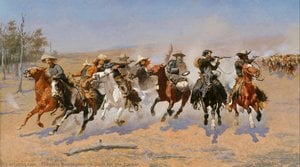
Russelli kunst on sügavalt jutukindel – iga lõuend räägib loo, mis on sageli täis piiri elanike müütilisi ja reaalseid lugusid. Tema subjektid on mitmekesised, kuid keskenduvad alati cowboyde, indiaanlaste ja karmi maastiku vahelisele suhtele. Ta ei vältinud konflikti kujutamist, kuid tema kujutused olid harva sensatsioonilised; pigem edastasid nad austust kõigi osaleja suhtes, tunnustades muutuva maailma keerukust. "Bad Hoss" (1904), kehastab seda – dünaamiline stseen, mis jäädvustab cowbo ja rebivat bronkot vahelise võitlust, sümboliseerides nii oskust kui ka ohtu, mis on sisalduvad cowboy elustiili. Samamoodi näitab "Belly jõe lahing" (1905) tema võimekust kujutada dramaatilisi ajaloolisi sündmusi täpsusega ja emotsionaalse sügavusega. Tema tehnika arenes ajas, liikudes illustratiivsemast stiilist vaba pintslipühkimise ja julgemate värvipalettide suunas. Ta oli meister jutustaja, kes kasutas kompositsiooni, valgust ja varju veenvaid narratiive loomiseks, mis kõlasid südamest publiku seas, kes soovisid ühendust saada lääne romantismi ja jõhkusega. Tema hilisemad tööd sisaldasid sageli suurendatud dramaatilisust ja emotsionaalset intensiivsust, peegeldades tema kasvavat küpsust kunstnikuna ja tema süvenevat arusaamist inimloomusest. Ta mõistis, et lääne tõeline ilu ei seisnenud ainult maastikutes, vaid ka nende seas, kes seal elasid – nende vastupanuvõimes ja vaimus.
Pärand ja jätkuv mõjutus
Charles Marion Russelli mõju Ameerika kunstile on eitamatav. Ta ei olnud lihtsalt lääne stseene maalija; ta määratles need põlvedeks. Tema töö aitas kujundada populaarset cowboide, indiaanlaste ja lääne laiemate maastike pilti, mõjutades lugemata kunstnikke, kes järgisid tema jälgi. Ta sai tuntuks kui "cowboy artist" mitte ainult oma teema pärast, vaid ka selle tõttu, et ta kujutas autentselt lääne elu – kujutust, mis põhines isiklikul kogemusel pigem kui romantilistel fantaasiatel. Tänapäeval on tema tööd väga soovitavad kollektoride ja muuseumide poolt üle maailma. C.M. Russelli Muuseumikompleks Great Fallsis Montanas seisab tema kestva pärandi tõendina, mis majutab suure hulga tema töid ja säilitab lääne vaimu, mille ta nii kirglikult kujutas. Tema seinamaalingud, nagu Lewis ja Clark kohtuvad Flathead indiaanlastega Ross' Hole'is, jätkavad imetlust ja austust tekitades, pakkudes võimsaid meelduvusi Ameerika ajaloo pöördelise hetke kohta. Russelli kunst ületab pelgalt esinduse; see on kuju julgust, vastupanuvõimet ja inimvaimu püsivat jõudu – pärand, mis jätkab publiku lummatamist rohkem kui sajandi möödumisel tema surmast.
Kangana peale lõuendi: Muutuste häälekas
Russell ei olnud lihtsalt kunstnik; ta oli ka pooldaja. Montana ajast oma sügava austuse tõttu indiaanlaste kultuuride vastu, kasutas ta oma kunsti valitsevate stereotüüpidele vastu ja mõistmist edendada. Ta toetas aktiivselt Chippewa hõimu jõupingutusi reservatsiooni saamiseks Montanas, lobedades isegi nende nimel kongressi ees. See pühendumus sotsiaalsele õigusele on sageli ülevaade, kuid see esindab olulist dimensiooni tema iseloomu ja kunstilise visiooni kohta. Ta uskus, et on oluline dokumenteerida ja säilitada indiaanlaste traditsioone enne nende kadumist – veendumus, mis peegeldub paljudes tema maalides ja skulptuurides. Tema kunst ei olnud lihtsalt lääne kujutamine; see oli muutuva maailma tunnistamine ja nende hääle poolelijäämine, kelle hääl jäi sageli varju. See pühendumus autentsusele, koos oma kunstilise talendiga, kinnitas tema koha ühena Ameerika olulisema ja armastatuima kunstniku – kaduva eluviisi kroonikuna ja kultuur



 Eelvaade
 Lülita trükkitoodetele
 Saada
Saada Jaga
Jaga
 Teave teose kohta

 Laadi alla
 Sarnased teosed
 Röntgenuuring
 Slaidietendus
 Statistika


 Loe lähemalt