


Sellel lehel kuvatav kunstiteos on kaitstud autoriõigusega, mis tähendab, et meil ei ole seaduslikku õigust luua või müüa identset reproduktsiooni. Seda kaitset rakendatakse rahvusvaheliste kokkulepete alusel, nagu näiteks Berne konventsioon ning riiklike seadustega, sealhulgas nendega, mida on sätestatud USA autoriõiguse seadus – 17. peatükk.
See meetod järgib täielikult autoriõiguse reegleid, kuna see ei põhine kaitstud kunstiteose kopeerimisel või dupliteerimisel. Selle asemel on tegu loova reinterpreetatsiooniga – uue maaldisega, mis on algteosest inspireeritud, kuid ei ole sellest identiline.
Muuseumikvaliteediga giclée- või kangasprint kiire tootmisega ja paindlikud viimistlusvõimalused. ( Osta käsitsi maalatud teos Lülita digitaalse pildi juurde)





























Vali meie eelmääratud suurused, mis vastavad teose algupärastele proportsioonidele.

Sisestage vajalik laius ja kõrgus, et see sobiks teie raamile või seinale. Trükki saab ainult lõigata, seda ei saa kunagi pildist suuremaks teha, seega ka erineva mustega suurus kaotab osa pildist. Enne trükkimist saadame teile kinnitamiseks digitaalse näidisprojektsiooni. Sellel lehel näidatud pilt ei kujuta reaalset lõiget — seda näitab ainult näidisprojektsioon.
Ülemaailmne tarne () 2 nädala jooksul, tavalise 4/5 nädala asemel. (8 november)
Armchair
Reproduktsiooni suurus
Bernardo Bernardi's "Armchair," meticulously reproduced here in a generous 68 x 68 cm format, represents more than just a piece of furniture; it embodies a pivotal moment in Croatian design history and the burgeoning ideals of functional modernism. Crafted in 1961 for the “Moša Pijade” Workers’ University – now the Open University – this chair was conceived by Bernardi himself, reflecting his deep commitment to accessible design and the transformative potential of tertiary education. The work speaks volumes about a period defined by social reform, architectural innovation, and a conscious effort to reshape public spaces with thoughtful, utilitarian forms.
The chair's aesthetic is strikingly austere, dominated by clean lines and a deliberately unadorned form. The primary material—black leather—conveys an immediate sense of sophistication and durability, while the wooden frame provides a grounding element, anchoring the piece to its functional purpose. Bernardi’s design eschews superfluous ornamentation in favor of pure geometric shapes, aligning with the principles of modernism that prioritized clarity and simplicity. The bowl-like silhouette, reminiscent of a shell or perhaps even a stylized echo of classical forms, introduces an unexpected layer of visual interest – a subtle nod to enduring artistic traditions within a decidedly contemporary context.
Beyond its purely functional role, “Armchair” carries a subtle symbolic weight. As the piece was designed for an institution dedicated to learning and social progress, it can be interpreted as representing comfort, contemplation, and the potential for intellectual growth. The chair’s starkness invites introspection, encouraging viewers to consider their own place within the broader context of knowledge and society. The presence of two additional chairs in the photograph further emphasizes this theme – a collective space designed for dialogue and shared experience.
This meticulously hand-painted reproduction captures the essence of Bernardi's original design with exceptional detail and fidelity. Utilizing archival quality materials and employing skilled artisans, WahooArt.com ensures that this artwork faithfully replicates the chair’s form, texture, and color palette. It is a perfect addition to any collection of modern design or a statement piece for contemporary interiors.
Teose "Armchair" trükised on saadaval vormis kunstiprint puuvillalõikel kangas või arhiveeritaval kangaspaberil. Tellimusi saab esitada selle Kvaliteetne kunstutrüki print lehel oma soovitud suuruses.
Teose „Armchair“, autor Bernardo Bernardi luminants on Bright Balance. Luminants kirjeldab, kui palju valgust värvid peegeldavad.
Teose „Armchair“, autor Bernardo Bernardi registreeritud populaarsusaste on Recognized.

Born in 1974 in the historic Italian town of Todi, Roberto Bernardi has emerged as a profound voice within the photorealist movement. His journey into the heart of visual precision began much earlier than his formal career, with his first artistic explorations dating back to the early 80s. After moving to Rome in 1993 following his high school graduation, Bernardi immersed himself in the delicate art of restoration, working at the church of San Francesco a Ripa. This intimate encounter with the preservation of beauty and the meticulous care required for historical artifacts undoubtedly laid the foundation for his later mastery of detail. By 1994, he transitioned into a full-time painter, moving away from initial forays into landscapes and portraits to embrace a contemporary still life that would define his legacy.
Bernardi’s work is a breathtaking meditation on the extraordinary hidden within the ordinary. As a master of photorealism, he possesses a singular ability to capture the exquisite beauty of everyday life through a sophisticated play of reflections and transparencies. His canvases often feature mundane objects—plates, glasses, kitchen appliances, dishwashers, and even colorful candies or lollipops—reimagined as subjects of intense light and complex optical phenomena. Through his brush, a simple glass becomes a vessel for light, and a kitchen surface transforms into a mirror of the surrounding world, inviting the viewer to rediscover the magic in the mundane.
The development of Bernardi's style is marked by an increasing fascination with how light interacts with various surfaces. His technique allows for a startlingly realistic depiction of textures, from the cold sheen of metal to the translucent glow of sugar. This pursuit of precision was further enriched by his meeting in 1999 with Raphaella Spence, also a photorealist artist and his frequent collaborative partner. Together, they have occasionally ventured beyond the intimate scale of still life to create large-scale series representing expansive social scenes, such as the vibrant energy of crowds at football stadiums, adding a communal dimension to his otherwise quiet, contemplative subject matter.
His professional trajectory has been characterized by significant international recognition and prestigious commissions. From working on pieces for the Cutler Collection in Beijing to being commissioned by the Italian multinational Eni, Bernardi's reach extends far beyond the borders of Italy. His work has been showcased in renowned institutions across the globe, including:
Through this vast exhibition history, Bernardi has solidified his place in the contemporary art landscape. His ability to bridge the gap between the hyper-real and the poetic ensures that his paintings are not merely technical exercises in mimicry, but emotional invitations to pause and observe the shimmering, often overlooked wonders of our daily existence.

1974 - , Italy

Explore 25 iconic Hokusai masterpieces and the soul of Ukiyo-e. Discover museum-quality art on WahooArt.com.

Avastage Bostoni Kunstimuuseumi 25 kõige ikoonilisemat maali! Lood kunstnike, stiilide ja ajaloost. Leidke inspiratsiooni kodukaunistuseks või tellige kvaliteetsed kunstireprodutsioonid WahooArt.com-ist. Avastage kogu kollektsioon veebis!
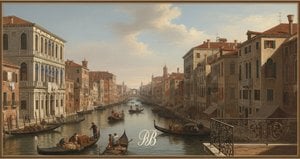
Explore the life & art of Bernardo Bellotto, Canaletto’s nephew and a master of veduta painting. Discover his stunning cityscapes of Dresden & Warsaw, artistic techniques, and lasting legacy. Expert insights for collectors.

Avastage geomeetrilise abstraktsiooni 10 suurteost – Kandinsky, Mondrian ja teised. Lugege kunstiteoste lugusid ning leidke inspiratsiooni kodukaunistuseks WahooArt.com-is! Kunstikollektsioon ja reprodutsioonid.

Explore the revolutionary art of Piet Mondrian and the principles of Neo-Plasticism. Discover De Stijl's influence, iconic compositions like 'Composition with Red, Yellow and Blue,' and Mondrian’s lasting legacy on modern design.
 Eelvaade
 Saada
Saada Jaga
Jaga
 Teave teose kohta
 Juhend

 Laadi alla
 Sarnased teosed
 Röntgenuuring
 Slaidietendus
 KÜSIMUSED JA VASTUSID
 Statistika


 Loe lähemalt









 Klaasivalik on saadaval ainult kuni 110 cm suuruses teostes


