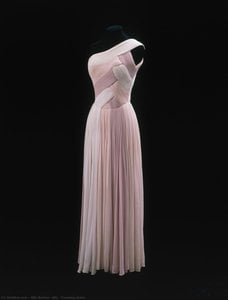
Evening Dress (1944) autor Alix Barton, Alix, meistri poolt käsitsi maalatud õlimaali reproduktsioon
Eelvaade AR-eelvaade Lülita trükkitoodetele Lülita digitaalse pildi juurde Saada
Teave teose kohta Juhend Lisa lemmikutesse Laadi alla Sarnased teosed Röntgenuuring Slaidietendus KÜSIMUSED JA VASTUSID Esitlus Statistika

Evening Dress Käsitsi maalatud õlimaal reproducing

Explore Alix Barton’s ‘Evening Dress,’ a neoclassical masterpiece mirroring Grès’ iconic draped designs. Discover the elegance & artistry of 1944 haute couture.

Alix (Madame Grès): Iconic French couturier famed for draped Grecian gowns & masterful drapery. A 'sphinx of fashion,' her designs revolutionized haute couture.

Sellel lehel kuvatav kunstiteos on kaitstud autoriõigusega, mis tähendab, et meil ei ole seaduslikku õigust luua või müüa identset reproduktsiooni. Seda kaitset rakendatakse rahvusvaheliste kokkulepete alusel, nagu näiteks Berne konventsioon ning riiklike seadustega, sealhulgas nendega, mida on sätestatud USA autoriõiguse seadus – 17. peatükk.

Austasena ja seaduslikuna alternatiivina pakume originaalist inspireeritud, käsitsi maalitud isikupärastatud teoseid. Meie osutavad ja professionalsed kunstnikud uurivad hoolikalt originaali stiili, meelemoi ja kunstilist olemust, et luua uus, ainulaadne teos, mis tekitab sama tunnet – olles samal ajal omaette originaalne looming.

See meetod järgib täielikult autoriõiguse reegleid, kuna see ei põhine kaitstud kunstiteose kopeerimisel või dupliteerimisel. Selle asemel on tegu loova reinterpreetatsiooniga – uue maaldisega, mis on algteosest inspireeritud, kuid ei ole sellest identiline.

Käsitsi valmistatud õlimaalireproduktsioon

Meie kunstnike poolt tellimusel valmistatud käsitsi maalitud õli-kainaste teos teie soovitud suuruses ja raamis. ( Lülita trükkitoodetele Lülita digitaalse pildi juurde)

Standardne suurus
kohandatud
CM
INCH

Vali meie eelmääratud suurused, mis vastavad teose algupärastele proportsioonidele.

laius
kõrgus

Sisestage vajalik laius ja kõrgus, et teos sobiks teie raamile või seinale. Kuna tegu on käsipainatud teosega, siis erineva kujuga suuruse korral võib kunstnik jätta pildi ümber veidi rohkem marginaali või lõigata osa ära — valik on teie. Enne maali alustamist saadame teile kinnitamiseks digitaalse näidisprojektsiooni. Sellel lehel näidatud pilt ei kajasta tegelikku tulemust — seda näitab ainult näidisprojektsioon.

Näited muudetavatest elementidest: asenda nägu kliendi fotoga; lisa lemmikloom (nt asenda kass koeraga); lisa taustale peidetud sõnum; muuda tausta maastikku või elemente.
Pärast tellimust saadab WahooArt.com meeskond kliendile e-posti juhised ning esitab eelvaate kavandi

Maailmline tarne 3–4 nädala jooksul tavalise 5 nädala asemel. (10 november). Kvaliteedis kompromisse ei tehta.

Tasuta ekspresssaatmine üle maailma
Kõrgekvaliteediline lina-kangas
Täielik transpordikindlustus
Tollimaksude tagastamise garantii
Värvitoime täpsuse garantii
100 päeva tagastusõigus (ainult valmistusdefektide korral)
100% raha tagasi garantii
Hulgusoodustus

Kogu summa

€ 243

Evening Dress

Reproduktsiooni tehnika

Reproduktsiooni suurus

-

Koguhind

€ 243

Small pleats contour the lines of the chest, and the natural flow of the cloth becomes a skirt. This work demonstrates the typical style of Grès.Madame Grès opened the fashion house Alix in 1934, but was forces to close it in 1939. In 1942 she opened a new house under her husband

Korduvad küsimused

Millal teos "Evening Dress" loodi ja millesse kunstisuuna see kuulub?

Teos "Evening Dress" loodi aastal 1944 ning see kuulub Neoclassical suunasse. Aasta ja stiil anavad teosele kunstiajalist konteksti.

Kas teos "Evening Dress" on üldmuljelt pigem hele või tumene?

Teose „Evening Dress“, autor Alix Barton, Alix registreeritud väärtused on: eregus brilliant ja luminants Luminous.

Kas teosele "Evening Dress" on saadaval lisatud reaalsete elementidega (AR) eelvaade?

Teosele "Evening Dress" on saadaval täiendatud reaalne eelvaade: teose AR-eelvaade teose kohta leht näitab seda teie enda ruumis ühilduval seadmel.


Kunstniku elulugu

A Life Sculpted in Silk: The Enigmatic World of Madame Grès

Germaine Émilie Krebs, the woman who would become known as Madame Grès, was born into a middle-class Parisian family in 1903. From an early age, her artistic inclinations leaned towards sculpture—a desire to mold and shape form that would ultimately define her legacy, though not through stone or bronze, but through the fluid medium of fabric. Her parents discouraged this path, steering her toward dressmaking, a more “suitable” vocation for a young woman of her time. This early redirection proved pivotal; it didn’t extinguish her sculptural ambitions, but rather channeled them into an entirely new realm. She began her career as a hat maker, honing her skills before transitioning to couture dressmaking at the esteemed Maison Premet, where exacting standards and meticulous technique were paramount. These formative years instilled in her a dedication to craftsmanship that would become her hallmark.

The Birth of a Signature: From Alix to Madame Grès

The evolution of her professional identity—from Mademoiselle Alix to Alix Barton and finally to Madame Grès—mirrors a deliberate crafting of persona, as carefully considered as the garments she created. The name “Grès” itself emerged in 1942 with her marriage to Russian painter Serge Anatolievitch Czerefkow, an anagram of his first name. This period was marked by both personal and professional challenges. Despite the turmoil of wartime Paris, Grès refused to compromise her artistic vision, continuing to design elegant dresses that subtly echoed the colors of the French flag—a quiet act of defiance that led to the temporary closure of her fashion house under German occupation. It was during this time, however, that her signature style truly crystallized: floor-length gowns draped with an unparalleled mastery, evoking the grace and timelessness of classical Greek sculpture.

Draping as Art: A Revolutionary Technique

Madame Grès wasn’t merely designing dresses; she was sculpting them onto the body. Unlike many of her contemporaries who relied on pattern making, Grès preferred to work directly on a mannequin, manipulating fabric—primarily silk jersey and paper taffeta—with an almost intuitive understanding of its properties. This process was famously laborious, often requiring up to 300 hours for a single gown. Each pleat, twist, and fold was meticulously crafted by hand, allowing the fabric to conform to the contours of the body rather than imposing a rigid structure upon it. She described this as a “battle” between designer and medium, a constant negotiation between her vision and the inherent qualities of the material. This dedication to draping elevated dressmaking to an art form, earning her the moniker "the Sphinx of Fashion" for her secretive nature and unwavering focus on her craft.

A Lasting Influence: Inspiring Generations

Throughout the 1940s and 50s, Madame Grès dressed some of the most iconic women of the era—the Duchess of Windsor, Paloma Picasso, Grace Kelly, Marlene Dietrich, and Greta Garbo among them. Her designs were characterized by their simplicity, elegance, and respect for the female form. She eschewed overt embellishment, allowing the beauty of the fabric and the artistry of her draping to speak for themselves. Her influence extended beyond the realm of haute couture, inspiring a new generation of designers with her innovative techniques and minimalist aesthetic. Azzedine Alaïa, in particular, was deeply captivated by Grès’s work, amassing a significant collection of her garments—a testament to his admiration and a recognition of her enduring legacy.

The Queen of Drapery: A Timeless Vision

Madame Grès' impact on the fashion world remains profound. Her pioneering approach to draping, her unwavering commitment to craftsmanship, and her ability to transform fabric into wearable sculpture continue to inspire designers today. She wasn’t interested in fleeting trends; she sought to create timeless garments that celebrated the beauty of the human body and the artistry of couture. Her work stands as a powerful reminder that fashion can be more than just clothing—it can be a form of art, a testament to skill, and an expression of enduring elegance. Her minimalistic draping techniques and her attention to and respect for the female body have had a lasting effect on the haute couture and fashion industry.
Alix Barton, Alix

Alix Barton, Alix

1903 - 1993 , France

Lühikest infot

  • Full Name: Germaine Émilie Krebs
  • Nationality: French
  • Date Of Birth: 1903
  • Date Of Death: 1993
  • Place Of Birth: Paris, France
  • Notable Artworks:
    • Evening Dress
    • Dress
    • Two-piece Evening Gown
  • Artistic Movement Or Style: Haute Couture, Draping