

Una Herencia Forjada En Arte: Explorando El Museo Thyssen-Bornemisza
Madrid’s Museo Nacional Thyssen-Bornemisza isn't simply a building filled with paintings; it is a testament to vision, passion, and an unwavering dedication to completing an artistic narrative. Nestled within the city’s famed “Golden Triangle of Art,” alongside the Prado and Reina Sofía museums, the Thyssen-Bornemisza distinguishes itself by bridging historical gaps, offering a panoramic sweep of European art from the medieval period through to the late 20th century. Where its neighbors excel in specific areas – the Prado with Spanish masters, the Reina Sofía with modern and contemporary works – the Thyssen-Bornemisza steps in to fill the voids, creating an unparalleled journey through eight centuries of artistic evolution.
Colección. Museo Nacional Thyssen-Bornemisza
With over 1,600 paintings, it was once the second largest private collection in the world after the British Royal Collection. A competition was held to house the core of the collection in 1987–88 after Baron Thyssen, having unsuccessfully sought permission to enlarge his museum in Lugano, searched for a better-suited location elsewhere in Europe.
- Early European Painting: The Museo Nacional Thyssen-Bornemisza boasts an impressive ensemble of paintings from the 14th and 15th centuries, including works by Duccio, Luca di Tommè, Bernardo Daddi, Paolo Uccello, and Benozzo Gozzoli. These delicate panels, imbued with symbolic detail and shimmering gold leaf, offer a glimpse into the spiritual fervor of the era.
- Maestros De Los Antiguos Tiempos: The Museo Nacional Thyssen-Bornemisza presents significant paintings by Ghirlandaio and Carpaccio, acquired during the 20th century by the Conde Heinrich Thyssen-Bornemisza de Kászon.
- Maestros Del Siglo XIX Y XX: Ampliado por el Conde Hans Heinrich Thyssen-Bornemisza, this section includes works from the gothic era to modern pieces of Lucian Freud, filling gaps in the Prado and Reina Sofía collections.
Arquitectura Como Fondo
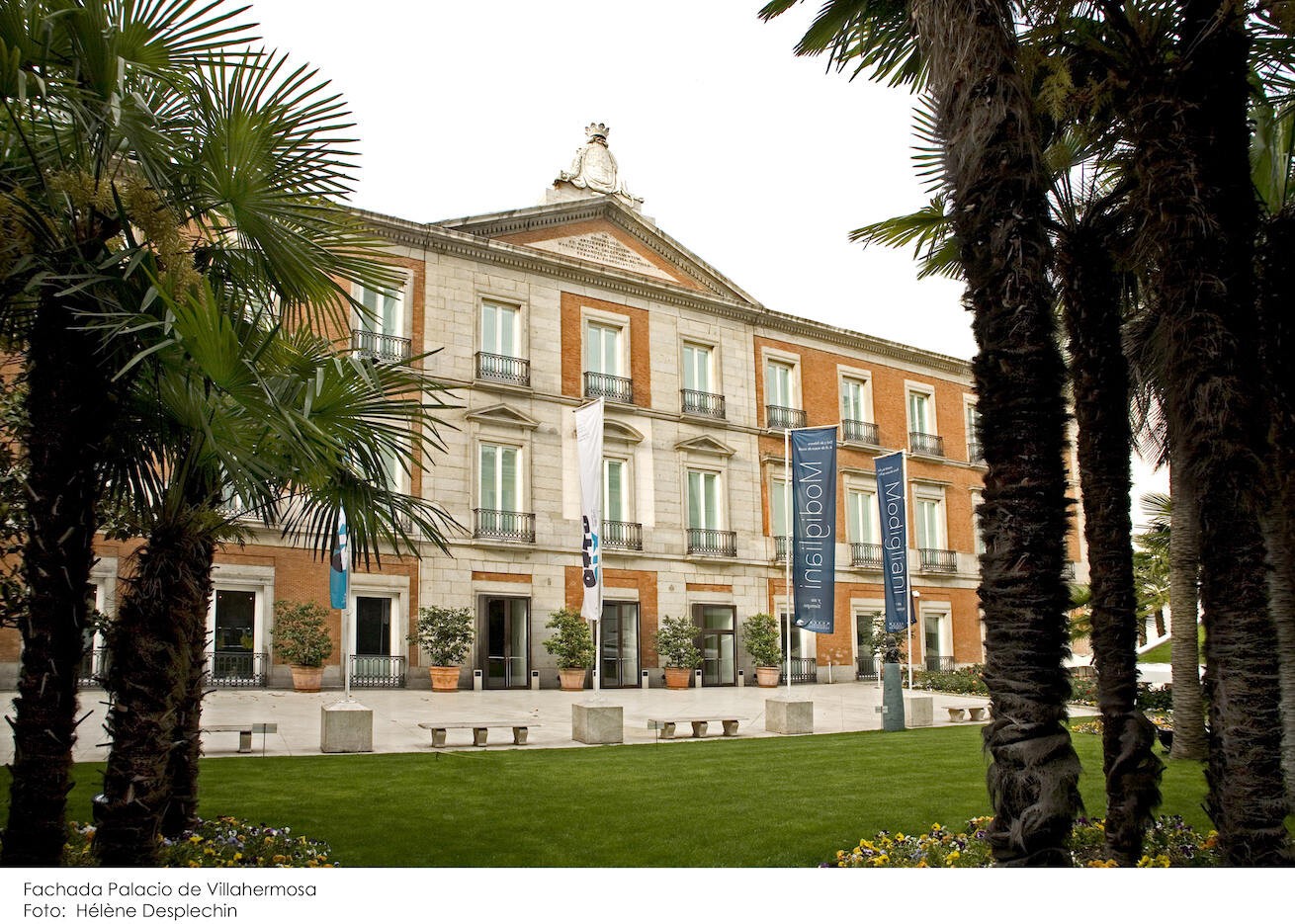
The Museo Nacional Thyssen-Bornemisza was inaugurated officially in 1992 under the direction of Tomás Llorens. The collection initially resided in the family estate in Lugano, but it moved to Madrid after the purchase by the Spanish government of 775 paintings for 350 million dollars. The structure built with purpose for showcasing its extensive collection is a testament to modern architectural design.
The history of the museum is intimately linked to the Thyssen-Bornemisza family. The Conde Hans Heinrich Thyssen-Bornemisza and his wife, Carmen Cervera (formerly Miss España 1961), played fundamental roles in expanding and relocating the collection. The Condesa continues involved actively, even deciding the salmon pink walls tone for improving visual experience.
Lo Que Lo Hace Único
The Museo Nacional Thyssen-Bornemisza doesn't just hold art; it’s a vibrant celebration of European artistic evolution. Whether you’re a connoisseur or simply passing through Madrid, this museum promises an enriching and unforgettable experience.
Una Ubicación Estratégica
Situated in the ‘Golden Triangle of Art’ of Madrid, visitors can explore three world-renowned museums in a single day, each offering distinct collections but complementary perspectives.
Un Toque Personal
The personal history of the museum and the ongoing involvement of Carmen Cervera add an unmistakable charm, transforming it not only into a repository of art but also into a tangible legacy.