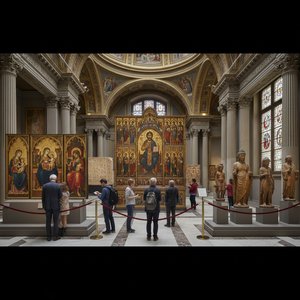
A Journey Through Faith and Art: Museo Convento de Santo Domingo el Antiguo
Nestled in the historic city of Toledo, Spain, Museo Convento de Santo Domingo el Antiguo offers a captivating glimpse into both artistic brilliance and centuries of religious history. This remarkable museum is housed within an ancient monastery dating back to the 9th century, later becoming a Dominican convent founded in 1364. Its location alone whispers tales of royal patronage and enduring devotion—a setting perfectly attuned to appreciating the treasures held within its walls.
History & Architecture: Echoes of Castile’s Legacy
Originally established as a monastery, the site evolved into a significant center for Dominican nuns. The building itself reflects a blend of architectural styles accumulated over centuries, showcasing its rich and layered past. Constructed primarily in the Gothic style during its initial phase, it underwent considerable expansion during the Renaissance period, incorporating elements of Mannerism—a testament to Toledo’s artistic dynamism throughout time. Notably, it served as a place of memory for descendants of King Peter I of Castile, preserving important historical documents within its archives – tangible links to Spain's royal heritage that contribute profoundly to the museum experience. The monastery’s austere façade belies the vibrant artistic legacy housed within its walls, representing an enduring symbol of Toledo’s spiritual and cultural identity.
The Santo Domingo Altarpiece: El Greco’s Initial Masterpiece
At the heart of Museo Convento de Santo Domingo el Antiguo lies its centerpiece: The Santo Domingo Altarpiece, painted by El Greco between 1577 and 1579. Although fragments now reside in other esteemed institutions like the Prado Museum and Art Institute of Chicago, the remaining panels offer an unparalleled opportunity to witness El Greco’s formative artistic vision—a pivotal moment in his journey as a painter and a symbol of Toledo's artistic prowess during the Baroque era. The dramatic use of color and form exemplifies Mannerist principles, capturing God’s grace through Mary’s celestial ascension with breathtaking intensity. Scholars continue to debate the precise symbolism embedded within each panel, furthering our understanding of El Greco’s artistic intentions and his contribution to European art history.
Beyond El Greco: A Diverse Collection Reflecting Centuries
While El Greco dominates the museum’s fame, Museo Convento de Santo Domingo el Antiguo boasts a broader collection encompassing religious art and sculptures spanning several centuries. Admire works from various artistic movements—from Gothic stained glass windows depicting biblical scenes to Baroque sculptures portraying saints—each piece telling its own story of faith, devotion, and artistic innovation. The curators have painstakingly researched provenance and stylistic influences, enriching the visitor’s understanding of Toledo's cultural panorama. Visitors can explore illuminated manuscripts dating back to the medieval period alongside exquisite Flemish tapestries illustrating religious narratives, providing a comprehensive overview of artistic traditions across time.
Notable Exhibitions & Preservation Efforts
Throughout its history, Museo Convento de Santo Domingo el Antiguo has hosted significant exhibitions exploring themes of Spanish religious art and El Greco’s influence on European painting. Recent initiatives focused on conservation have ensured that these artworks—including “Assumption of the Virgin” and “The Resurrection”—remain accessible to future generations. The museum's commitment to safeguarding cultural heritage underscores its importance as a beacon of artistic excellence and historical remembrance. Furthermore, ongoing research into El Greco’s techniques and materials contributes to preserving his legacy for scholars and art enthusiasts alike.
What Makes It Unique?
More than just an art museum, Museo Convento de Santo Domingo el Antiguo is unique for several reasons. Firstly, it provides rare insight into El Greco’s early work within the context of his original monastic setting—a space imbued with serenity and contemplation that elevates the appreciation of its artistic treasures. Secondly, its preservation of historical documents related to Spanish royalty adds another layer of fascination for visitors interested in delving deeper into Toledo's royal past. Finally, it stands as a testament to the enduring power of faith and art intertwined—a place where beauty inspires reflection and history comes alive. A visit here isn’t merely observing masterpieces; it’s embarking on a pilgrimage through time itself.