Yelan Xinggui: Elegance Amidst the Sui Dynasty’s Zenith
Yelan Xinggui, a name whispered with reverence in circles of Chinese art scholarship, stands as a beacon of refined calligraphy and poignant poetry originating from the Sui Dynasty (581-618 CE). Though biographical details remain scarce—a testament to the challenges inherent in reconstructing lives across millennia—the enduring legacy of his artistic output speaks volumes about the cultural landscape of his time and continues to inspire contemporary artists.Early Life and Artistic Roots
Born around 540 AD in Chang’an, the imperial capital during a period of unprecedented cultural flourishing, Yelan's formative years were steeped in the traditions of the Sui Dynasty. This era witnessed a revival of Buddhism and Confucian scholarship, shaping the intellectual currents that would ultimately permeate his creative endeavors. Accounts suggest he spent his childhood in Datong, Shanxi Province, fostering an early appreciation for natural beauty—a fascination that would become central to his artistic vision. Notably influenced by the monumental Yungang Caves, famed for their intricate Buddhist sculptures and murals, Yelan’s artistic sensibilities were nurtured amidst the grandeur of imperial patronage and religious fervor.Calligraphy: Flowing Elegance Reflects Nature
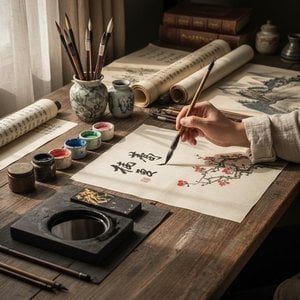
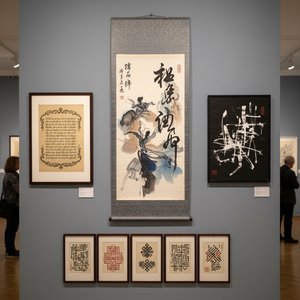
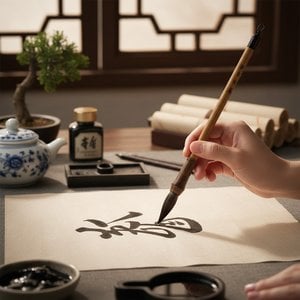
Yelan Xinggui's calligraphy is characterized by an unparalleled grace—a fluidity that mirrors the serene landscapes he so passionately depicted in his poems. His brushstrokes embody a deliberate pursuit of harmony, mirroring the principles of Daoist philosophy which championed balance and contemplation. Unlike many contemporary artists who favored ornate styles, Yelan opted for simplicity, prioritizing clarity and conveying emotion through subtle nuances of line and ink. This stylistic choice underscores his belief that true artistic expression resided in capturing the essence of the natural world—a conviction reflected throughout his oeuvre.Poetry: Echoes of Emotion and Landscape
Yelan’s poetic output is equally remarkable for its depth and sensitivity. His verses delve into themes of love, loss, and the cyclical rhythms of existence, mirroring the profound philosophical inquiries prevalent during the Sui Dynasty. Recurring motifs—particularly depictions of mountains, rivers, and blossoming trees—serve as conduits for conveying emotions ranging from melancholy contemplation to joyous celebration. Like Su Dongpo, a fellow poet of his era who similarly explored the intersection between human experience and natural grandeur, Yelan’s work embodies a humanist spirit that transcends temporal boundaries.Notable Works and Influences
While definitive records documenting specific pieces by Yelan Xinggui are elusive, scholars recognize his influence on subsequent generations of artists. His stylistic approach—particularly his emphasis on capturing the sublime beauty of nature—resonated with Wang Hui’s landscapes after old masters, offering a comparative perspective on artistic sensibilities during the Sui Dynasty. Furthermore, Yelan's engagement with Daoist philosophy—a cornerstone of Chinese thought—provided him with intellectual grounding for expressing profound spiritual truths through art.Legacy and Remembrance
Yelan Xinggui passed away around 606 AD, marking the end of an era defined by artistic brilliance and philosophical contemplation. Despite the paucity of biographical information, his enduring legacy persists in the annals of Chinese art history—a testament to the power of beauty and reflection to transcend time itself. His work serves as a poignant reminder of the Sui Dynasty’s cultural zenith—a period characterized by intellectual dynamism and artistic innovation that continues to captivate scholars and artists alike.Preguntas y respuestas
¿Puedo explorar las obras de Yelan Xinggui por movimiento?
Puedes ver los movimientos en los que trabajó Yelan Xinggui en la página de Todos los movimientos del artista, donde las obras se agrupan por movimiento.
¿Qué colores utilizaba con más frecuencia Yelan Xinggui?
El perfil cromático de la obra de Yelan Xinggui se puede consultar en su página de ADN de la Paleta.
¿Puedo explorar las obras de Yelan Xinggui por tema?
Las obras de Yelan Xinggui pueden explorarse por tema en la página Índice temático del artista.