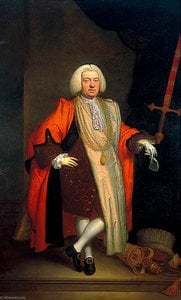
Primeros años y aprendizaje
Thomas Bardwell, nacido en 1704, surgió de una familia profundamente arraigada en las artes decorativas más que en el mundo establecido de la pintura fina. Su incursión inicial en el arte no se produjo a través de una formación formal, sino dentro de las exigencias prácticas del negocio familiar en Bungay, Suffolk. Comenzó elaborando paneles pintados, adornos funcionales que, sin embargo, requerían un ojo agudo para la composición y el color. Esta experiencia temprana, aunque aparentemente humilde, sentó una base crucial para su éxito posterior. Le inculcó un enfoque meticuloso del oficio y una comprensión del impacto visual de la imaginería, incluso antes de aspirar conscientemente a ser retratista. Las obras documentadas más antiguas, piezas de conversación de 1736 —notablemente una que podría representar a la familia Brewster de Beccles, que ahora se encuentra en el Museo Geffrye— ofrecen vistazos a este período formativo. Estas pinturas, escenas íntimas que capturan la vida familiar, revelan un talento emergente para la caracterización y el detalle narrativo, insinuando una sensibilidad que florecería en sus encargos más ambiciosos.Abriendo nuevos caminos en Norwich
La trayectoria de Bardwell dio un giro significativo en 1746, cuando obtuvo un encargo de la Compañía de Artillería de Norwich para pintar a William Crowe, quien pronto se convertiría en alcalde. Este no fue simplemente otro retrato; representó un desafío al orden artístico establecido dentro de la ciudad. Hasta entonces, John Theodore Heins, un artista nacido en Alemania, había mantenido un virtual monopolio sobre el retrato civil en Norwich. El éxito de Bardwell al capturar el parecido de Crowe —y al asegurar este prestigioso encargo— rompió efectivamente ese dominio, marcándolo como una nueva y formidable presencia en la escena artística local. Este triunfo inicial condujo a una serie de nueve retratos para el St Andrew's Hall en Norwich, consolidando su reputación y estableciendo un estilo distintivo favorecido por los ciudadanos prominentes de la ciudad. No estaba simplemente pintando rostros; se estaba convirtiendo en una parte integral del registro de la propia sociedad de Norwich.Encargos en Londres y profundidad alegórica
Las décadas de 1740 y 1750 vieron a Bardwell extender su alcance hasta Londres, donde emprendió una variedad de encargos de retratos. Sin embargo, fue durante este período cuando se aventuró más allá de la representación directa, demostrando una ambición por obras alegó리가 más complejas. Joshua Ward recibiendo dinero de Britania (y otorgándolo como caridad a los necesitados), pintada en 1748 y que ahora reside en la colección del Royal College of Surgeons, se erige como un ejemplo primordial. Esta pintura no es solo un retrato del Dr. Joshua Ward; es una narrativa visual cuidadosamente construida. Las figuras simbólicas de Britania y la Caridad flanqueando a Ward, junto con la multitud de pacientes agradecidos, elevan la obra más allá del mero parecido para convertirla en una celebración de la filantropía y la virtud cívica. Un grabado basado en esta pieza, probablemente realizado por Bernard Baron, difundió aún más su imaginería e influencia. Este período revela la creciente sofisticación de Bardwell al utilizar el simbolismo para dotar a sus retratos de un significado más profundo, alejándolo de la representación puramente descriptiva hacia obras que interactuaban activamente con temas morales y sociales.Yorkshire, Escocia y un regreso a Norwich
El viaje artístico de Bardwell no se limitó al sur de Inglaterra. Entre 1752 y 1753, emprendió una extensa serie de encargos en Yorkshire y Escocia, ampliando su exposición a diferentes mecenas y estilos regionales. Este período probablemente influyó en su técnica y refinó aún más su capacidad para adaptarse a diversas preferencias estéticas. Sin embargo, hacia 1759, Bardwell tomó la decisión de establecerse permanentemente en Norwich. Se convirtió en una figura central dentro de la comunidad artística de la ciudad, celebrado por su habilidad y dedicación. Un obituario publicado en un periódico local lo elogió como “un eminente pintor de retratos... que principalmente a través del poder del genio y el esfuerzo de la aplicación, adquirió un grado de perfección en su arte”.Legado y contribuciones teóricas
El impacto de Bardwell se extendió más allá del lienzo. En 1756, publicó La práctica de la pintura y la perspectiva hecha fácil, un tratado de 64 páginas dedicado al conde de Rochford. Esta obra no era simplemente un manual técnico; reflejaba su propia filosofía artística y ofrecía una guía práctica para los pintores aspirantes. Demuestra un compromiso con el intercambio de sus conocimientos y la promoción del arte de la pintura más allá de su círculo inmediato. Según una historia general de Norfolk publicada en 1829, “los mejores de sus retratos están en Langley”, mencionándose también obras de Turner y Carr que contienen temas históricos pintados por Bardwell. Aunque quizás no alcanzó la fama generalizada de algunos de sus contemporáneos, Thomas Bardwell se labró un nicho significativo como un hábil retratista, un rompedor de monopolios artísticos y un pensador que contribuyó al discurso sobre la pintura en la Inglaterra del siglo XVIII. Su legado reside no solo en los rostros que capturó, sino también en la calidad perdurable de su artesanía y su dedicación a elevar el arte del retrato dentro de su comunidad.Preguntas y respuestas
¿Qué estados de ánimo expresan las obras de Thomas Bardwell?
La Rincón de emociones de Thomas Bardwell organiza las obras del artista según el estado de ánimo.
¿Cómo se divide la trayectoria de Thomas Bardwell en periodos?
La Trayectoria de Thomas Bardwell es una línea de tiempo con desplazamiento vertical que presenta las obras del artista en orden cronológico, agrupadas en capítulos por periodos de su carrera.
¿A qué periodo histórico pertenecía Thomas Bardwell?
Thomas Bardwell trabajó durante el periodo Edad Moderna. Este periodo sitúa la actividad del artista en su contexto histórico.